Maiden Voyage of the S.S. Great Eastern
1860 · Southampton, United Kingdom
The S.S. Great Eastern, a massive iron sailing steamship designed by Isambard Kingdom Brunel, begins her maiden voyage.
July 12, 1843
The steamship SS Great Britain, designed by Isambard Kingdom Brunel, is launched, marking a milestone in engineering and ship design.
Bristol, England | Great Western Steamship Company
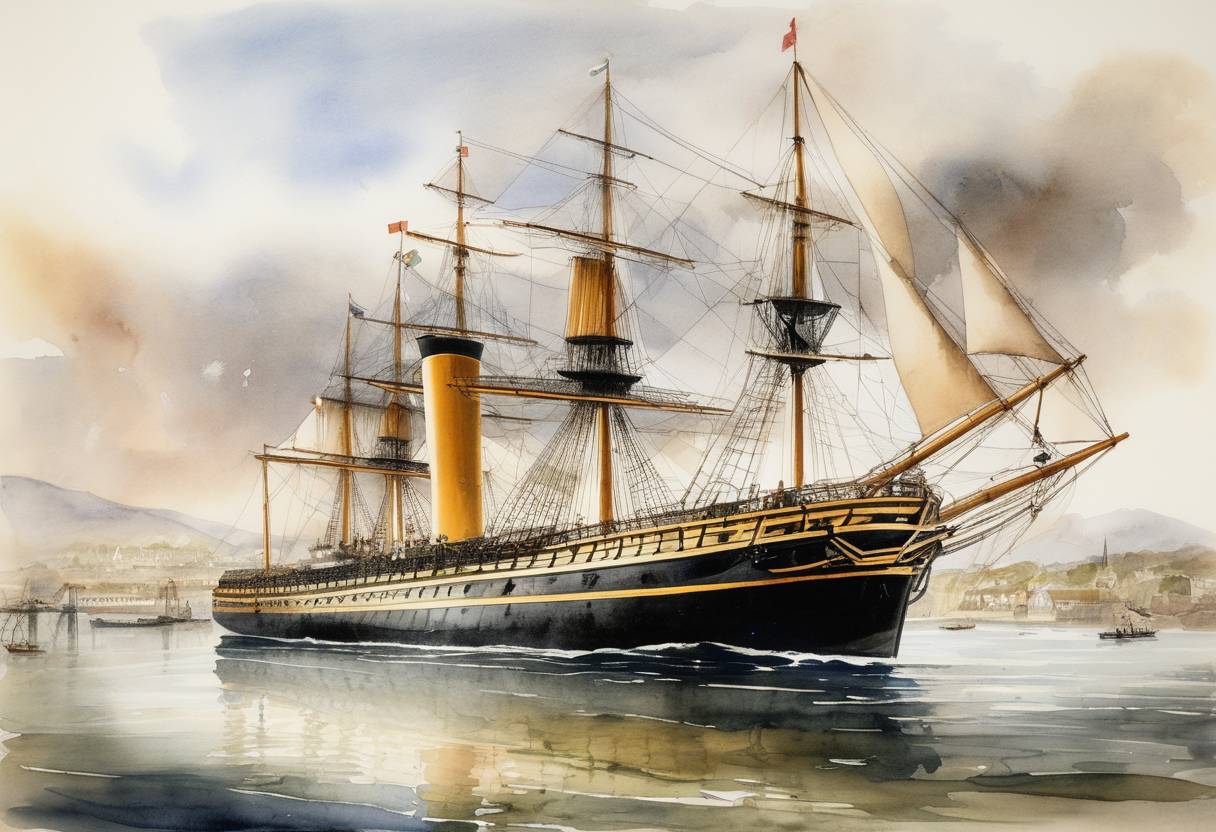
On July 12, 1843, the SS Great Britain, designed by the renowned engineer Isambard Kingdom Brunel, was launched from the Bristol shipyard in England. This event marked a revolutionary moment in maritime engineering and ship design.
Isambard Kingdom Brunel was a pivotal figure in the 19th century, known for his innovative contributions to engineering and transportation infrastructure. The SS Great Britain was designed to be the largest and most advanced steamship of its time, intended to serve the transatlantic route to America.
Iron Hull: Unlike its wooden predecessors, the SS Great Britain was constructed with a wrought iron hull, which provided greater strength and durability, reducing issues such as wood rot and maintenance costs.
Propeller Screw: It was the first ship to combine a screw propeller with an iron hull. This was a groundbreaking shift from the paddle wheel propulsion system, offering more efficiency and reliability in various sea conditions.
Size and Capacity: At 322 feet in length and displacing around 3,400 tons, it was the largest passenger ship of its era, capable of carrying over 600 passengers and crew, along with significant cargo.
The launch on July 12 was attended by thousands, witnessing this feat of modern engineering. The SS Great Britain successfully demonstrated the potential held by Brunel’s design, influencing subsequent developments in shipbuilding and establishing new standards for oceanic travel.
Technological Legacy: The innovations introduced by the SS Great Britain shaped the future of naval design, paving the way for modern steamships and later advancements in marine engineering.
Brunel’s Influence: This ship further solidified Brunel’s legacy as a visionary engineer who contributed significantly to the Industrial Revolution.
Although initially used in transatlantic service, the SS Great Britain was later employed on routes to Australia and underwent various modifications, including conversion to a full-rigged sailing ship and later, a coal transport vessel. After being retired and left in the Falkland Islands, it was eventually rescued and brought back to Bristol in 1970, where it was restored and is now a museum ship, celebrated as a key piece of maritime heritage.
The launch of the SS Great Britain remains a testament to the innovation and ambition of Isambard Kingdom Brunel, reflecting the era’s spirit of progress and transformation during the Industrial Revolution.
Source: www.brunelsssgreatbritain.org