The Siege of Constantinople: August 7, 626
626 · Constantinople, Byzantine Empire
The Siege of Constantinople ends as the Avar and Persian forces withdraw after failing to breach the city's defenses.
November 20, 1368
The siege of Zutphen ends as its defenders, loyal to Albert I, Duke of Bavaria, surrender to the forces of the Duchy of Guelders.
Zutphen, Duchy of Guelders | Duchy of Guelders
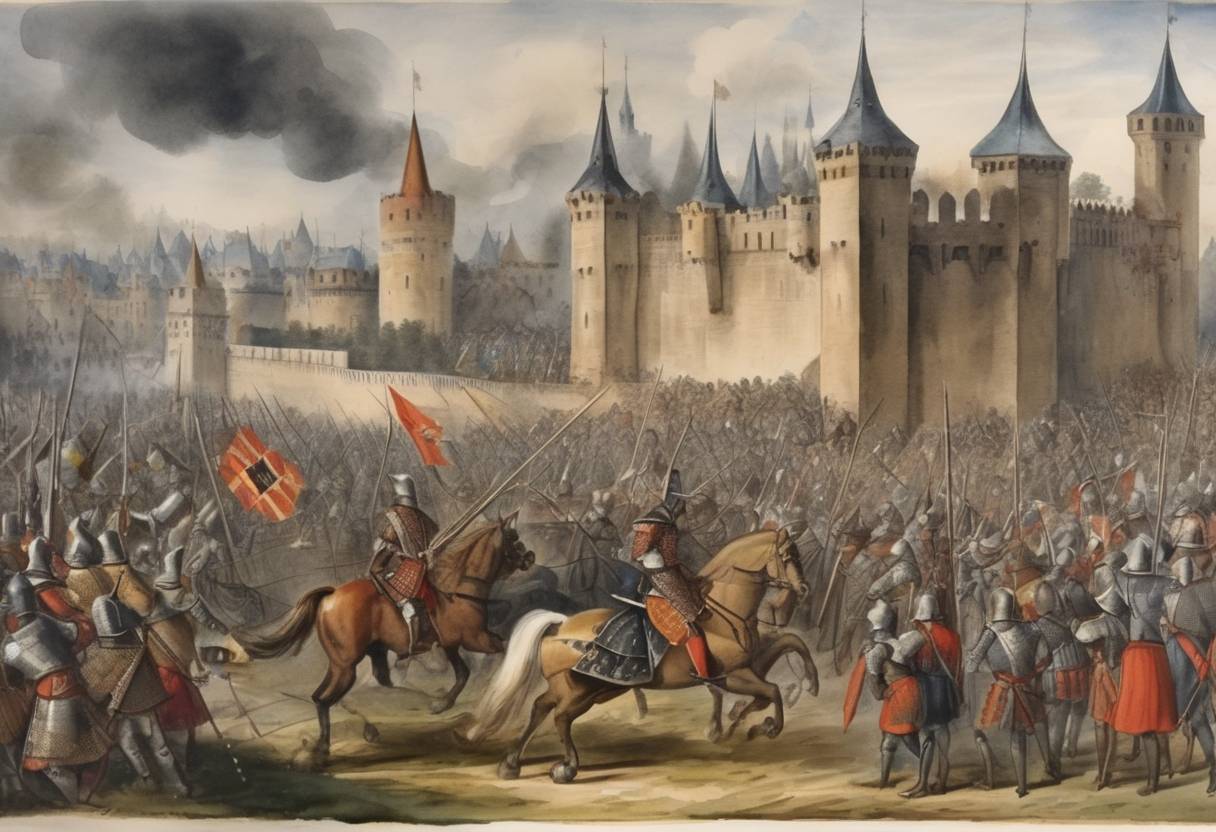
The siege of Zutphen concluded on November 20, 1368, marking a significant event in the power struggles of the Low Countries during the late Middle Ages. This siege was a part of greater regional conflicts involving the Duchy of Guelders and the forces loyal to Albert I, Duke of Bavaria.
In the mid-14th century, the Low Countries were a patchwork of competing territories. Among the prominent figures was Albert I, Duke of Bavaria, who served as the Count of Holland, Hainaut, and Zeeland. His interests in expanding and securing his influence often led to conflicts with neighboring territories and within the region itself.
Zutphen, a strategically located city in the eastern part of the present-day Netherlands, found itself embroiled in these regional disputes. The city, at that time, was loyal to Albert I. However, the Duchy of Guelders, under the leadership of Duke Reginald III, sought to expand its influence by seizing control of Zutphen. In 1368, the forces of the Duchy of Guelders laid siege to the city.
After withstanding the siege, the defenders of Zutphen, who had pledged allegiance to Albert I, were compelled to surrender on November 20, 1368. The capitulation marked a victory for the Duchy of Guelders, allowing it to assert greater power in the region. This change of control was not just a tactical victory but also demonstrated the shifting allegiances and the fluid political landscape of medieval Europe.
The surrender of Zutphen highlighted the ongoing tensions among the territories that would eventually influence the broader development of the Netherlands. It set a precedent for further hostilities in the region and helped shape the geopolitical boundaries and relationships in the northern European territories during this turbulent period.
Source: en.wikipedia.org