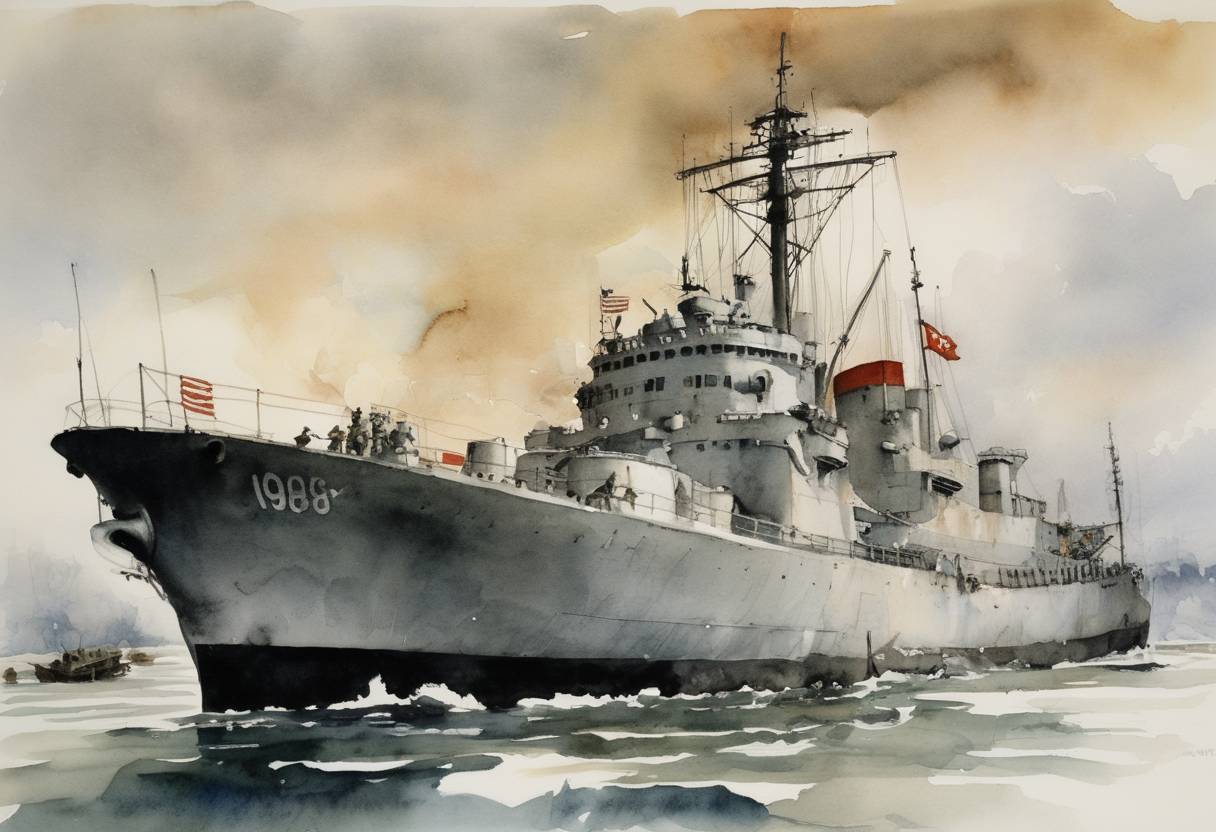
The Capture of the USS Pueblo: January 23, 1968
On January 23, 1968, the USS Pueblo, a United States Navy intelligence vessel, was seized by North Korean forces, dramatically heightening tensions during the Cold War and precipitating a complex standoff between the United States and North Korea.
Background
The USS Pueblo, a Banner-class environmental research ship, was repurposed for intelligence gathering during the Cold War. It was equipped to intercept and analyze enemy communications. In January 1968, during a routine mission intended to monitor Soviet and North Korean military activity, the Pueblo was operating in international waters near the east coast of North Korea.
The Incident
On the morning of January 23, the Pueblo, under the command of Lieutenant Commander Lloyd M. Bucher, was approached by North Korean naval vessels and aircraft. Despite Bucher’s claims that the Pueblo was in international waters, the North Korean forces insisted the ship had crossed into their territorial waters. After several warnings, North Korean naval forces fired upon the Pueblo and eventually boarded the vessel, capturing the ship and its crew of 83 members.
Detention and Diplomacy
Following the capture, the crew members were taken to two different detention facilities, where they endured harsh conditions and interrogations for nearly a year. The North Korean government used the incident to publicly accuse the United States of espionage and demanded an apology. This incident coincided with other significant events, including the Vietnam War’s Tet Offensive and heightened tensions on the Korean peninsula, particularly after the attempted assassination of South Korean President Park Chung-hee by North Korean commandos on January 21, 1968.
Resolution
After extensive negotiations, the crisis was resolved on December 23, 1968, exactly 11 months after the capture. Negotiators, led by the U.S. Department of State and supported by the Swiss and Swedish governments, reached an agreement. The U.S. signed a statement acknowledging espionage activities in North Korean waters and formally apologized—though it later retracted the admission after securing the crew’s release. The USS Pueblo remains in North Korea to this day, docked in Pyongyang as a museum exhibit.
Aftermath
The Pueblo Incident had several long-term consequences. It exposed vulnerabilities in U.S. intelligence operations and led to reviews and reforms within the Navy regarding electronic surveillance missions. The incident also exacerbated Cold War tensions in the region, reinforcing the urgency of diplomatic dialogues to prevent war.
The incident is a reminder of the high-stakes intelligence operations during the Cold War and remains a point of diplomatic friction between the U.S. and North Korea.