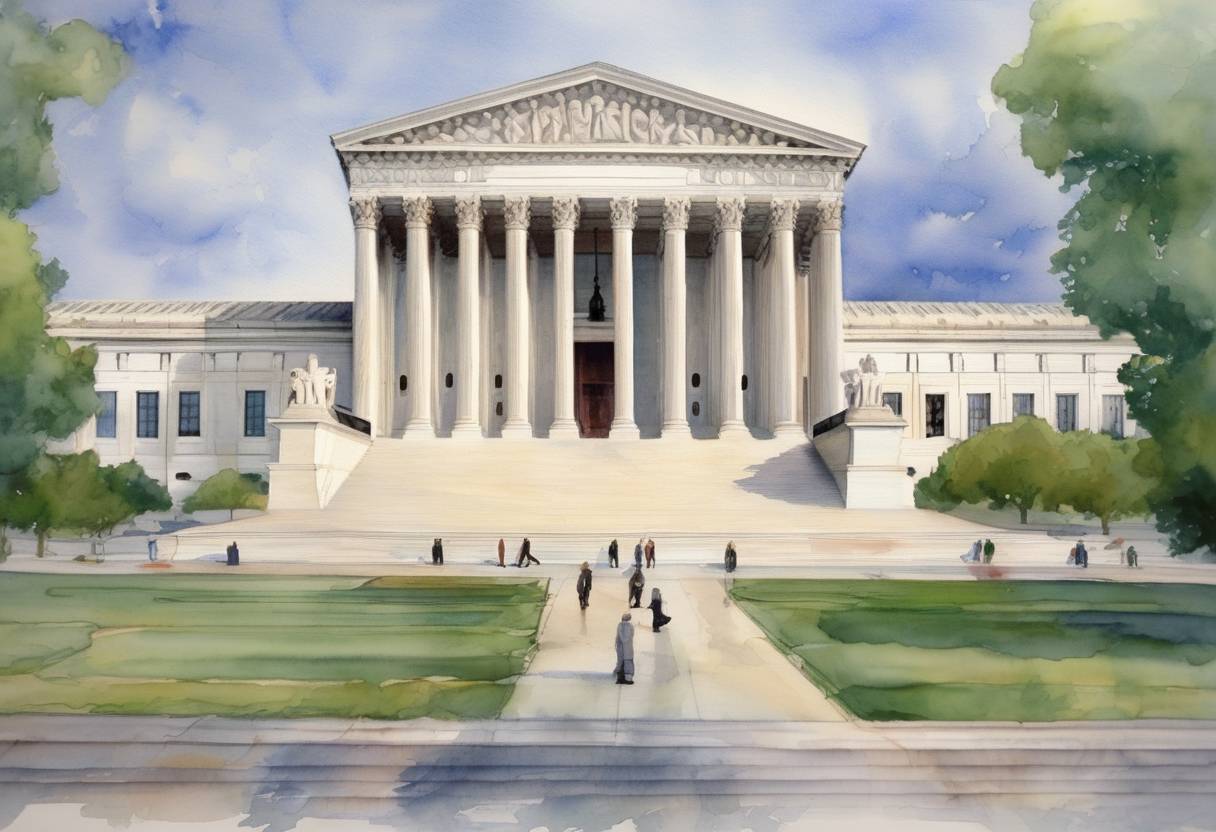
Bush v. Gore: Supreme Court Decision on December 12, 2000
On December 12, 2000, the United States Supreme Court issued its decision in the landmark case of Bush v. Gore, effectively resolving the contentious 2000 presidential election in favor of George W. Bush. This decision was pivotal in determining the outcome of one of the closest and most disputed elections in American history.
Background
The 2000 presidential election between Republican candidate George W. Bush and Democratic candidate Al Gore was one of the tightest in U.S. history. The state of Florida, with its 25 electoral votes, became the critical battleground that would decide the presidency. The initial vote count in Florida showed Bush leading by a very narrow margin, triggering an automatic machine recount under state law.
The Dispute
The recount process in Florida was fraught with controversy, particularly concerning the “hanging chads” and “butterfly ballots” in several counties. The Gore campaign requested manual recounts in four heavily Democratic counties, which led to legal challenges and a series of court rulings.
The Florida Supreme Court eventually ordered a statewide manual recount of undervotes, ballots that did not register a vote for president when counted by machine. The Bush campaign appealed this decision to the U.S. Supreme Court, arguing that the varying standards of counting in different counties violated the Equal Protection Clause of the Fourteenth Amendment.
The Supreme Court Decision
On December 12, 2000, the U.S. Supreme Court delivered a per curiam opinion in Bush v. Gore. The Court ruled in a 7-2 decision that the Florida Supreme Court’s method for recounting ballots was unconstitutional due to inconsistent evaluation standards, thus violating the Equal Protection Clause. However, the more decisive 5-4 vote determined that there was no time to establish a constitutionally valid recount procedure before the December 12 deadline for certifying electors.
The majority opinion effectively halted the recount process, allowing Florida’s previously certified results to stand, which awarded the state’s electoral votes to George W. Bush. This decision secured Bush’s victory in the Electoral College, despite Al Gore winning the popular vote nationwide.
Aftermath and Significance
The decision in Bush v. Gore was met with significant controversy and debate. Critics argued that the ruling was politically motivated, while supporters contended it was a necessary intervention to uphold constitutional principles. The case highlighted issues related to voting technology, electoral processes, and the role of the judiciary in elections.
The outcome of the 2000 election had lasting impacts on American politics, influencing electoral reforms and shaping public discourse on the integrity of the electoral process. The decision remains a significant moment in the history of the U.S. Supreme Court and its role in American democracy.