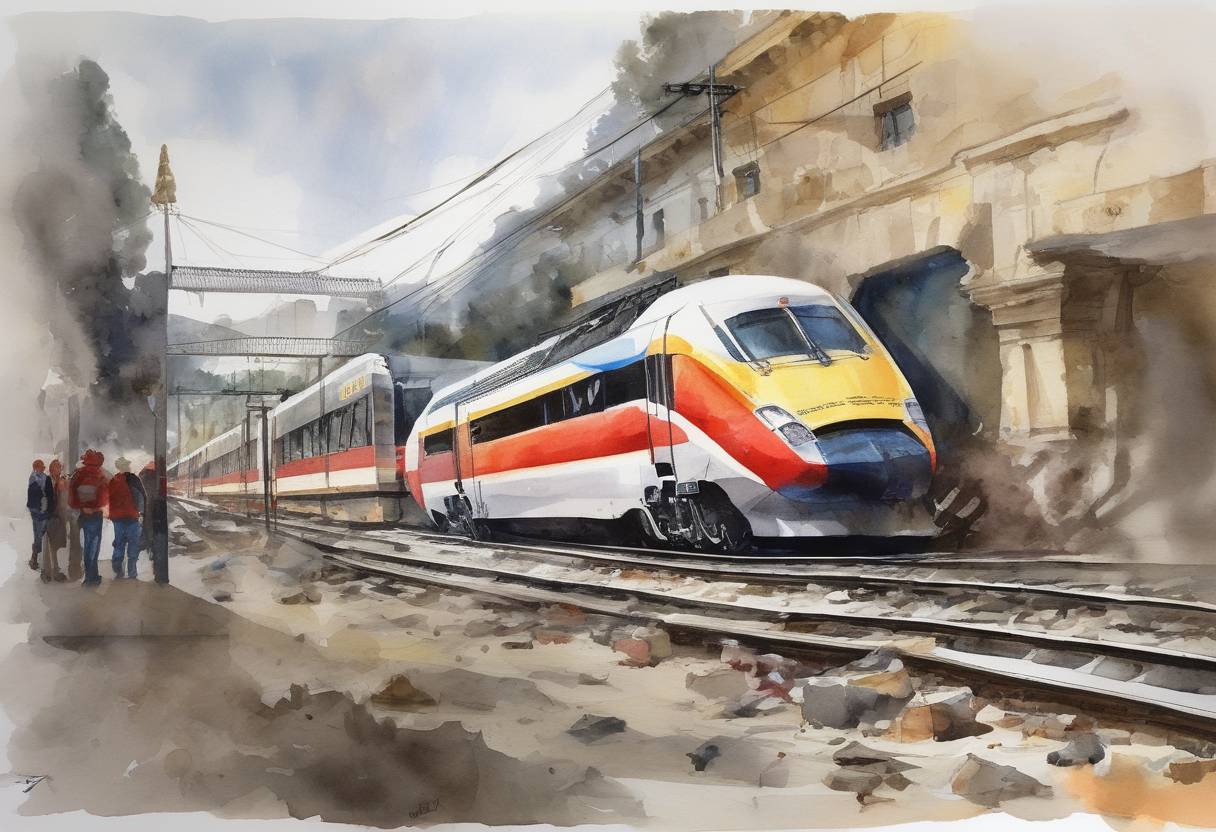
Santiago de Compostela Train Derailment - July 24, 2013
On July 24, 2013, a high-speed train derailed near Santiago de Compostela in northwestern Spain, resulting in one of the deadliest rail disasters in the country’s history. The accident claimed the lives of 79 people and injured over 140 others.
Background
The train involved in the accident was an Alvia service, operated by Renfe, Spain’s national railway company. It was traveling from Madrid to Ferrol, a city in the Galicia region. The Alvia trains are known for their ability to operate on both high-speed and conventional tracks, allowing them to serve a wide range of destinations.
The Incident
- Location: The derailment occurred on a curve known as A Grandeira, located just a few kilometers from the Santiago de Compostela station.
- Speed: At the time of the accident, the train was reportedly traveling at approximately 179 km/h (111 mph), significantly above the speed limit of 80 km/h (50 mph) for that section of track.
- Cause: The excessive speed was identified as the primary cause of the derailment. The train’s driver, Francisco José Garzón Amo, later admitted to being distracted and failing to slow down in time.
- Rescue Efforts: Emergency services quickly responded to the scene, with local residents also assisting in rescue efforts. The injured were transported to nearby hospitals, and a temporary morgue was set up to handle the fatalities.
- Investigation: An investigation was launched to determine the exact cause of the accident. It focused on the train’s speed, the driver’s actions, and the safety systems in place on that section of the track.
Consequences and Reactions
- Legal Proceedings: The train driver was charged with 79 counts of homicide by professional recklessness and numerous counts of causing injury. The investigation also scrutinized the railway infrastructure and safety protocols.
- Public Response: The tragedy prompted widespread mourning across Spain. King Juan Carlos and Prime Minister Mariano Rajoy, who is from Santiago de Compostela, visited the site and met with victims’ families.
- Safety Reforms: The accident led to calls for improved safety measures on Spanish railways, including better speed monitoring systems and enhanced driver training programs.
Broader Historical Significance
The Santiago de Compostela train derailment highlighted the critical importance of railway safety and the potential consequences of human error in high-speed rail travel. It served as a catalyst for discussions on transportation safety standards and the implementation of more rigorous safety technologies across Europe.
The disaster remains a somber reminder of the vulnerabilities in modern transportation systems and the ongoing need for vigilance and improvement in safety protocols.