Christopher Columbus' Fourth and Final Voyage
1502 · Cadiz, Spain
Christopher Columbus embarked on his fourth and final voyage to the New World, aiming to find a passage to Asia.
September 24, 1493
Christopher Columbus embarked on his second voyage to the New World, departing from Cádiz, Spain, with a fleet of 17 ships.
Cádiz, Spain | Spanish Crown
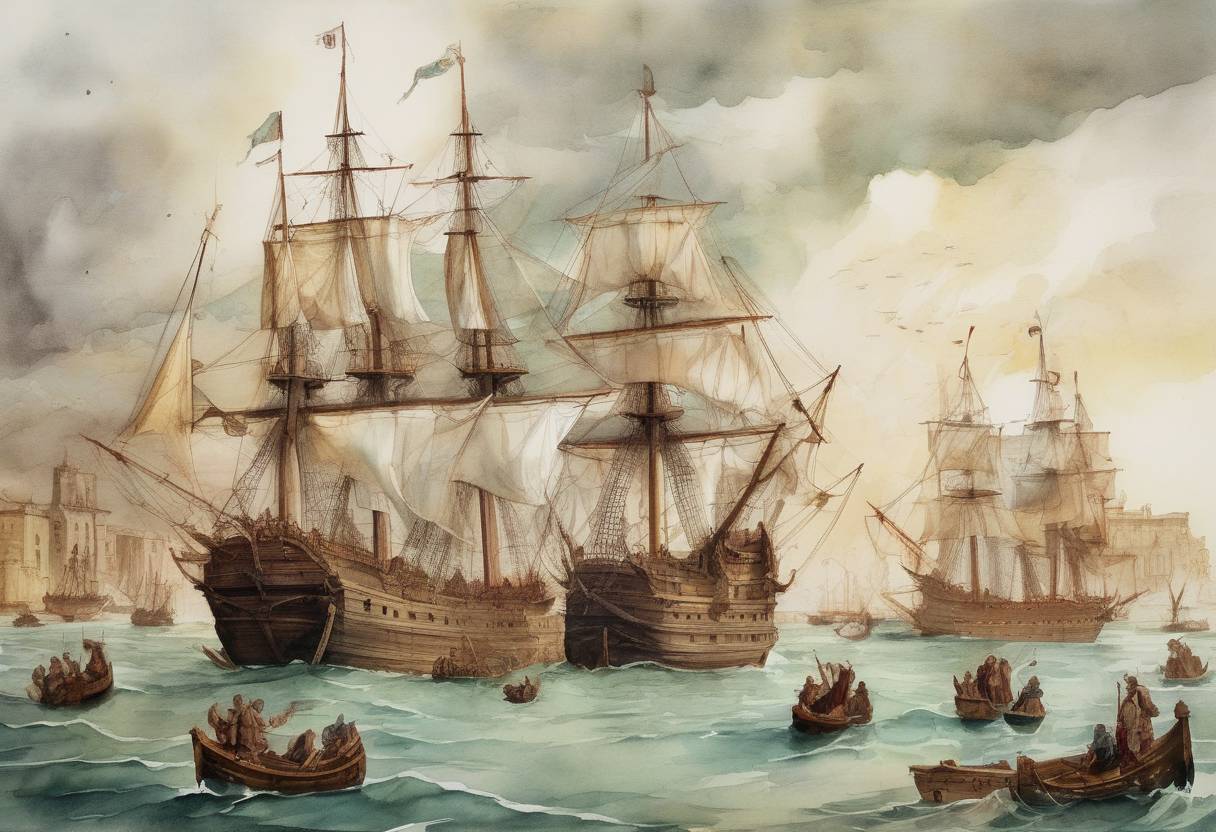
On September 24, 1493, Christopher Columbus embarked on his second voyage to the New World, departing from the port of Cádiz, Spain. This expedition marked a significant escalation in the Spanish efforts to explore and colonize the Americas following Columbus’ initial voyage in 1492.
First Voyage Success: Columbus’ first voyage in 1492 resulted in the European discovery of the Caribbean islands, including what he named San Salvador (in the present-day Bahamas), and the islands of Cuba and Hispaniola. This success spurred interest and investment from the Spanish monarchy.
Royal Support: King Ferdinand and Queen Isabella of Spain were eager to capitalize on Columbus’ discoveries. They provided substantial support for a second, larger expedition aimed at establishing a permanent Spanish presence in the New World.
Fleet Composition: Columbus’ second voyage was significantly larger than the first. He commanded a fleet of 17 ships, carrying approximately 1,200 to 1,500 men. This included soldiers, settlers, and priests, reflecting the dual goals of colonization and conversion of indigenous peoples to Christianity.
Objectives: The primary objectives of the second voyage were to explore further territories, establish Spanish settlements, and continue the search for valuable resources such as gold. Additionally, Columbus was tasked with converting the indigenous populations to Christianity.
Departure from Cádiz: The fleet set sail from Cádiz on September 24, 1493. The journey was well-planned, with provisions and supplies intended to support the establishment of new colonies.
Arrival in the Caribbean: Columbus and his fleet arrived in the Caribbean in November 1493. They explored several islands, including Dominica and Guadeloupe, before reaching Hispaniola, where Columbus had left a small settlement during his first voyage.
Settlement Efforts: Columbus established the settlement of La Isabela on the northern coast of Hispaniola, which became the first permanent European colony in the Americas. However, the settlement faced numerous challenges, including disease, food shortages, and conflicts with indigenous peoples.
Expansion of Spanish Influence: The second voyage marked the beginning of sustained Spanish colonization in the New World. It laid the groundwork for further exploration and conquest in the Americas.
Impact on Indigenous Populations: The arrival of Europeans had profound and often devastating effects on the indigenous populations, including the spread of diseases to which they had no immunity, and the beginning of a period of colonization and exploitation.
Legacy of Columbus: Columbus’ voyages opened the Americas to European exploration and colonization, significantly altering the course of world history. However, his legacy is complex, as it includes both the opening of new worlds and the negative impacts on indigenous cultures.
Columbus’ second voyage was a pivotal moment in the Age of Exploration, setting the stage for the extensive European colonization of the Americas that followed.
Source: www.history.com