Otto I Crowned King of East Francia
936 · Aachen, East Francia
Otto I is crowned King of East Francia (Germany) at Aachen Cathedral, marking the beginning of his reign.
October 2, 0939
Battle of Andernach: Otto I, King of East Francia, defeats a rebellion by his former allies.
Andernach, East Francia | East Francia
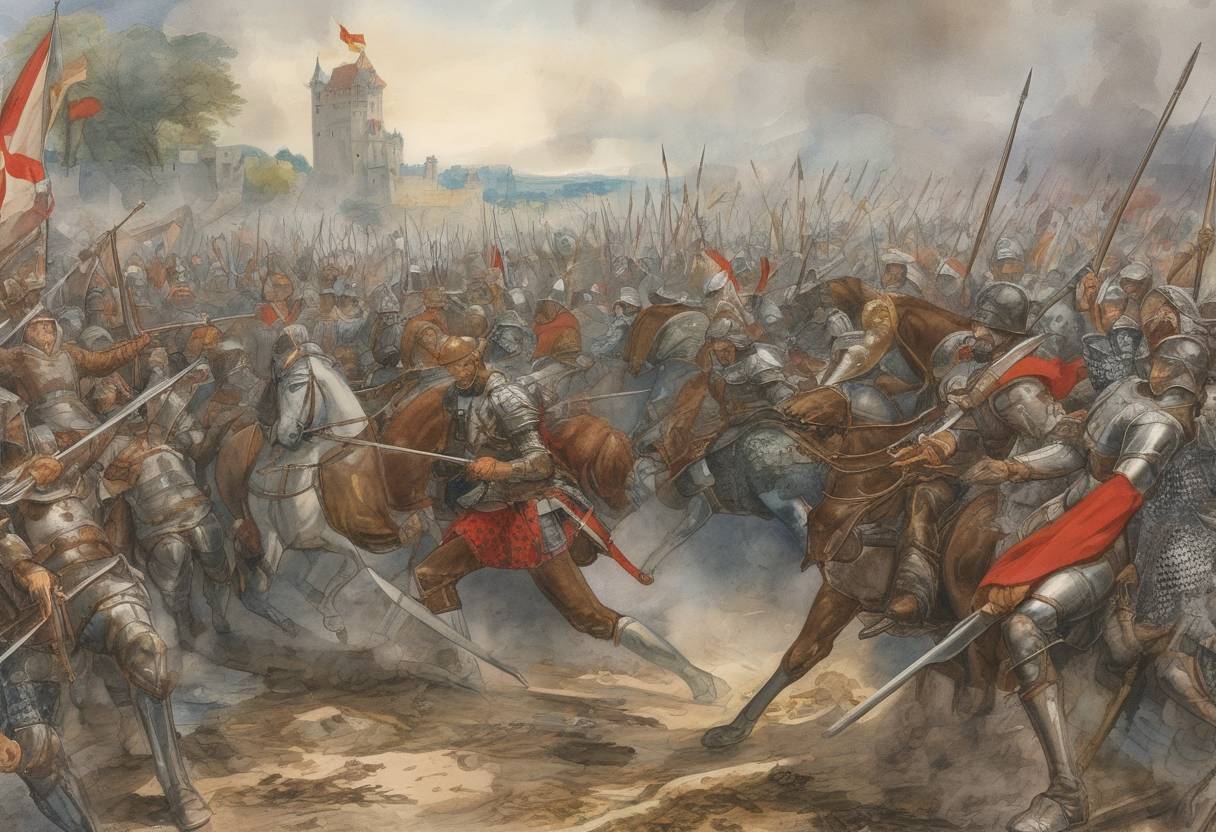
On October 2, 939, the Battle of Andernach marked a significant turning point in the reign of Otto I, King of East Francia. This battle was pivotal in consolidating Otto’s power and quelling a major rebellion by his former allies.
Otto I’s Ascension: Otto I, also known as Otto the Great, became King of East Francia in 936. His reign was characterized by efforts to strengthen royal authority and consolidate the fragmented territories of the kingdom.
Rebellion: The rebellion against Otto was led by a coalition of discontented nobles, including his own brother, Henry I, Duke of Bavaria, and Eberhard of Franconia. These nobles were dissatisfied with Otto’s centralizing policies and his attempts to diminish their regional power.
Alliances: The rebels sought support from external forces, including Louis IV of West Francia, hoping to leverage these alliances to overthrow Otto.
Location: The battle took place near Andernach, a strategic location along the Rhine River in present-day Germany.
Forces: Otto’s forces were composed of loyalist troops, including Saxons and Swabians, while the rebels fielded a formidable army bolstered by their alliances.
Outcome: Otto’s forces decisively defeated the rebels. The victory was largely attributed to Otto’s strategic acumen and the loyalty of his commanders, who managed to outmaneuver the rebel forces.
Consolidation of Power: The victory at Andernach allowed Otto to consolidate his power and reassert control over the rebellious duchies. It marked the end of significant internal opposition to his rule.
Execution and Exile: Key rebel leaders, including Eberhard of Franconia, were killed in the battle, while others, like Henry, were captured and later pardoned, though stripped of their titles.
Strengthening the Monarchy: The battle reinforced the monarchy’s authority and set a precedent for Otto’s future policies of centralization and expansion, which would eventually lead to the formation of the Holy Roman Empire.
Legacy: Otto’s victory at Andernach was a foundational moment in his reign, establishing him as a powerful and effective ruler capable of maintaining order and unity in his realm.
The Battle of Andernach thus stands as a critical event in medieval European history, illustrating the challenges of monarchical rule and the complex dynamics of power and loyalty in the early medieval period.
Source: en.wikipedia.org