Martin Luther King Jr.: Birth and Early Life
1929 · Atlanta, United States
Martin Luther King Jr., American civil rights leader, was born.
November 13, 0354
The birth of Saint Augustine of Hippo, an early Christian theologian and philosopher whose writings influenced the development of Western Christianity and Western philosophy.
Thagaste, Roman Empire (modern-day Algeria)
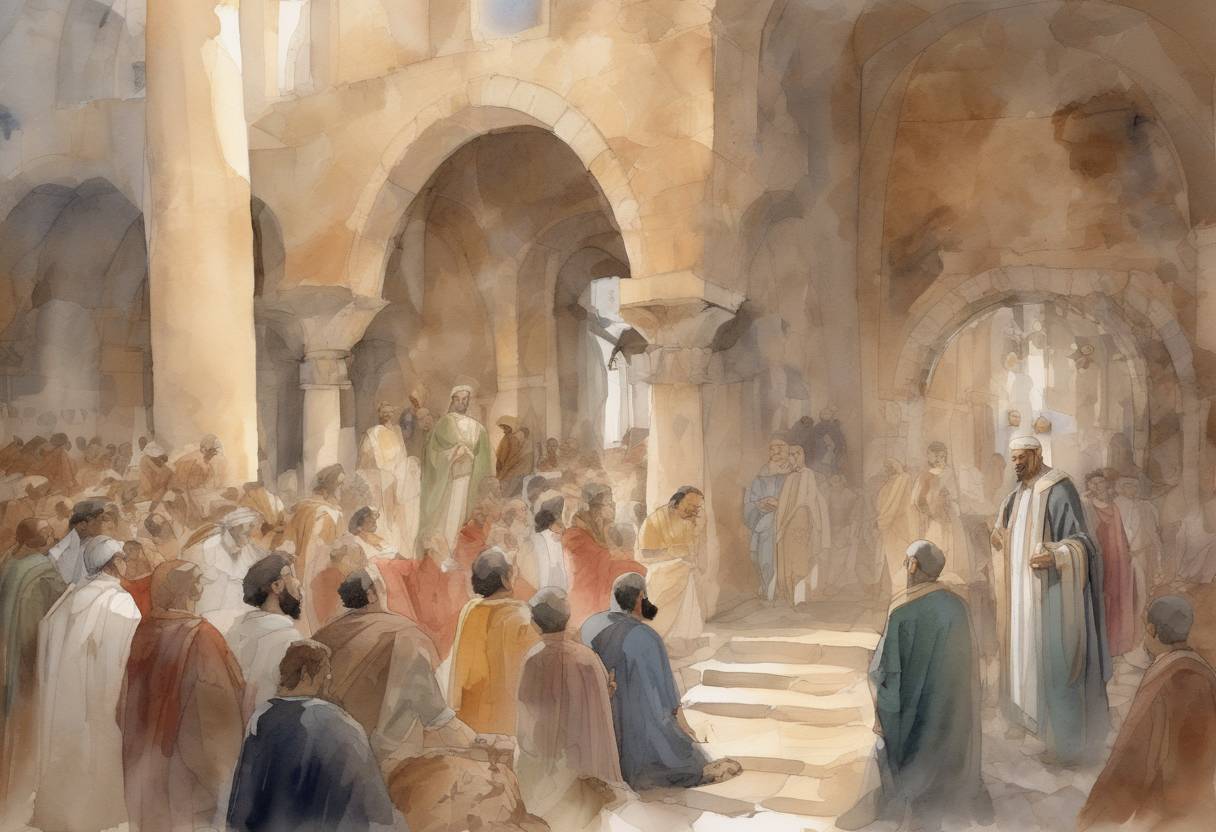
Date: November 13, 354
Location: Thagaste, Numidia (modern-day Souk Ahras, Algeria)
Saint Augustine, one of the most influential figures in Western Christianity and philosophy, was born on November 13, 354, in the Roman province of Numidia, in the town of Thagaste. His full name was Aurelius Augustinus. Augustine was born into a family of mixed religious backgrounds; his father, Patricius, was a pagan who converted to Christianity on his deathbed, while his mother, Monica, was a devout Christian who played a significant role in Augustine’s spiritual development.
Augustine received a classical education in rhetoric and philosophy, first in his hometown and later in Carthage, a major center of learning in the Roman Empire. His early life was marked by a pursuit of knowledge and a search for truth, which led him to explore various philosophical and religious systems, including Manichaeism, a dualistic religion that was popular at the time.
Despite his mother’s influence, Augustine initially resisted Christianity. However, his intellectual journey and personal struggles eventually led him to embrace the faith. His conversion was profoundly influenced by the preaching of Saint Ambrose, the Bishop of Milan, and the reading of Neoplatonic philosophy. In 386, at the age of 31, Augustine converted to Christianity, an event he famously recounted in his autobiographical work, “Confessions.”
Augustine was ordained a priest in 391 and became the Bishop of Hippo (modern-day Annaba, Algeria) in 395. He was a prolific writer, and his works have had a lasting impact on Christian theology and Western philosophy. Some of his most significant writings include:
Augustine’s thoughts on original sin, grace, and free will have been foundational to Christian doctrine. His philosophical ideas also influenced medieval scholasticism and the development of Western thought.
Saint Augustine’s contributions to theology and philosophy have made him a central figure in the history of Christianity. His works continue to be studied for their profound insights into human nature, ethics, and the relationship between faith and reason. Augustine’s legacy endures in both religious and secular contexts, underscoring his role as a pivotal thinker in the shaping of Western intellectual history.
Source: en.wikipedia.org