Establishment of the Province of Canada: Act of Union 1840
1840 · London, United Kingdom
The Province of Canada was established as a result of the Act of Union 1840 passed by the British Parliament.
January 25, 1791
The British Parliament passes the Constitutional Act of 1791, splitting the Province of Quebec into Upper and Lower Canada.
London, United Kingdom | British Parliament
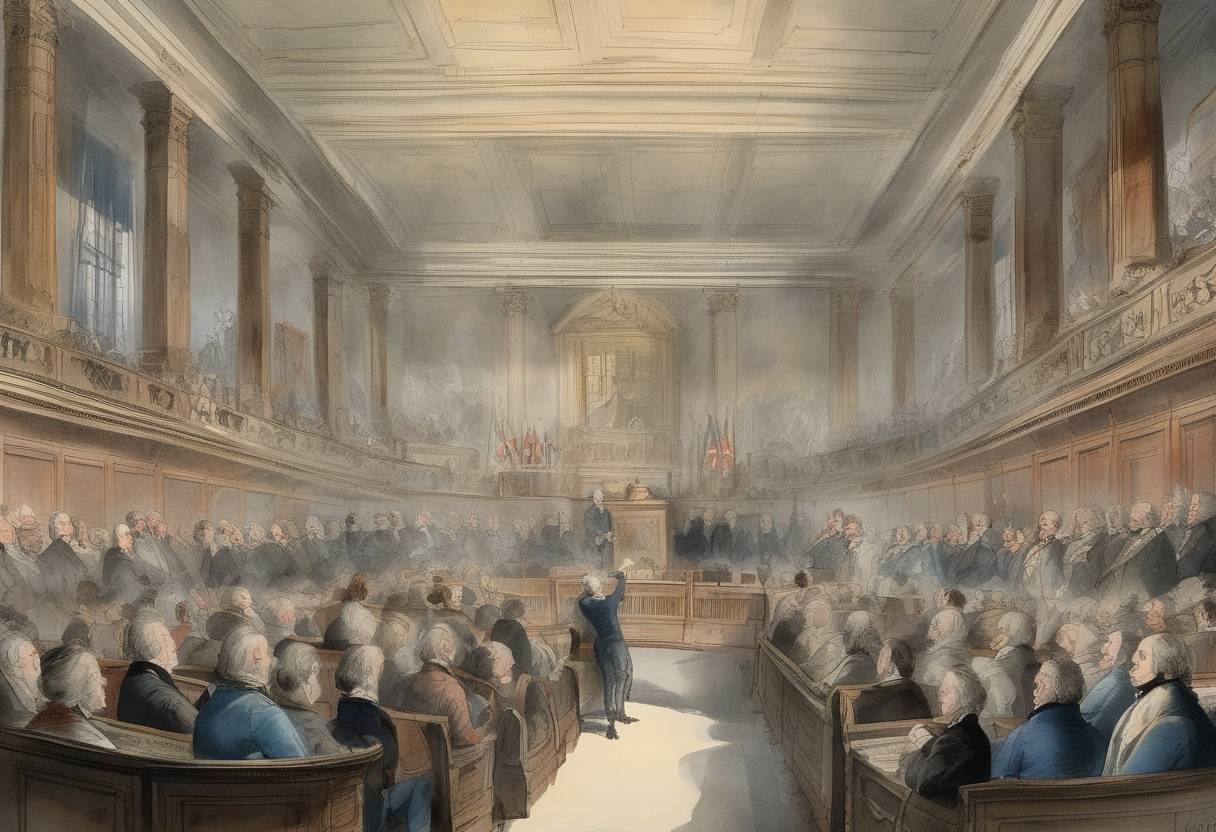
On January 25, 1791, the British Parliament passed the Constitutional Act, a significant legislative measure that restructured the governance of the Province of Quebec by dividing it into two distinct entities: Upper Canada and Lower Canada. This act was a pivotal moment in Canadian history, setting the stage for the development of modern-day Canada.
The Quebec Act of 1774: Prior to the Constitutional Act, the Quebec Act of 1774 had expanded the boundaries of Quebec and allowed French civil law and the Catholic religion to be practiced. However, this arrangement did not fully satisfy the growing number of British settlers who desired a government more reflective of British customs and laws.
Loyalist Influx: Following the American Revolutionary War, many Loyalists—colonists who remained loyal to the British Crown—migrated to Canada. This influx increased the demand for a separate administration that could cater to the English-speaking population’s needs.
Division of Quebec: The act divided the Province of Quebec into two parts:
Separate Governments: Each of the two new provinces was granted its own government, consisting of a lieutenant governor, an executive council, and a legislative assembly. This allowed for more localized governance and addressed the distinct cultural and legal needs of the two populations.
Land Tenure and Laws: The act maintained French civil law in Lower Canada, while Upper Canada adopted English common law. This legal distinction was crucial in preserving the cultural identity of the French-speaking population.
Representative Government: The establishment of legislative assemblies in both provinces marked a step towards representative government, allowing settlers to have a voice in local governance.
Cultural Preservation: The division helped preserve the French language and culture in Lower Canada, which remains a defining characteristic of Quebec today.
Foundation for Confederation: The Constitutional Act of 1791 laid the groundwork for the eventual confederation of Canada in 1867 by introducing a model of federalism that balanced regional interests.
Tensions and Rebellions: Despite its intentions, the act did not fully resolve tensions between English and French settlers, leading to political unrest and the Rebellions of 1837-1838. These events eventually prompted further reforms, including the Act of Union in 1840.
In summary, the Constitutional Act of 1791 was a crucial step in the evolution of Canadian governance, addressing immediate needs while setting the stage for future developments in the country’s political landscape.
Source: en.wikipedia.org