Construction of the Aswan High Dam Begins
1960 · Aswan, Egypt
Construction work began on the Aswan High Dam in Egypt.
July 21, 1970
The Aswan High Dam in Egypt was completed, providing significant benefits in terms of flood control, irrigation, and hydroelectric power, but also causing environmental and archaeological concerns.
Aswan, Egypt | Egyptian government
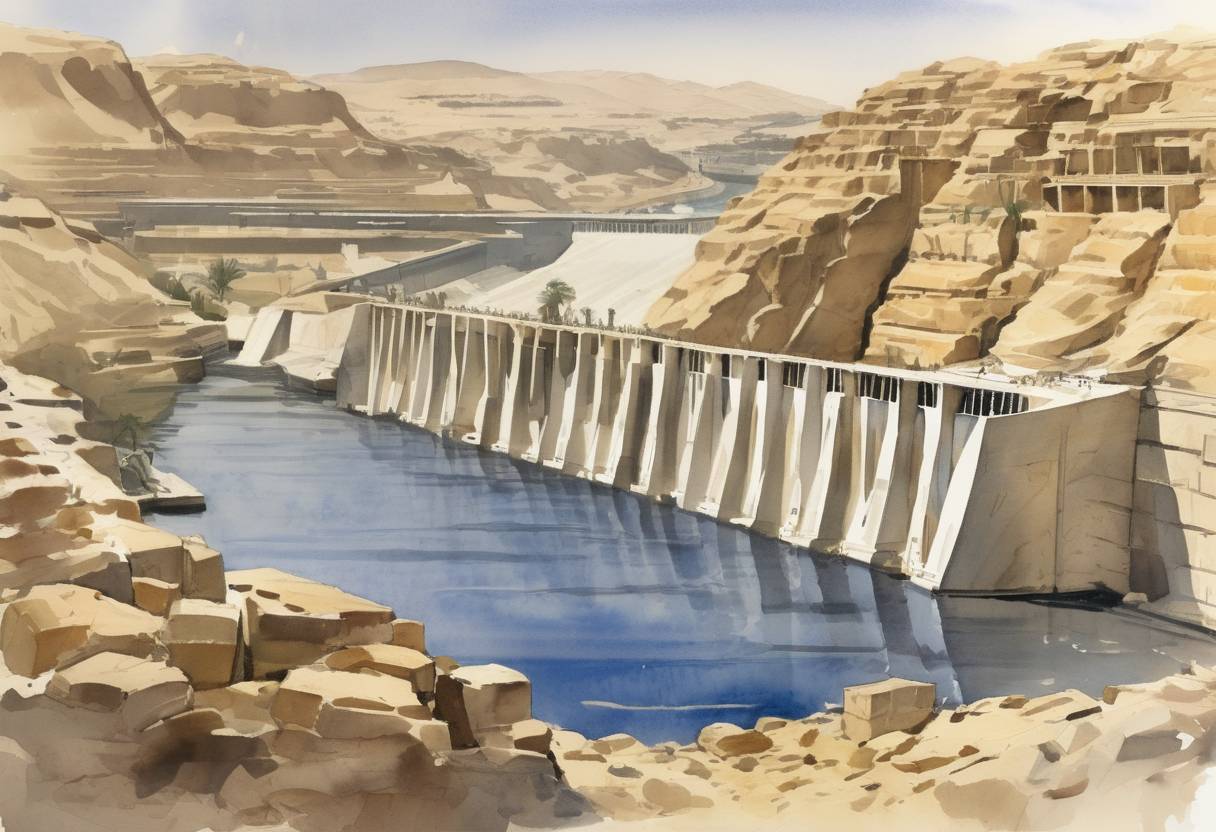
On July 21, 1970, the Aswan High Dam in Egypt was completed, marking a pivotal moment in the country’s modern history. This monumental engineering project was designed to control the annual flooding of the Nile River, provide water for irrigation, and generate hydroelectric power, significantly contributing to Egypt’s economic development.
The need for a dam on the Nile had been recognized for decades, primarily to manage the river’s unpredictable flooding, which could devastate crops and settlements. The original Aswan Low Dam, completed in 1902, was insufficient for these needs. Thus, plans for a more substantial structure began in the mid-20th century.
While the Aswan High Dam brought numerous benefits, it also raised several environmental and archaeological issues:
The completion of the Aswan High Dam was a symbol of Egypt’s post-colonial development and modernization efforts. It demonstrated the country’s ability to undertake large-scale infrastructure projects and highlighted the geopolitical dynamics of the Cold War era, with Soviet support playing a crucial role in its realization.
In summary, the Aswan High Dam remains a testament to human ingenuity and ambition, with its benefits and challenges continuing to influence Egypt’s socio-economic and environmental landscape.
Source: en.wikipedia.org