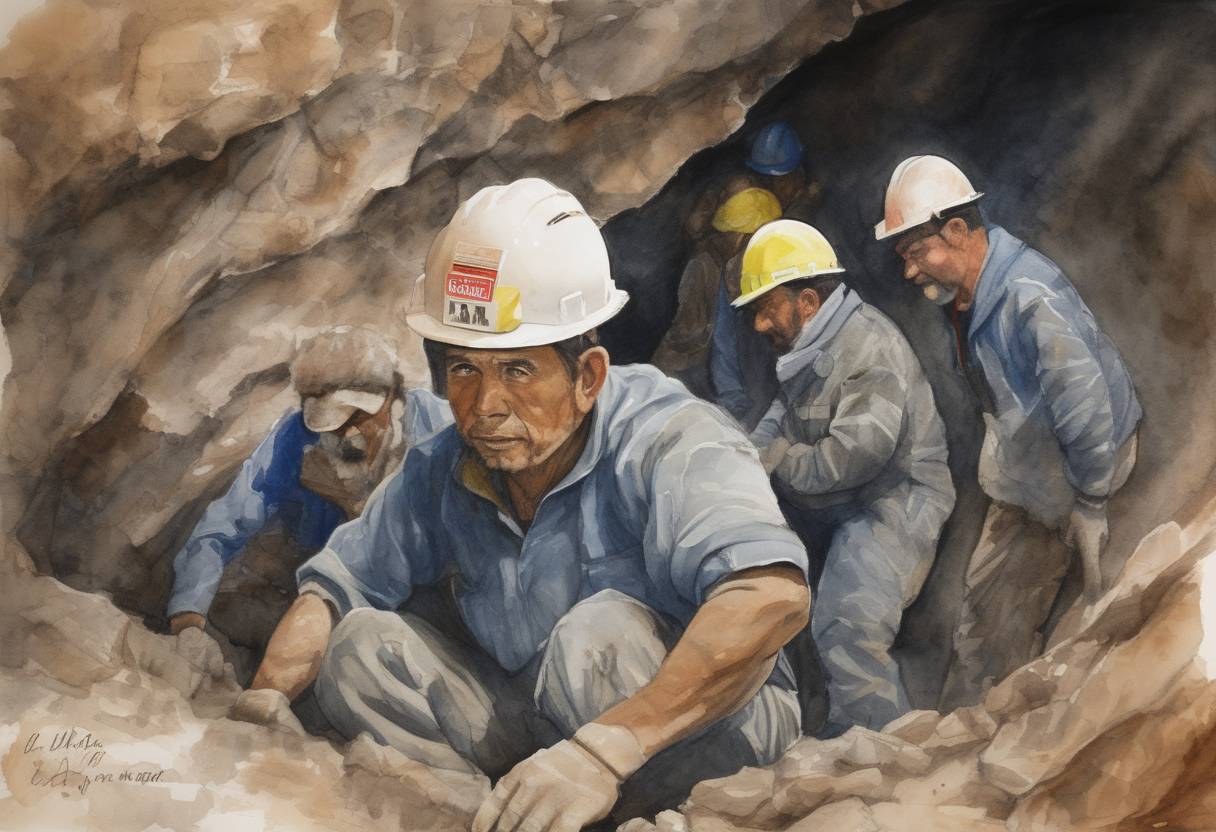
The Rescue of the Chilean Miners: October 13, 2010
On October 13, 2010, the world watched as the last of 33 miners trapped underground for 69 days in the San José mine near Copiapó, Chile, was successfully rescued. This event marked the conclusion of an extraordinary international rescue operation that captivated global attention and demonstrated remarkable human resilience and cooperation.
Background
The San José mine, primarily a copper and gold mine, is located in the Atacama Desert of northern Chile. On August 5, 2010, a cave-in occurred, trapping 33 miners approximately 700 meters (about 2,300 feet) underground. The miners were confined in a small refuge area with limited food and water supplies.
The Rescue Operation
The rescue operation, known as “Operación San Lorenzo,” was a complex and multinational effort involving engineers, drilling experts, and support from various countries. Key elements of the operation included:
Drilling Plans: Three separate drilling plans, labeled Plan A, B, and C, were devised to reach the miners. Plan B, using a Schramm T130XD air drill, ultimately succeeded in creating a borehole wide enough to extract the miners.
Communication and Supplies: Rescuers established communication with the miners 17 days after the collapse. They sent food, water, and medical supplies through narrow boreholes, which sustained the miners during their ordeal.
The Phoenix Capsule: A specially designed capsule named “Fénix” (Phoenix) was constructed to hoist the miners to the surface one by one. The capsule was equipped with oxygen and communication systems to ensure the safety of each miner during the ascent.
The Rescue
The rescue operation began on October 12, 2010, and continued into the early hours of October 13. Each miner was brought to the surface in a carefully coordinated sequence, with the entire process taking nearly 24 hours. The last miner, Luis Urzúa, emerged from the mine at 9:55 PM local time on October 13, completing the rescue.
Aftermath and Significance
The successful rescue of the Chilean miners was celebrated worldwide as a triumph of human spirit and international collaboration. It highlighted the importance of safety regulations in mining operations and led to increased scrutiny and improvements in mining safety standards globally.
The miners’ ordeal and rescue were documented in various media, including books and films, serving as a testament to human endurance and the power of hope and teamwork in the face of adversity. The event remains a significant moment in modern history, symbolizing the potential for unity and innovation in overcoming seemingly insurmountable challenges.