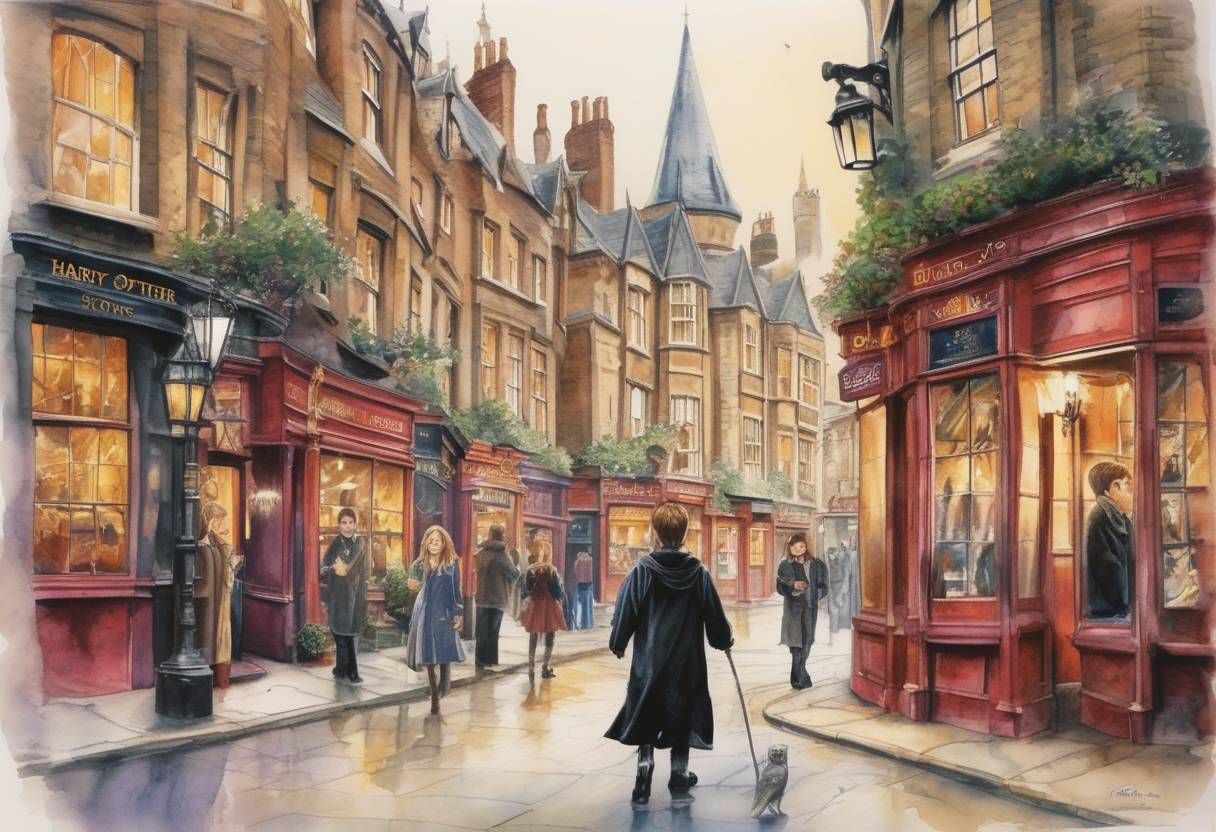
Premiere of “Harry Potter and the Philosopher’s Stone”
On November 4, 2001, the much-anticipated film “Harry Potter and the Philosopher’s Stone” premiered in London. This event marked the beginning of a cinematic journey that would captivate audiences worldwide and become a cultural phenomenon.
Background
The film is an adaptation of J.K. Rowling’s debut novel, “Harry Potter and the Philosopher’s Stone,” published in 1997. The book quickly gained immense popularity, leading to a series that would eventually consist of seven novels. The story follows a young boy, Harry Potter, who discovers on his eleventh birthday that he is a wizard and has been accepted to attend Hogwarts School of Witchcraft and Wizardry.
Key Details of the Premiere
- Date and Location: The premiere took place on November 4, 2001, at the Odeon Leicester Square in London.
- Director: The film was directed by Chris Columbus, known for his work on family-friendly films such as “Home Alone.”
- Cast: The film introduced audiences to Daniel Radcliffe as Harry Potter, Rupert Grint as Ron Weasley, and Emma Watson as Hermione Granger. The cast also included notable actors such as Richard Harris, Maggie Smith, and Alan Rickman.
- Title Variation: In the United States, the film was released under the title “Harry Potter and the Sorcerer’s Stone,” a change made by the American publisher to appeal to the U.S. market.
Reception and Impact
- Box Office Success: The film was a commercial success, grossing over $974 million worldwide, making it the highest-grossing film of 2001.
- Critical Acclaim: It received positive reviews for its faithful adaptation of the book, the performances of the young cast, and its visual effects.
- Cultural Impact: The film’s success helped solidify the Harry Potter series as a significant cultural and literary phenomenon. It paved the way for seven more films, creating a franchise that would become one of the most successful in cinematic history.
Aftermath
The success of “Harry Potter and the Philosopher’s Stone” set the stage for the continuation of the film series, with each subsequent movie contributing to the growth of the Harry Potter universe. The franchise has since expanded beyond films, including theme parks, merchandise, and a spin-off film series, “Fantastic Beasts.”
In summary, the premiere of “Harry Potter and the Philosopher’s Stone” on November 4, 2001, was a landmark event in film history, marking the beginning of a beloved series that continues to enchant audiences around the world.