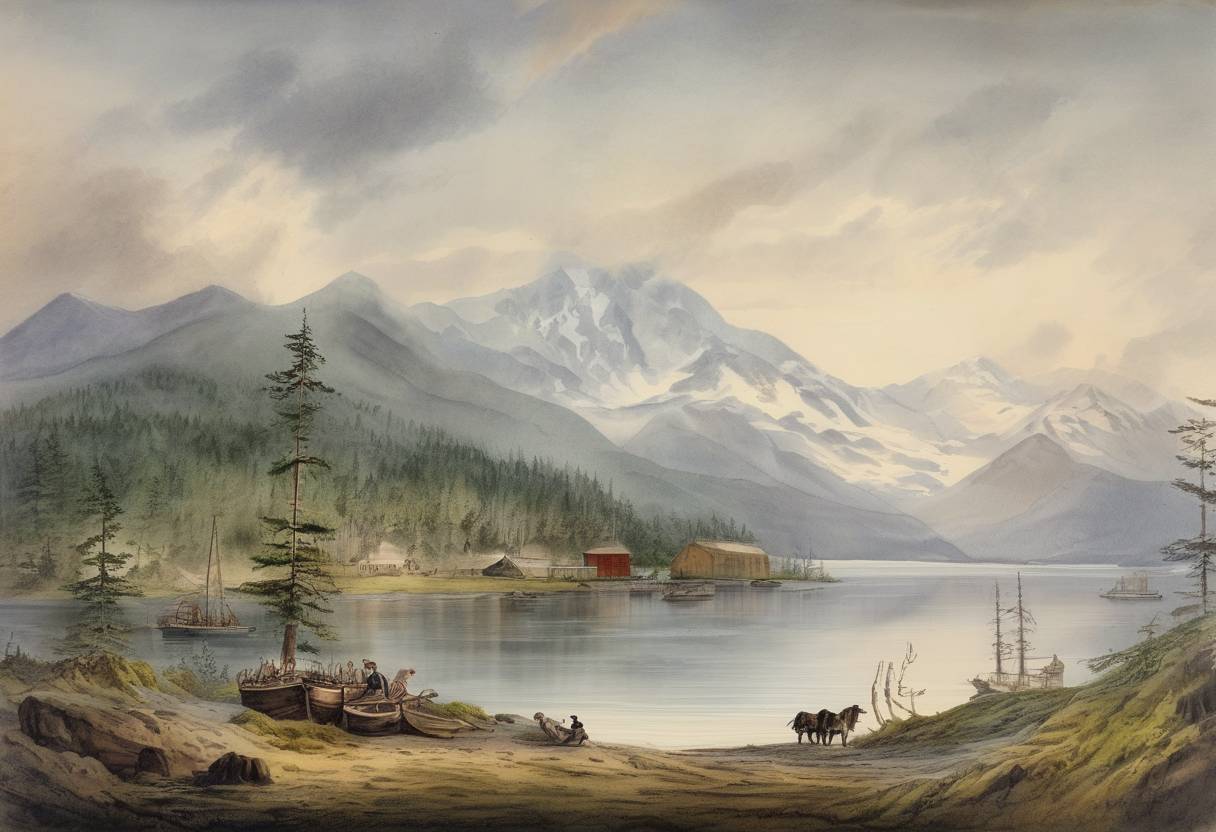
On October 18, 1867, the United States formally took possession of Alaska from Russia, marking the culmination of a significant transaction known as the Alaska Purchase. This event was a pivotal moment in American expansion and had lasting implications for both nations involved.
Background
The idea of the United States acquiring Alaska was largely driven by the vision of Secretary of State William H. Seward. In the mid-19th century, Russia, which had established a presence in Alaska since the late 18th century, found the territory increasingly difficult to defend and economically burdensome. The Russian Empire, under Tsar Alexander II, was also concerned about the potential threat from British forces in neighboring Canada.
Negotiations between the United States and Russia began in earnest in 1867. On March 30 of that year, the two countries reached an agreement, with the U.S. agreeing to purchase Alaska for $7.2 million, roughly two cents per acre. This deal was initially met with skepticism and derision by some Americans, who referred to it as “Seward’s Folly” or “Seward’s Icebox,” questioning the value of the seemingly barren and remote land.
The formal transfer of Alaska took place on October 18, 1867, in a ceremony held at Fort Sitka. The event was marked by the lowering of the Russian flag and the raising of the American flag, symbolizing the official handover of the territory. American troops, led by General Lovell Rousseau, took possession of the land, and the day was later commemorated as Alaska Day, a state holiday.
Aftermath and Significance
The acquisition of Alaska proved to be a strategic and resource-rich addition to the United States. Initially underestimated, the territory would later reveal vast natural resources, including gold, oil, and natural gas, contributing significantly to the U.S. economy. The purchase also expanded American territory by approximately 586,412 square miles, enhancing its geopolitical influence in the North Pacific region.
The Alaska Purchase is now regarded as a visionary move that underscored the United States’ commitment to expansion and development. It set the stage for further American interests in the Pacific and Arctic regions and remains a testament to the foresight of leaders like William H. Seward.
In summary, the formal transfer of Alaska on October 18, 1867, was a landmark event in American history, transforming the nation’s landscape and economic potential while highlighting the complex interplay of international diplomacy and domestic policy.