Banner Coal Mine Explosion - September 25, 1911
1911 · Banner, United States
An explosion occurred at the Banner Coal Mine in Banner, Illinois, resulting in the deaths of eight miners.
March 10, 1906
The Courrières mine disaster in France kills 1,099 miners, making it Europe's worst mining accident.
Courrières, France | Courrières Mining Company
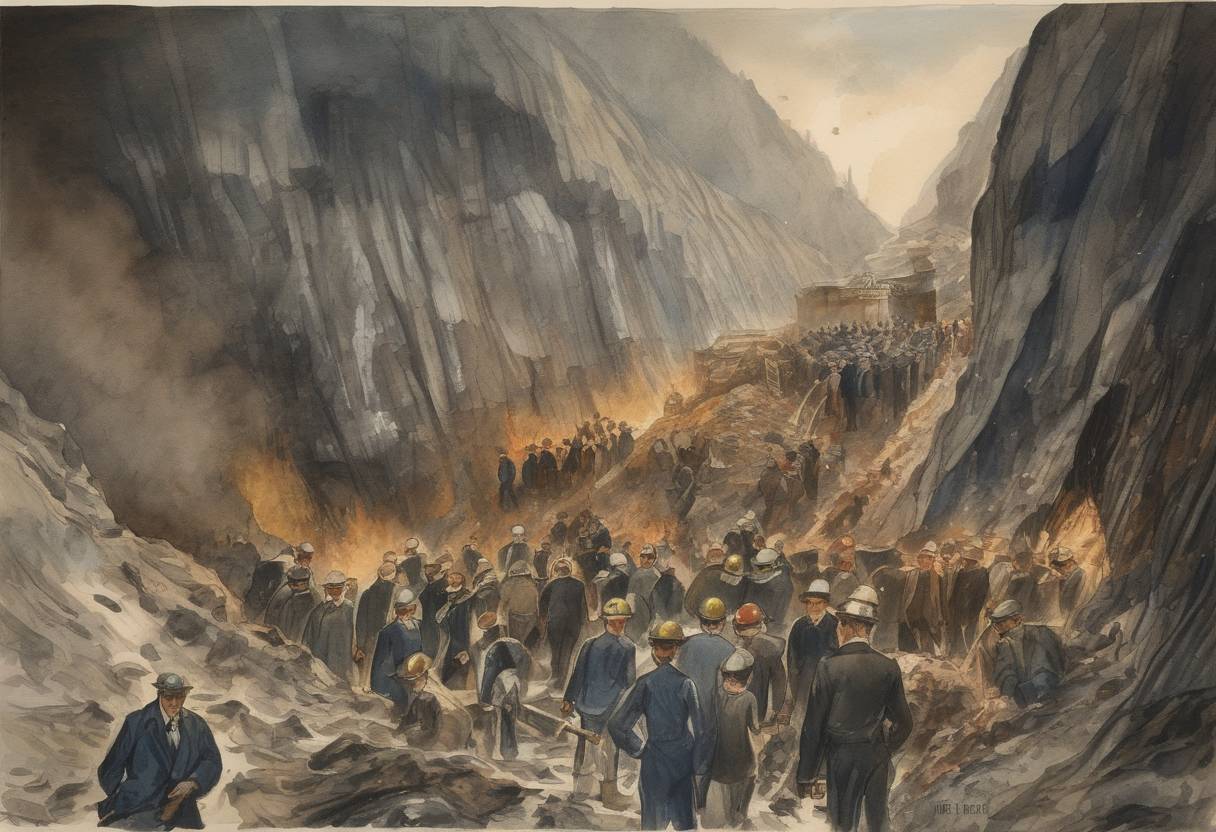
On March 10, 1906, the Courrières mine disaster occurred in northern France, marking the deadliest mining accident in European history. This catastrophic event resulted in the deaths of 1,099 miners, leaving a profound impact on the mining industry and labor movements across Europe.
The Courrières mining complex, located in the Pas-de-Calais region, was one of the largest coal mines in France at the time. The mine employed thousands of workers, many of whom were subjected to harsh and dangerous working conditions typical of the early 20th century mining industry.
The disaster struck on the morning of March 10, 1906, when a massive explosion ripped through the mine. The exact cause of the explosion remains uncertain, but it is believed to have been triggered by a combination of coal dust and methane gas, both highly combustible substances found in coal mines.
The explosion caused extensive damage, collapsing tunnels and trapping hundreds of miners underground. The force of the blast was so powerful that it was felt miles away, and fires ignited by the explosion further complicated rescue efforts.
Rescue operations were launched immediately, but they were severely hampered by the fires, toxic gases, and unstable conditions within the mine. Despite the efforts of rescue teams, including miners from neighboring regions and international experts, the majority of those trapped could not be saved.
Remarkably, 13 miners were found alive 20 days after the explosion, having survived in a pocket of air deep within the mine. Their rescue provided a glimmer of hope amidst the tragedy, but it also highlighted the dire conditions faced by those who perished.
The Courrières disaster had significant repercussions:
Labor Movements: The tragedy fueled labor unrest and demands for better working conditions, safety regulations, and miners’ rights. It became a rallying point for labor unions and contributed to the growth of the labor movement in France and beyond.
Safety Reforms: The disaster prompted widespread calls for improved safety standards in mines. It led to increased scrutiny of mining practices and eventually resulted in stricter regulations aimed at preventing similar catastrophes.
Public Outcry: The scale of the disaster and the perceived inadequacy of the initial rescue efforts led to public outrage. It exposed the vulnerabilities and risks faced by miners, drawing attention to the need for reform in the industry.
The Courrières mine disaster remains a somber reminder of the dangers inherent in the mining industry during the early 20th century. It underscored the importance of safety and regulation in industrial work environments and left a lasting legacy on labor rights and safety standards in Europe.
Source: en.wikipedia.org