The First Use of Tanks in Warfare: Battle of the Somme, September 15, 1916
1916 · Somme, France
The first use of tanks in warfare occurred during the Battle of the Somme in World War I, marking a significant development in military technology.
July 1, 1916
The Battle of the Somme begins during World War I, resulting in over one million casualties.
Somme, France | Allied and Central Powers
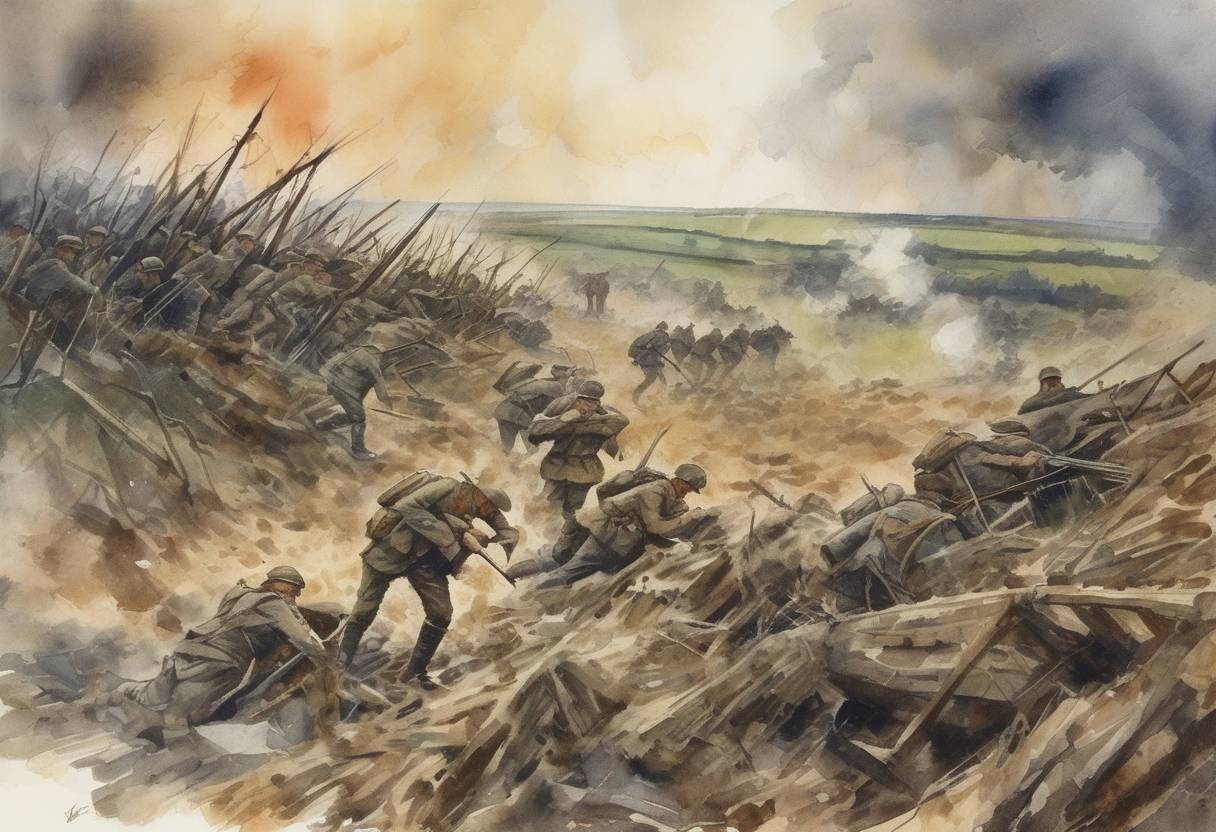
The Battle of the Somme, one of the largest and bloodiest battles of World War I, commenced on July 1, 1916. This battle, fought between the forces of the British and French Empires against the German Empire, marked a significant and tragic chapter in military history due to its immense scale and the staggering number of casualties.
Strategic Objectives: The battle was primarily intended to relieve pressure on the French forces at Verdun and to weaken the German army by inflicting heavy losses. The Allied forces aimed to break through German defenses and achieve a decisive victory on the Western Front.
Preparations: The British and French forces prepared extensively for the offensive, which included a week-long artillery bombardment intended to destroy German defenses and barbed wire. However, the bombardment failed to achieve its intended effect, leaving many German positions intact.
The Offensive Begins: At 7:30 AM on July 1, 1916, the first wave of British troops went “over the top” from their trenches, advancing across no man’s land towards the German lines. The French launched their attack slightly later, with more success due to better artillery support and less fortified German positions.
Casualties: The first day of the battle was the bloodiest in British military history, with nearly 60,000 British soldiers killed, wounded, or missing. The high casualties were due to strong German defenses, including machine-gun nests that were largely undamaged by the preliminary bombardment.
Duration: The Battle of the Somme continued for 141 days, ending on November 18, 1916. The battle saw numerous phases, with both sides launching attacks and counterattacks.
Casualties: By the end of the battle, over one million men from all sides were wounded or killed, making it one of the costliest battles in human history.
Territorial Gains: The Allies gained approximately 6 miles (10 km) of territory, a relatively small advance given the scale of the battle and the losses incurred.
Military Tactics: The Battle of the Somme highlighted the brutal realities of trench warfare and the limitations of contemporary military tactics, particularly the reliance on massive infantry assaults against fortified positions.
Technological Developments: The battle saw the first use of the tank in warfare by the British, marking a significant development in military technology, although their initial impact was limited.
Impact on Morale: The immense loss of life had a profound impact on public perception and morale in the participating countries, influencing military and political strategies in the subsequent years of the war.
The Battle of the Somme remains a poignant reminder of the human cost of war and the challenges of early 20th-century military strategy. It serves as a critical study in the evolution of warfare and the enduring quest for peace.
Source: en.wikipedia.org