Establishment of the World Trade Organization (WTO) - April 15, 1994
1994 · Geneva, Switzerland
The World Trade Organization was established, marking a significant event in global trade relations.
December 15, 1993
The Uruguay Round of General Agreement on Tariffs and Trade (GATT) negotiations concludes after seven years, leading to the creation of the World Trade Organization (WTO).
Geneva, Switzerland | GATT
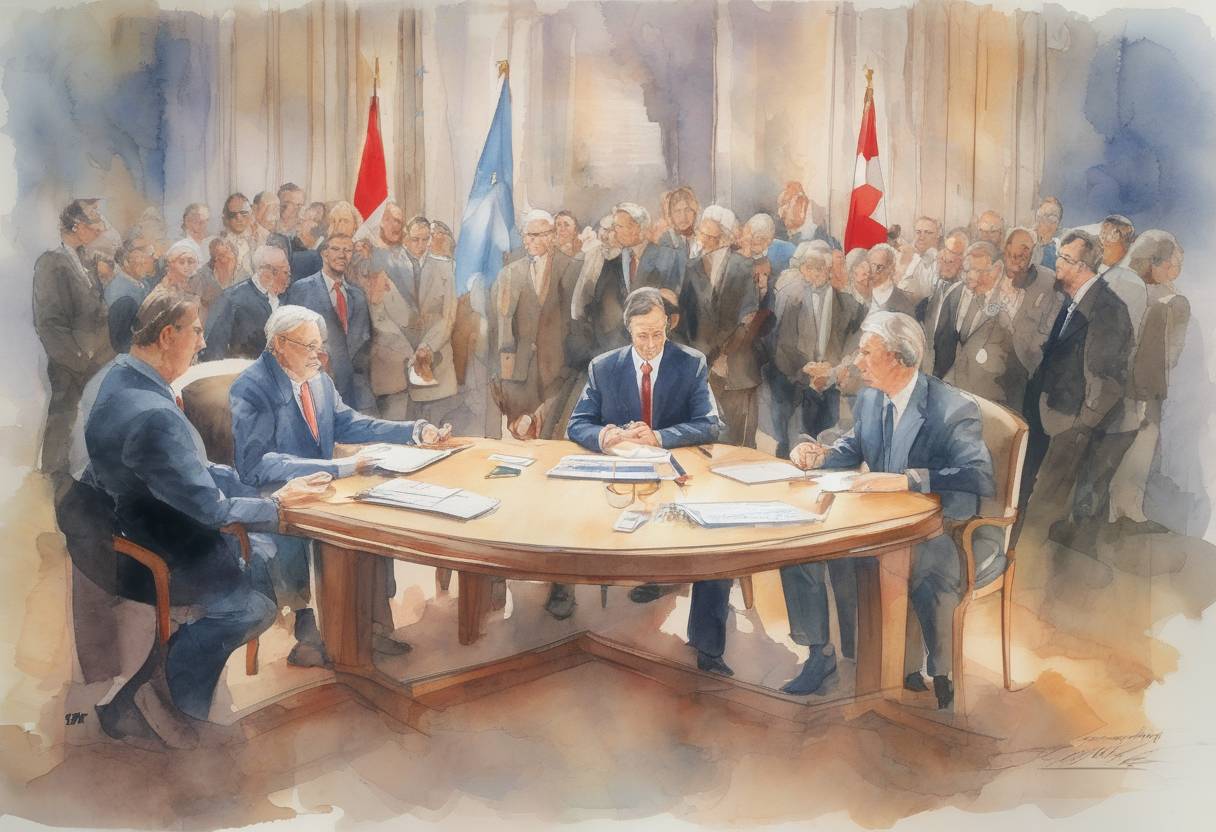
On December 15, 1993, the Uruguay Round of negotiations under the General Agreement on Tariffs and Trade (GATT) concluded after seven years of complex discussions. This pivotal moment in international trade history led to the establishment of the World Trade Organization (WTO), which officially came into being on January 1, 1995.
The Uruguay Round was the eighth round of multilateral trade negotiations conducted within the framework of GATT, which was established in 1947 to promote international trade by reducing tariffs and other trade barriers. The negotiations began in Punta del Este, Uruguay, in September 1986, with the aim of addressing a wide range of trade issues, including:
The Uruguay Round was marked by intense negotiations and numerous challenges, including disagreements between developed and developing countries, particularly over agricultural subsidies and market access. The round faced several deadlocks, but significant breakthroughs occurred in the early 1990s, leading to the final agreement.
The conclusion of the Uruguay Round resulted in the signing of the Marrakesh Agreement in April 1994, which established the WTO. The WTO replaced GATT as the primary international body governing trade, with a broader mandate and a more robust institutional framework.
The conclusion of the Uruguay Round and the creation of the WTO marked a significant shift in the global trading system. It represented a move towards greater liberalization and integration of the world economy, with an emphasis on rules-based trade. The agreements reached during the round have had lasting impacts on global trade patterns and economic policies, influencing subsequent trade negotiations and shaping the modern international economic landscape.
In summary, the successful conclusion of the Uruguay Round on December 15, 1993, was a landmark achievement in international trade, laying the foundation for the WTO and setting the stage for a new era of global economic cooperation.
Source: en.wikipedia.org