First Photograph of Earth from Outer Space
1946 · White Sands Missile Range, United States
A camera on board the V-2 No. 13 rocket took the first photograph of Earth from outer space.
June 14, 1949
Albert II, a rhesus monkey, rides a V-2 rocket to an altitude of 83 miles, becoming the first monkey in space.
White Sands, United States | U.S. Army
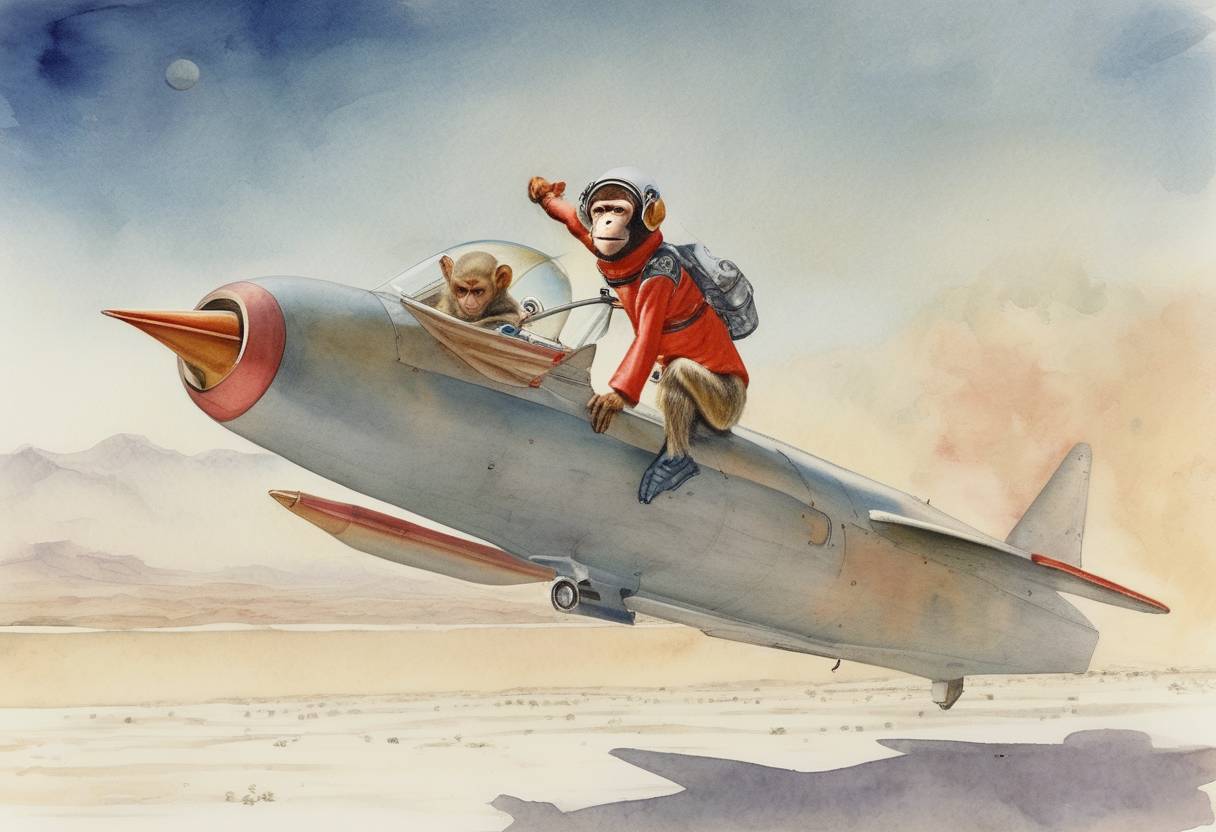
On June 14, 1949, Albert II, a rhesus monkey, made history by becoming the first monkey to travel to space. This significant event took place during a period of intense scientific exploration and experimentation in the early stages of space research.
The use of animals in space research was primarily aimed at understanding the biological effects of space travel, particularly the impact of high-altitude and zero-gravity environments on living organisms. The United States, in the aftermath of World War II, acquired several V-2 rockets from Germany. These rockets, originally developed by the Nazis, were repurposed by American scientists for high-altitude research.
Albert II’s journey began at the White Sands Proving Ground in New Mexico. He was placed inside a specially designed capsule atop a V-2 rocket. The mission aimed to reach an altitude that would provide valuable data on the effects of space travel on biological organisms.
Albert II’s flight marked the first time a primate had been sent into space, surpassing the Kármán line, which is commonly recognized as the boundary of space at 100 kilometers (62 miles) above Earth.
Unfortunately, Albert II did not survive the mission. Although the launch itself was successful, a parachute failure during the descent resulted in a fatal impact. Despite this tragic outcome, the mission provided crucial data that informed future space missions and the development of life-support systems for human spaceflight.
Albert II’s journey paved the way for subsequent missions involving animals, which eventually led to human space exploration. His flight underscored the importance of understanding the physiological challenges of space travel and contributed to the advancements that would later enable humans to venture beyond Earth’s atmosphere.
Albert II’s mission was a stepping stone in the broader context of the space race, which saw the United States and the Soviet Union competing to achieve significant milestones in space exploration. The data gathered from these early missions with animals were instrumental in ensuring the safety and success of human astronauts in the years that followed.
In summary, Albert II’s flight on June 14, 1949, represents a pivotal moment in the history of space exploration, highlighting both the risks and the scientific progress that characterized the early years of the space age.
Source: en.wikipedia.org