Napoleon Bonaparte's Abdication and Exile to Elba - April 11, 1814
1814 · Paris, France
Napoleon Bonaparte abdicated as Emperor of the French and was exiled to the island of Elba, marking the end of his rule in France.
December 2, 1804
Napoleon Bonaparte was crowned Emperor of the French at Notre-Dame Cathedral in Paris.
Paris, France | French Empire
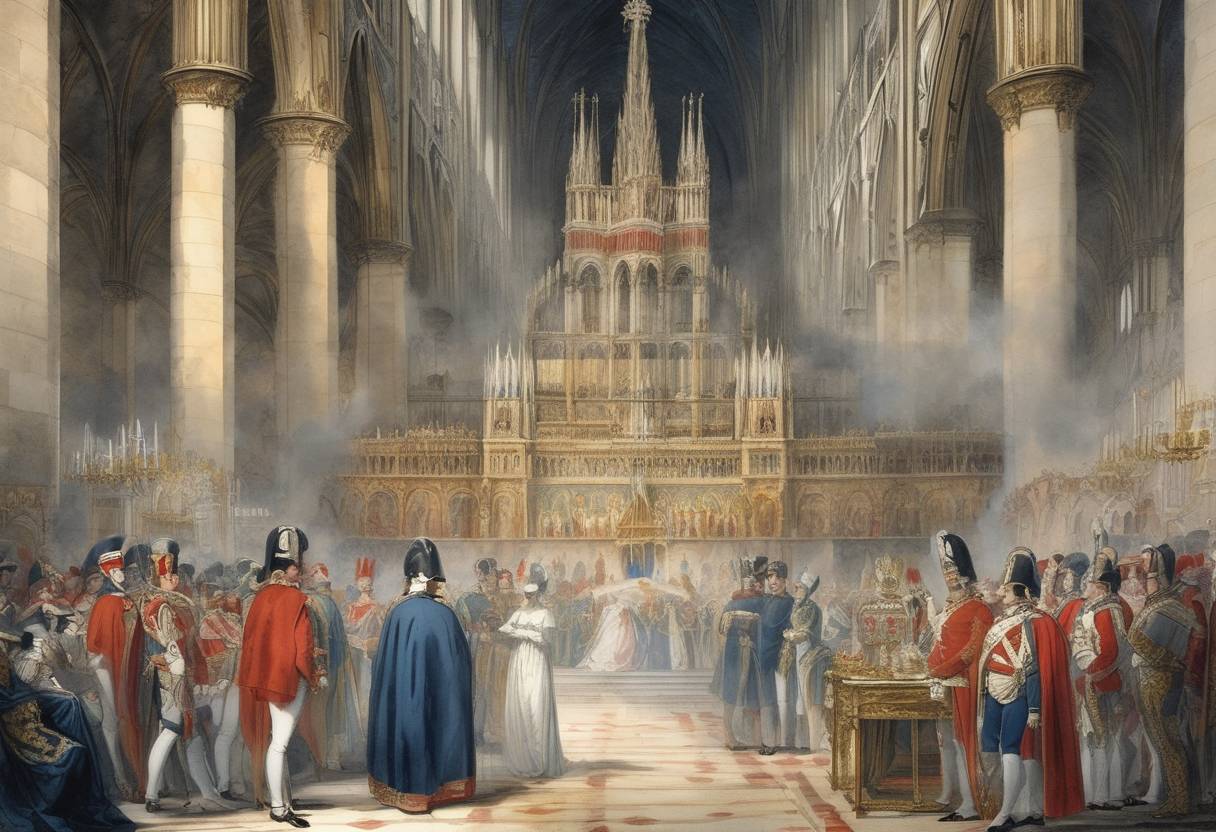
On December 2, 1804, Napoleon Bonaparte was crowned Emperor of the French in a grand ceremony held at Notre-Dame Cathedral in Paris. This event marked a pivotal moment in French history, symbolizing the transition from the revolutionary period to the establishment of the Napoleonic Empire.
Rise to Power: Napoleon Bonaparte, a military general, rose to prominence during the French Revolution. His successful campaigns in Italy and Egypt bolstered his reputation, leading to his coup d’état in 1799, which established him as the First Consul of France.
Consolidation of Power: Over the next few years, Napoleon consolidated his power, implementing reforms that stabilized the French economy and government. In 1802, he was declared Consul for Life, further solidifying his control.
Proclamation of the Empire: In May 1804, the French Senate declared Napoleon as Emperor, a move ratified by a plebiscite in November of the same year. This transition was seen as a means to provide France with stable leadership and to legitimize Napoleon’s rule.
Venue and Attendees: The coronation took place at the iconic Notre-Dame Cathedral, a site chosen for its historical and religious significance. The ceremony was attended by numerous dignitaries, including Pope Pius VII, who had been invited to bless the coronation.
Symbolic Acts: In a notable departure from tradition, Napoleon crowned himself, placing the crown on his own head. This act symbolized his authority and independence from the Church and other traditional powers. He then crowned his wife, Josephine, as Empress.
Ceremonial Details: The event was meticulously planned, featuring elaborate decorations and a procession. Napoleon wore a lavish coronation robe, and the ceremony included the use of the imperial regalia, such as the scepter and the hand of justice.
Establishment of the Empire: The coronation solidified the establishment of the First French Empire, with Napoleon as its leader. This marked the end of the French Consulate and the beginning of a new era in French governance.
Impact on Europe: Napoleon’s coronation and subsequent reign had profound effects on Europe, leading to a series of military campaigns known as the Napoleonic Wars. These conflicts reshaped the political landscape of the continent.
Legacy: Napoleon’s rule brought significant administrative and legal reforms, including the Napoleonic Code, which influenced legal systems worldwide. However, his imperial ambitions also led to widespread conflict and eventual downfall.
In summary, Napoleon Bonaparte’s coronation as Emperor was a defining moment in French history, symbolizing both the culmination of his rise to power and the beginning of an era that would have lasting impacts on France and Europe.
Source: en.wikipedia.org