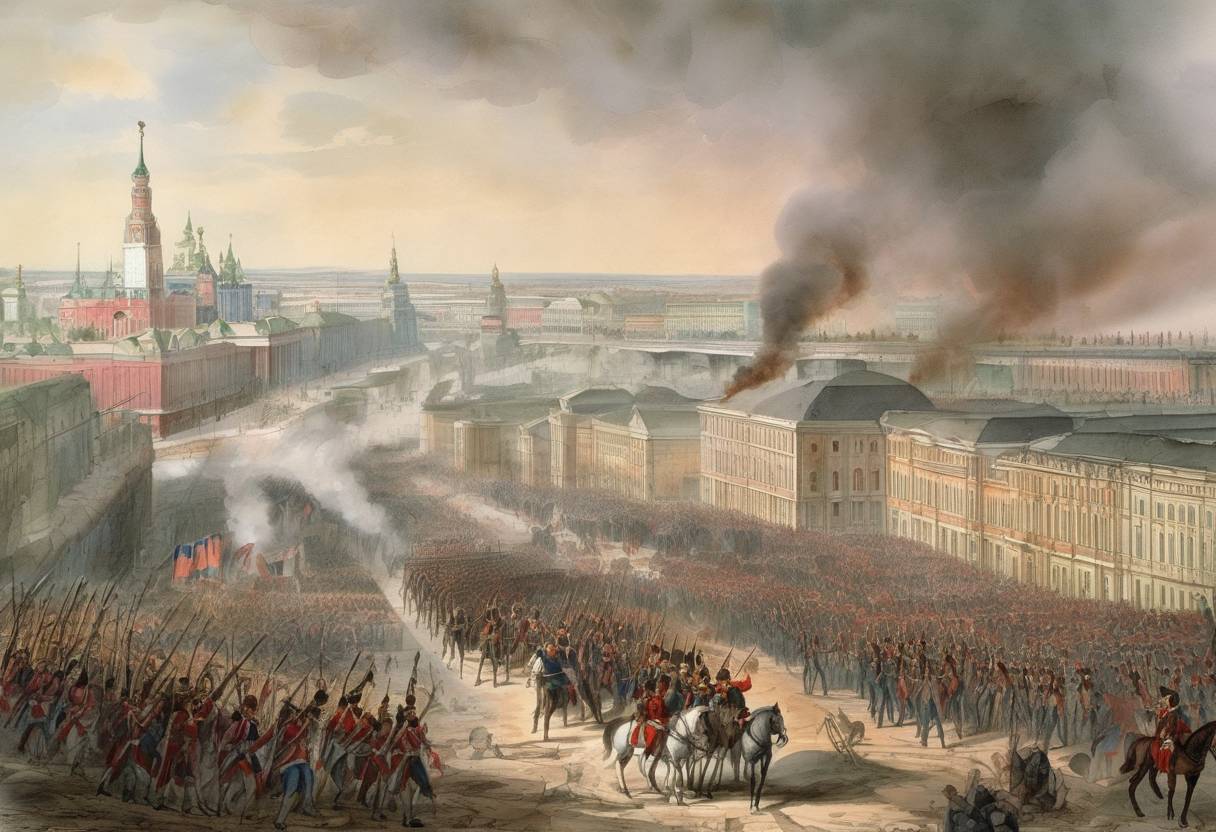
Napoleon’s Entry into Moscow: September 14, 1812
On September 14, 1812, during the Napoleonic Wars, Napoleon Bonaparte’s Grand Armée entered Moscow, marking a pivotal moment in the French invasion of Russia. This event was part of the larger conflict known as the French invasion of Russia, or the Russian Campaign, which began in June 1812. Napoleon’s campaign aimed to compel Tsar Alexander I of Russia to cease trading with Britain, thereby enforcing the Continental System.
Context Leading to the Event
- The Invasion of Russia: Napoleon amassed a massive force, estimated at over 600,000 troops, to invade Russia. The campaign was fraught with logistical challenges, including supply shortages and harsh weather conditions.
- Battle of Borodino: Prior to reaching Moscow, the French and Russian armies clashed at the Battle of Borodino on September 7, 1812. This battle was one of the bloodiest of the Napoleonic Wars, with heavy casualties on both sides. Although the French emerged victorious, the Russian army retreated in an orderly fashion, avoiding a decisive defeat.
The Entry into Moscow
- Abandoned City: Upon entering Moscow, Napoleon found the city largely abandoned. The Russian military and most civilians had evacuated, leaving behind a city devoid of the resources Napoleon had hoped to capture.
- The Fires: Shortly after the French arrival, fires broke out across Moscow. It is widely believed that the fires were set deliberately by Russian patriots or military personnel to deny the French the use of the city. The flames consumed large parts of Moscow, further complicating Napoleon’s plans.
Aftermath and Consequences
- Lack of Supplies: The destruction of Moscow meant that Napoleon’s army could not replenish its dwindling supplies. This exacerbated the logistical difficulties faced by the French forces.
- The Retreat: With winter approaching and no peace agreement with the Russians, Napoleon decided to retreat from Moscow in October 1812. The retreat turned disastrous due to the harsh Russian winter, continued Russian military harassment, and the lack of supplies.
- Impact on the Napoleonic Wars: The failure of the Russian campaign marked a turning point in the Napoleonic Wars. It significantly weakened Napoleon’s army and contributed to the eventual downfall of the Napoleonic Empire.
Broader Historical Significance
Napoleon’s entry into Moscow and the subsequent retreat highlighted the challenges of extended military campaigns in hostile territories. The Russian campaign is often cited as a classic example of the perils of overextension and the importance of logistics in military strategy. The events in Moscow also demonstrated the resilience and strategic depth of Russian defense tactics, which would influence military thinking in future conflicts.
Napoleon’s Russian campaign remains a subject of extensive study and analysis, illustrating the complexities of leadership, strategy, and the unpredictable nature of warfare.