King John and the Magna Carta: June 1, 1215
1215 · Runnymede, England
King John of England put his seal on the Magna Carta, a charter of liberties that would become a foundational document for constitutional governance.
June 15, 1215
King John of England put his seal on the Magna Carta, a document that limited the powers of the monarchy and laid the foundation for modern democracy.
Runnymede, England | English monarchy
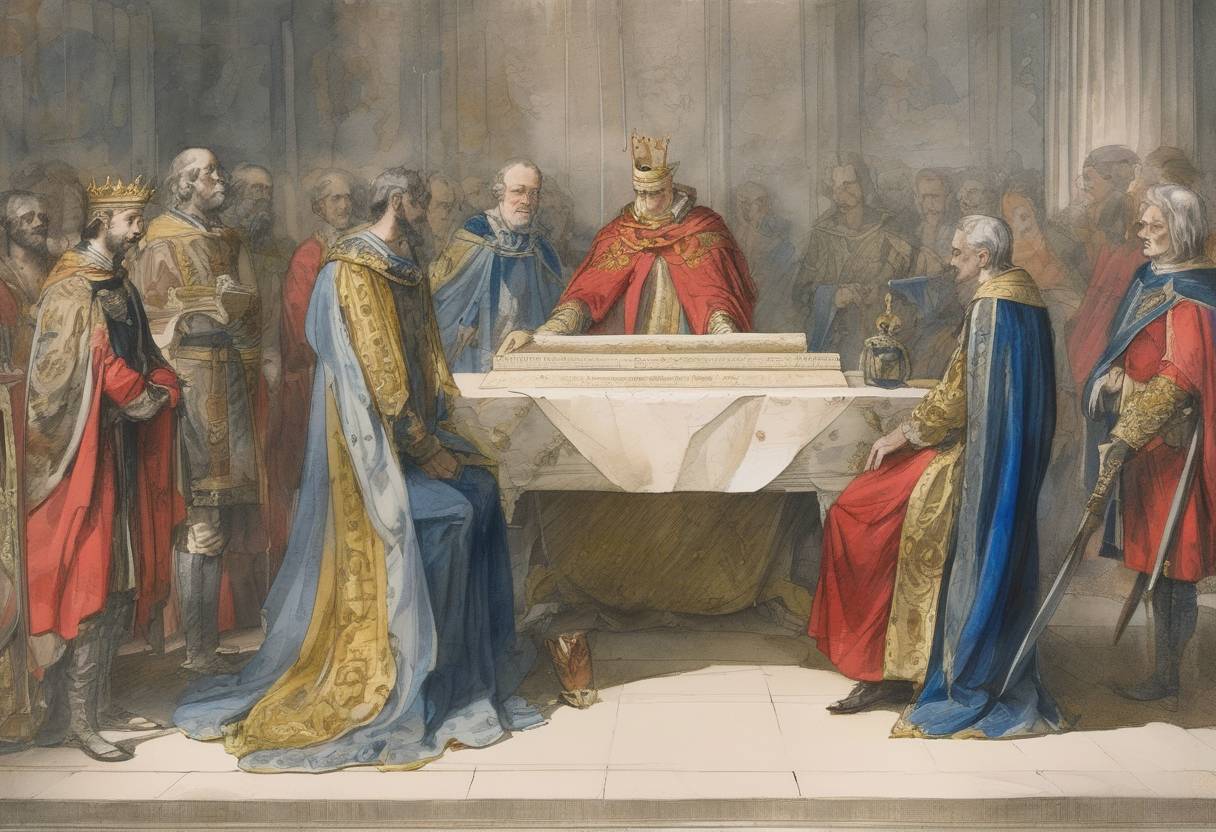
On June 15, 1215, a pivotal moment in the history of governance and law occurred when King John of England affixed his seal to the Magna Carta at Runnymede, a meadow by the River Thames. This document, whose name means “Great Charter” in Latin, is celebrated for its role in limiting the powers of the monarchy and laying the groundwork for modern democratic principles.
The early 13th century was a tumultuous period in England. King John, who reigned from 1199 to 1216, faced significant discontent among his barons due to his military failures, particularly the loss of Normandy to the French, and his heavy taxation to fund these unsuccessful campaigns. Additionally, his arbitrary justice and disputes with the Church, including his excommunication by Pope Innocent III, further eroded his support.
The barons, frustrated by John’s rule, rebelled and captured London in May 1215. This pressure forced King John to negotiate, leading to the meeting at Runnymede.
The Magna Carta contained 63 clauses, addressing various grievances and establishing several important principles:
Despite its significance, the Magna Carta was not initially successful in achieving lasting peace. King John sought annulment from the Pope, who declared the charter invalid, leading to the First Barons’ War. However, John’s death in 1216 and the subsequent regency for his young son, Henry III, saw the reissuance and reaffirmation of the Magna Carta in modified forms.
Over the centuries, the Magna Carta’s influence extended far beyond its immediate context. It became a symbol of liberty and the rule of law, inspiring constitutional documents worldwide, including the United States Constitution and the Universal Declaration of Human Rights.
In conclusion, the sealing of the Magna Carta on June 15, 1215, marked a foundational moment in the evolution of constitutional governance, emphasizing the importance of accountability and the protection of individual rights against arbitrary authority.
Source: en.wikipedia.org