Opening of the Manhattan Bridge
1909 · New York City, United States
The Manhattan Bridge, a suspension bridge connecting Manhattan and Brooklyn in New York City, officially opened to traffic.
March 25, 1911
The Triangle Shirtwaist Factory fire occurred in New York City, leading to the deaths of 146 garment workers and prompting significant labor reforms.
New York City, United States | Triangle Shirtwaist Company
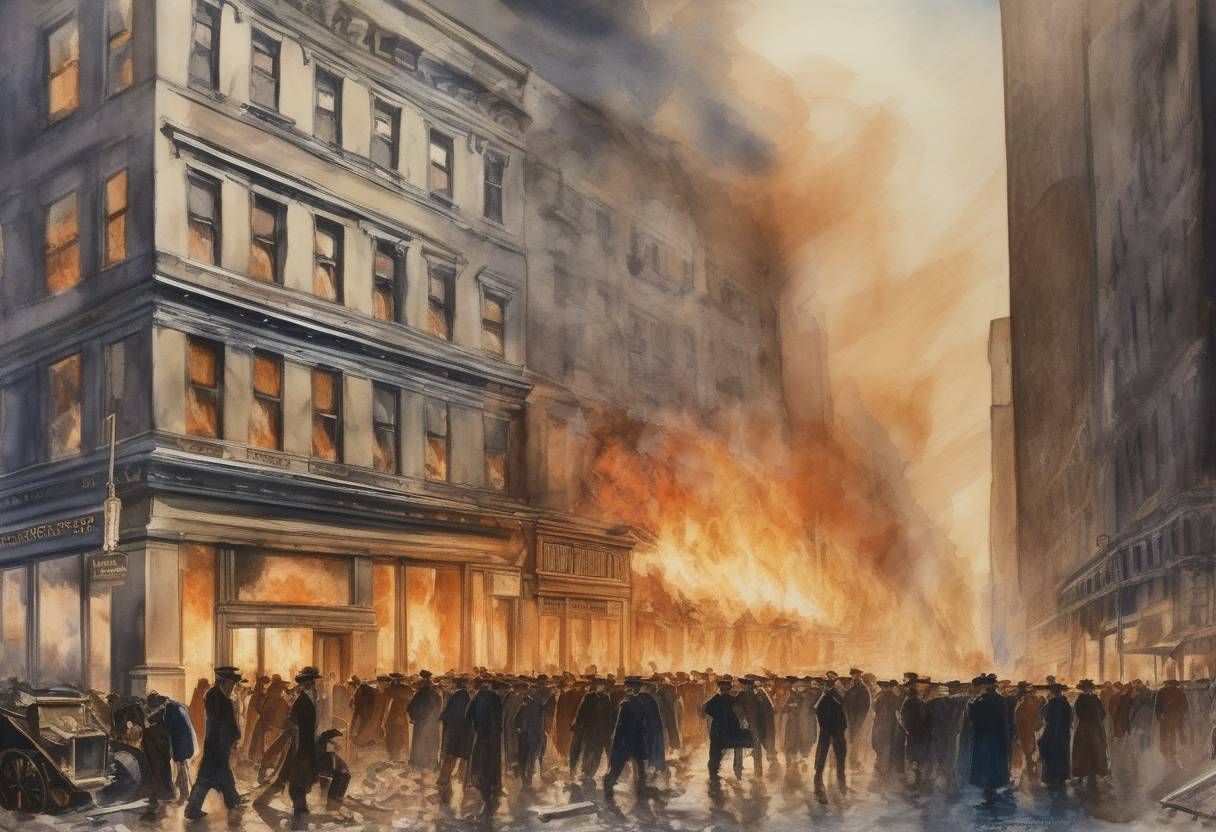
On March 25, 1911, a catastrophic fire broke out at the Triangle Shirtwaist Factory in New York City, resulting in the tragic deaths of 146 garment workers. This event is one of the deadliest industrial disasters in U.S. history and had profound implications for labor reform and workplace safety regulations.
The Triangle Shirtwaist Factory was located on the top three floors of the Asch Building in Manhattan’s Greenwich Village. It was a typical sweatshop of the time, employing around 500 workers, most of whom were young immigrant women from Eastern Europe and Italy. The factory produced women’s blouses, known as “shirtwaists,” and operated under poor working conditions, with long hours and low wages.
The fire began in a scrap bin on the eighth floor, likely caused by a discarded cigarette or match. Due to the highly flammable materials used in garment production, the fire spread rapidly. Workers on the eighth and ninth floors were trapped as the flames engulfed the building. Many exits were locked—a common practice to prevent theft and unauthorized breaks—leaving workers with few escape routes.
Efforts to extinguish the fire and rescue the trapped workers were hampered by inadequate safety measures. The building’s fire escape collapsed under the weight of fleeing workers, and the fire department’s ladders could not reach beyond the sixth floor. In desperation, some workers jumped from windows to their deaths.
The tragedy of the Triangle Shirtwaist Factory fire shocked the nation and highlighted the dire need for improved industrial safety standards. Public outrage led to the formation of the Factory Investigating Commission, which conducted thorough investigations into factory conditions across New York.
As a result, significant labor reforms were enacted, including:
The Triangle Shirtwaist Factory fire served as a catalyst for the labor reform movement in the United States. It underscored the need for government intervention in protecting workers’ rights and safety, setting a precedent for future labor legislation. The tragedy remains a poignant reminder of the human cost of industrial negligence and the importance of advocating for safe and fair working environments.
The legacy of the fire continues to influence labor laws and workplace safety standards, ensuring that such a disaster is never repeated.
Source: en.wikipedia.org