The Death of King John and the Ascension of Henry III
1216 · Newark, England
King John of England dies at Newark Castle, leading to the ascension of his nine-year-old son, Henry III, to the throne.
June 1, 1215
King John of England put his seal on the Magna Carta, a charter of liberties that would become a foundational document for constitutional governance.
Runnymede, England | English monarchy
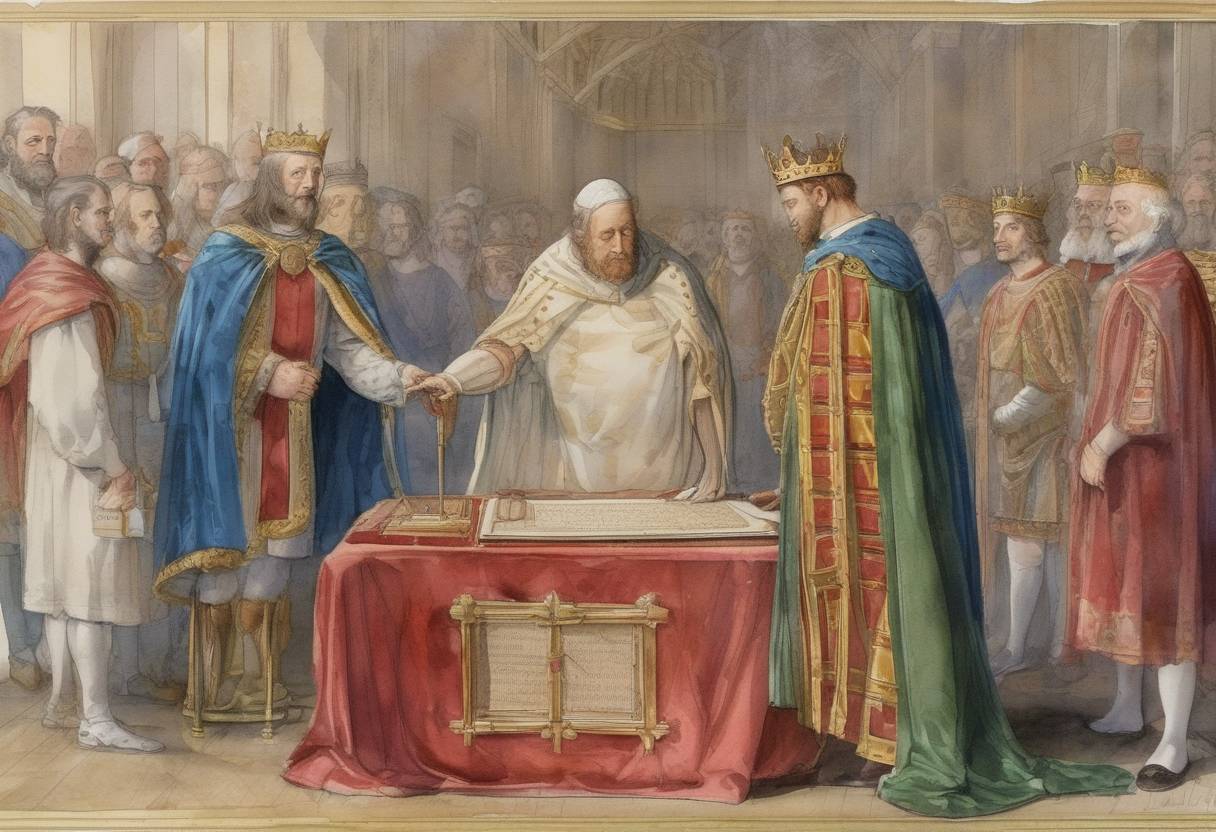
On June 1, 1215, a pivotal moment in the history of constitutional governance unfolded as King John of England agreed to the terms of the Magna Carta, a charter of liberties that would profoundly influence the development of legal systems in the English-speaking world.
King John, who reigned from 1199 to 1216, faced significant challenges during his rule, including military losses, heavy taxation, and conflicts with the barons and the Church. His reign was marked by the loss of the Angevin territories in France, which diminished his standing among the English nobility. To finance his military campaigns and recover these lands, John imposed heavy taxes, leading to widespread discontent among the barons.
The barons, frustrated by John’s arbitrary rule and heavy taxation, rebelled against the king. Their grievances included the king’s abuse of feudal rights and his failure to consult them on important matters. This unrest culminated in the barons capturing London in May 1215, forcing King John to negotiate.
The Magna Carta, or “Great Charter,” was drafted as a peace treaty between King John and the rebellious barons. It was sealed at Runnymede, near Windsor, on June 15, 1215, but the agreement on its terms was reached on June 1. The document contained 63 clauses, addressing various issues such as the protection of church rights, protection from illegal imprisonment, access to swift justice, and limitations on feudal payments to the Crown.
Initially, the Magna Carta was not successful in bringing peace. King John sought annulment from Pope Innocent III, who declared the charter invalid, leading to the First Barons’ War. However, John’s death in 1216 and the subsequent accession of his son, Henry III, led to the reissuance and eventual acceptance of the Magna Carta.
The Magna Carta’s significance lies in its enduring legacy. Although many of its clauses were specific to the medieval context, its core principles influenced the development of constitutional law. It inspired future documents such as the English Bill of Rights (1689) and the United States Constitution.
The Magna Carta remains a symbol of the struggle for liberty and the rule of law, underscoring the importance of limiting the powers of the government and protecting individual rights. Its legacy continues to resonate in legal and political systems around the world.
Source: en.wikipedia.org