1900 · Washington, D.C., United States
The Gold Standard Act is ratified, placing the United States currency on the gold standard.
April 22, 1864
The U.S. Congress passes the Coinage Act of 1864, which mandates the inscription 'In God We Trust' on all coins minted as U.S. currency.
Washington, D.C., United States | United States Congress
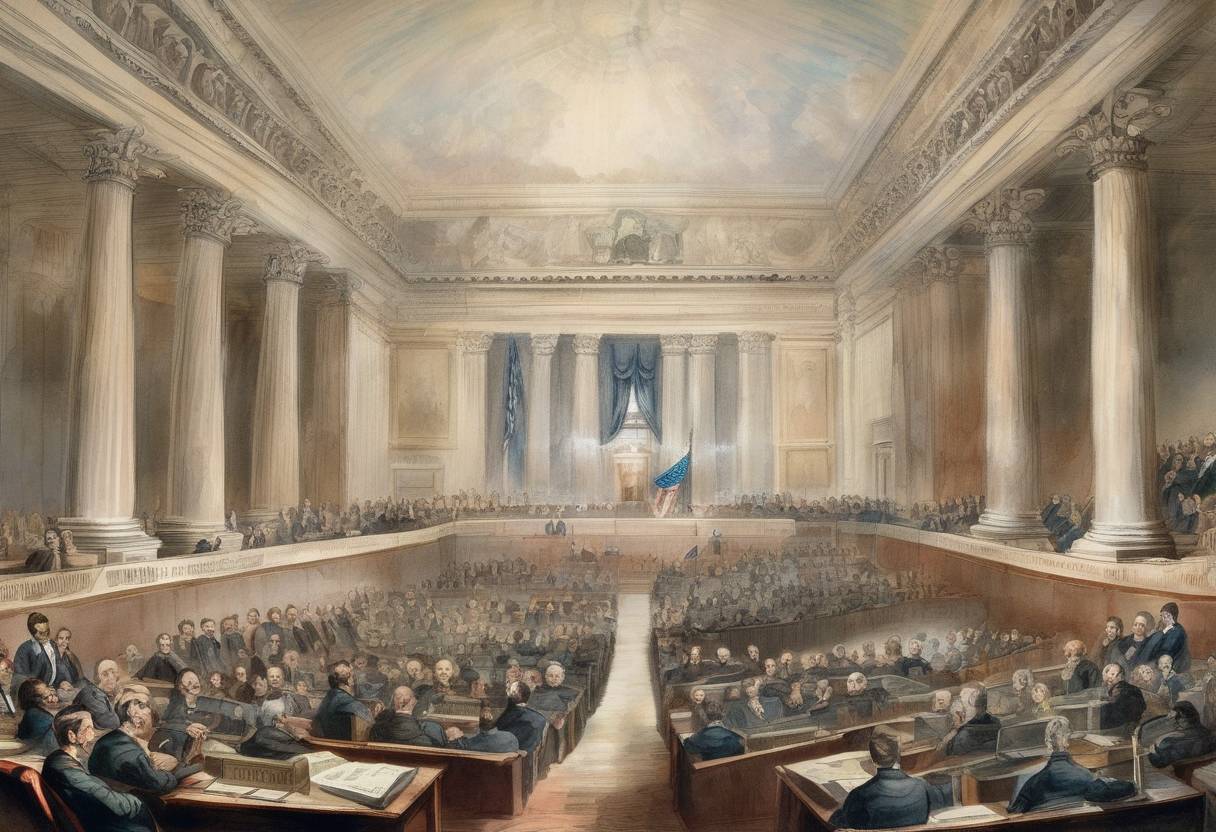
On April 22, 1864, the United States Congress passed the Coinage Act of 1864, a significant piece of legislation that mandated the inclusion of the inscription “In God We Trust” on certain U.S. coins. This act marked a pivotal moment in the history of American currency and reflected broader cultural and religious sentiments of the time.
The mid-19th century was a period of profound transformation and turmoil in the United States. The nation was in the midst of the Civil War, a conflict that not only threatened the Union but also prompted deep reflection on national identity and values. During this era, there was a growing movement among religious leaders and citizens advocating for the recognition of divine providence in national affairs. This sentiment was partly a response to the uncertainties and moral challenges posed by the war.
The Coinage Act of 1864 was primarily focused on the design and production of U.S. currency. One of its most notable provisions was the authorization of the two-cent coin, which became the first coin to bear the inscription “In God We Trust.” This phrase was suggested by Reverend M.R. Watkinson, who wrote to the Secretary of the Treasury, Salmon P. Chase, advocating for a recognition of God on U.S. coins as a way to reflect the nation’s religious heritage and moral values.
The decision to include “In God We Trust” on U.S. coins was more than a mere design choice; it was a reflection of the nation’s evolving identity. It underscored the interplay between religion and governance in America and highlighted how national crises can influence cultural and legislative changes. The phrase remains a topic of discussion and debate, symbolizing the enduring complexity of American values and identity.
In summary, the Coinage Act of 1864 was a landmark moment in U.S. history, embedding a phrase that continues to resonate in the nation’s cultural and political discourse.
Source: en.wikipedia.org