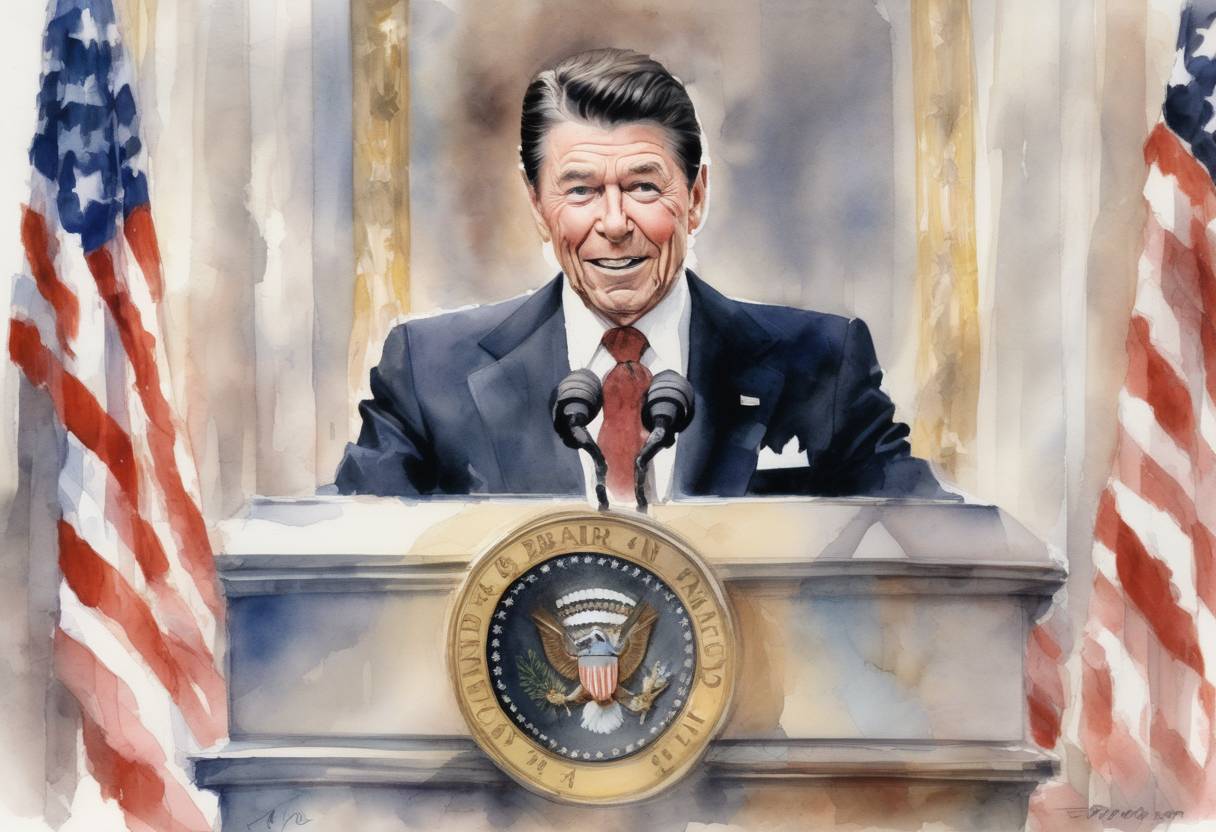
Ronald Reagan’s Farewell Address - January 11, 1989
On January 11, 1989, President Ronald Reagan delivered his farewell address to the nation from the Oval Office. This speech marked the conclusion of his two-term presidency, which spanned from January 20, 1981, to January 20, 1989. Reagan’s farewell address is remembered for its reflective tone and emphasis on the achievements and challenges of his administration.
Context Leading Up to the Address
Ronald Reagan, a former actor and Governor of California, was elected as the 40th President of the United States in 1980. His presidency was characterized by a conservative agenda, economic policies known as “Reaganomics,” a strong stance against the Soviet Union, and significant tax cuts. Reagan’s administration also faced challenges, including the Iran-Contra affair and debates over social policies.
Key Themes of the Address
Reflection on Achievements: Reagan highlighted the economic recovery during his presidency, noting the reduction in inflation and unemployment. He credited his administration’s policies for revitalizing the American economy and restoring national pride.
The Cold War and Foreign Policy: A significant portion of the address focused on the end of the Cold War tensions. Reagan spoke about his efforts to engage with Soviet leader Mikhail Gorbachev, which led to significant arms reduction agreements, such as the Intermediate-Range Nuclear Forces (INF) Treaty.
American Values and Patriotism: Reagan emphasized the importance of American values, such as freedom, democracy, and individual responsibility. He spoke about the “shining city on a hill,” a metaphor he often used to describe the United States as a beacon of hope and freedom.
Challenges and Future Outlook: While celebrating successes, Reagan acknowledged ongoing challenges, including the national debt and social issues. He urged Americans to remain vigilant and committed to the nation’s founding principles.
Aftermath and Historical Significance
Reagan’s farewell address is often cited as a poignant reflection on his presidency and a call to action for future generations. His optimistic vision and emphasis on American exceptionalism left a lasting impact on the political landscape. The address also set the stage for his successor, George H. W. Bush, who would continue to navigate the post-Cold War era.
Reagan’s presidency is remembered for its significant influence on American politics, economy, and foreign policy. His farewell address encapsulated the themes and values that defined his time in office, leaving a legacy that continues to be debated and analyzed by historians and political analysts.