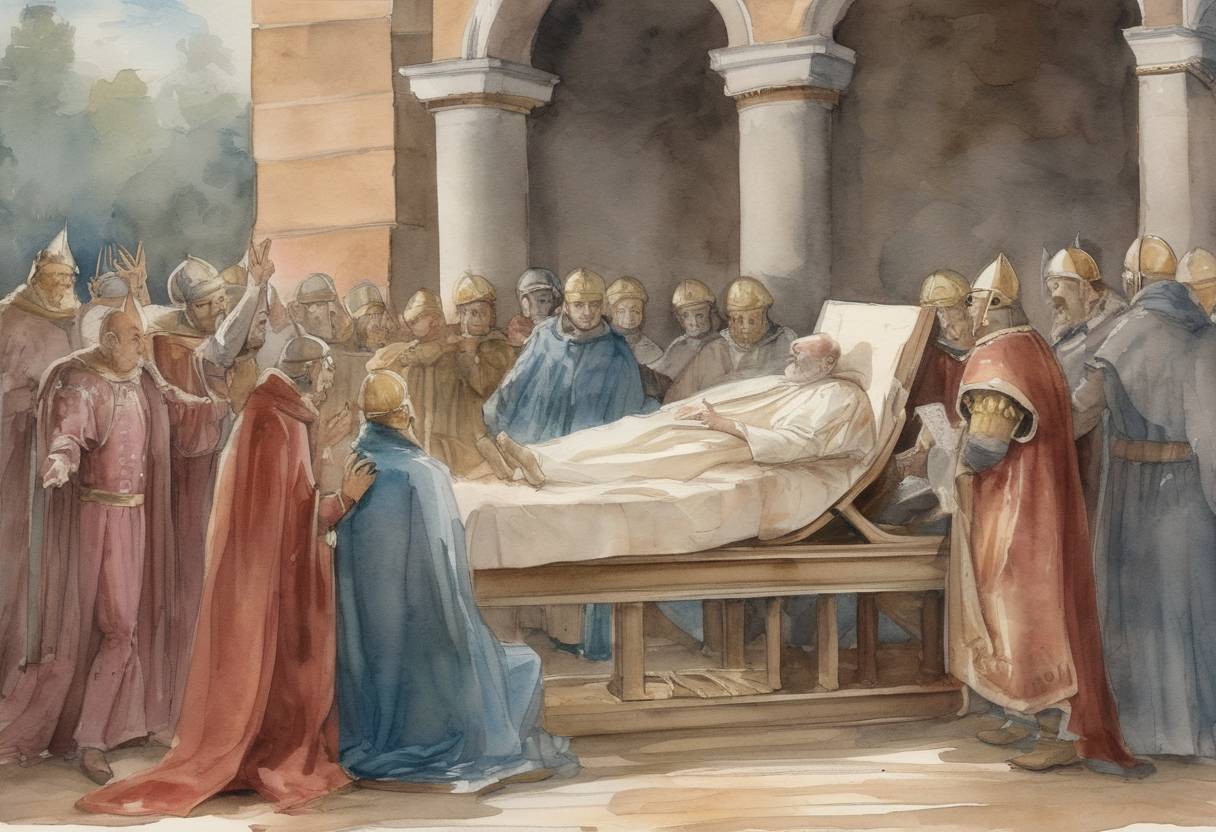
The Death of Pope Adrian III
Pope Adrian III, who served as the head of the Catholic Church from 884 until his death, passed away on May 17, 884. His papacy, though brief, was marked by significant efforts to strengthen the relationship between the papacy and the Carolingian Empire.
Background and Papacy
Adrian III ascended to the papacy during a tumultuous period in European history. The Carolingian Empire, once a dominant force in Western Europe, was experiencing internal strife and fragmentation. The papacy, on the other hand, was seeking to assert its influence and stabilize its position amidst these challenges.
Key Aspects of His Papacy
Relations with the Carolingian Empire: One of Adrian III’s primary objectives was to mend and enhance the relationship with the Carolingian rulers. This was crucial for maintaining the political and military support necessary for the papacy’s influence in Europe.
Church Reforms: Although his time as pope was short, Adrian III was committed to addressing issues within the Church, including clerical discipline and the administration of church lands.
Diplomatic Efforts: Adrian III engaged in diplomatic efforts to navigate the complex political landscape of the time, which included dealing with various factions within the Carolingian Empire.
Death and Legacy
Pope Adrian III died on May 17, 884, under circumstances that remain somewhat unclear. His death occurred while he was en route to a meeting with Charles the Fat, the Carolingian emperor, which underscores his commitment to improving papal-imperial relations.
Canonization
Adrian III was later canonized, and his feast day is celebrated on July 8. His canonization reflects the recognition of his efforts to uphold the Church’s interests during a challenging period.
Historical Significance
Despite the brevity of his papacy, Adrian III’s efforts to engage with the Carolingian Empire had lasting implications for the papacy’s role in European politics. His diplomatic initiatives laid the groundwork for future popes to navigate the complex relationship between the Church and secular rulers.
In summary, Pope Adrian III’s papacy, though short-lived, was marked by significant diplomatic efforts and a commitment to church reform, leaving a legacy that would influence the papacy’s interactions with European powers in the years to come.