The Soviet Invasion of Afghanistan: December 27, 1979
1979 · Kabul, Afghanistan
The Soviet Union invaded Afghanistan, marking the beginning of a decade-long conflict.
February 15, 1989
The Soviet Union officially announces that all of its troops have left Afghanistan, ending a nine-year military intervention.
Kabul, Afghanistan | Soviet Armed Forces
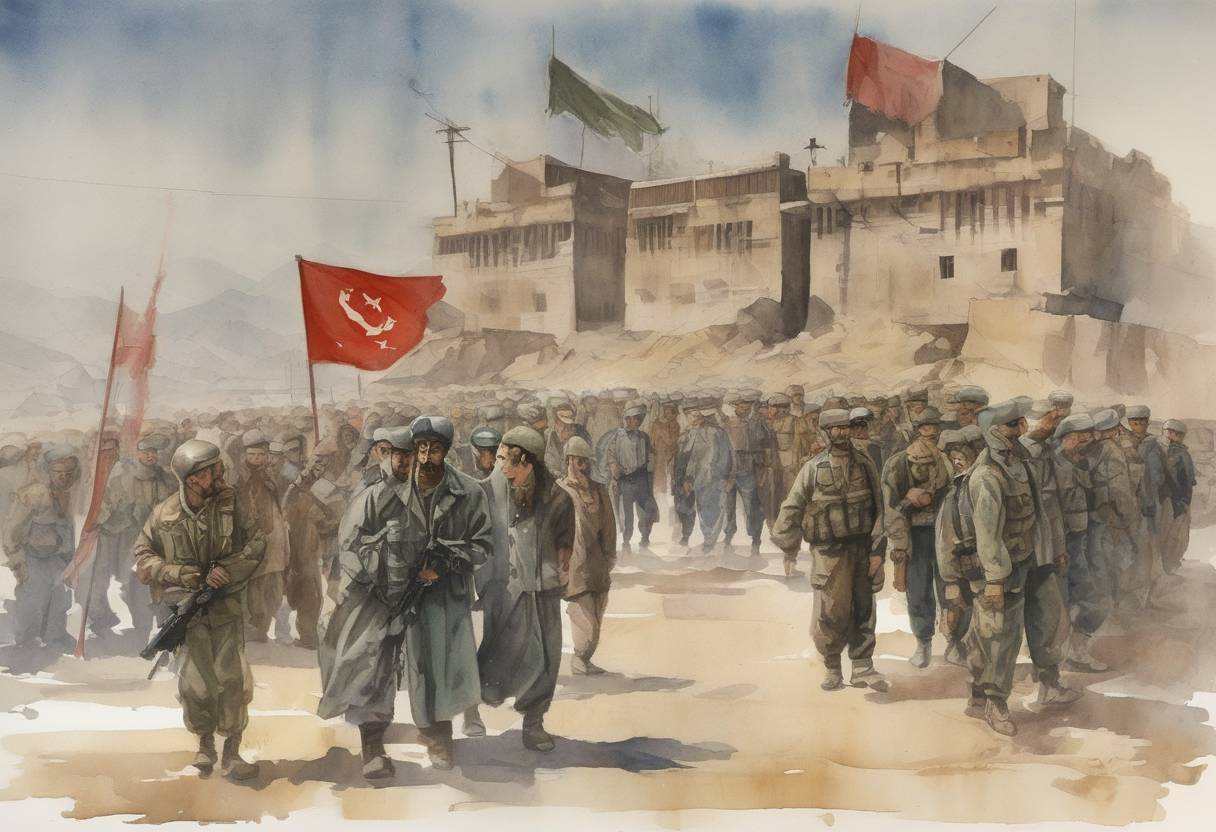
On February 15, 1989, the Soviet Union officially announced the complete withdrawal of its troops from Afghanistan, marking the end of a nine-year military intervention that began in December 1979. This event was a significant turning point in both Afghan and Soviet history, with far-reaching implications.
The Soviet intervention in Afghanistan began on December 24, 1979, when Soviet forces entered the country to support the communist government of the People’s Democratic Party of Afghanistan (PDPA) against insurgent groups known collectively as the Mujahideen. The intervention was part of the Cold War dynamics, with the Soviet Union seeking to maintain influence in Afghanistan amidst fears of Islamic insurgency and Western encroachment.
The Soviet-Afghan War was characterized by brutal guerrilla warfare, with the Mujahideen receiving substantial support from the United States, Pakistan, Saudi Arabia, and other countries. The conflict resulted in significant casualties and destruction, with estimates of Afghan civilian deaths ranging from 500,000 to 2 million. The war also displaced millions of Afghans, creating a massive refugee crisis.
The decision to withdraw was influenced by several factors:
The withdrawal was formalized through the Geneva Accords, signed in April 1988, which outlined a timetable for the withdrawal of Soviet troops and non-interference in Afghanistan’s internal affairs.
The Soviet withdrawal from Afghanistan remains a pivotal moment in history, illustrating the complexities of foreign intervention and its long-term consequences.
Source: en.wikipedia.org