1961 · Goldsboro, United States
A B-52 bomber carrying two nuclear bombs crashed near Goldsboro, North Carolina, narrowly avoiding a nuclear disaster.
February 5, 1958
A hydrogen bomb known as the Tybee Bomb is lost off the coast of Savannah, Georgia, after a mid-air collision.
Savannah, United States | United States Air Force
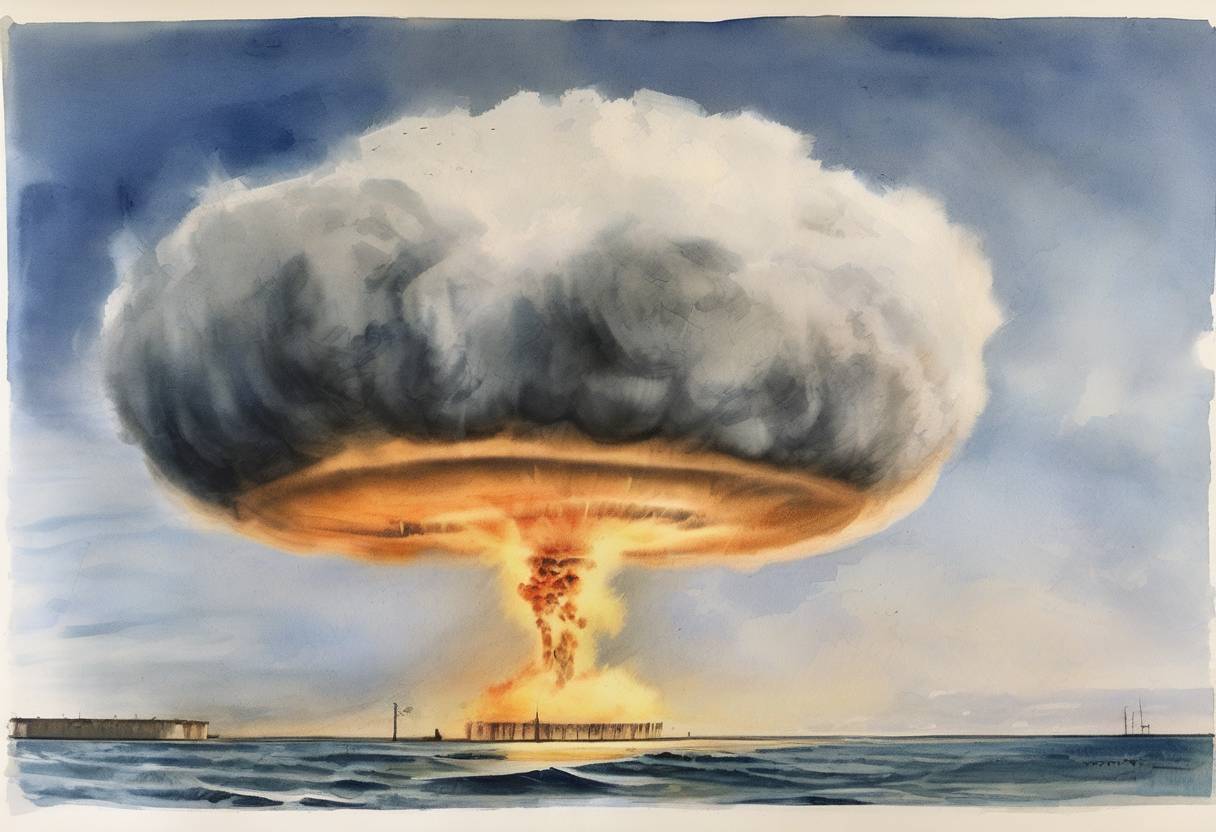
On February 5, 1958, a significant incident occurred involving the loss of a hydrogen bomb, known as the “Tybee Bomb,” off the coast of Savannah, Georgia. This event unfolded during a routine training mission conducted by the United States Air Force.
The Cold War era was marked by heightened military readiness and frequent training exercises involving nuclear weapons. On the night of February 5, a B-47 Stratojet bomber, piloted by Major Howard Richardson, was conducting a simulated combat mission. The bomber was armed with a Mark 15 hydrogen bomb, which was not equipped with its nuclear core, rendering it incapable of a nuclear explosion but still containing a substantial amount of conventional explosives and radioactive material.
During the mission, the B-47 collided with an F-86 Sabre jet fighter over the skies of Georgia. The collision severely damaged the B-47, compromising its ability to maintain flight. In order to ensure the safety of the crew and prevent a potential catastrophic crash, Major Richardson made the decision to jettison the bomb into the waters off Tybee Island, near Savannah.
Following the incident, the U.S. military launched an extensive search operation to locate and recover the bomb. Despite these efforts, which included the use of naval vessels and specialized equipment, the bomb was never found. The search was eventually called off, and the bomb remains lost to this day.
The Tybee Bomb incident raised concerns about the safety and security of nuclear weapons during the Cold War. It highlighted the risks associated with the transportation and handling of such weapons, leading to increased scrutiny and improvements in safety protocols.
The incident remains a topic of interest and speculation, particularly regarding the potential environmental and safety risks posed by the lost bomb. However, official reports have indicated that the likelihood of a nuclear detonation is negligible due to the absence of the bomb’s nuclear core.
The Tybee Bomb incident is a notable example of the complexities and dangers associated with nuclear weapons during the Cold War. It serves as a reminder of the importance of stringent safety measures and the ongoing challenges of managing nuclear arsenals in a complex geopolitical landscape.
Source: en.wikipedia.org