Christopher Columbus' Fourth and Final Voyage
1502 · Cadiz, Spain
Christopher Columbus embarked on his fourth and final voyage to the New World, aiming to find a passage to Asia.
August 1, 1498
Christopher Columbus landed on the mainland of South America, near present-day Venezuela, during his third voyage.
Paria Peninsula, Venezuela | Spanish Crown
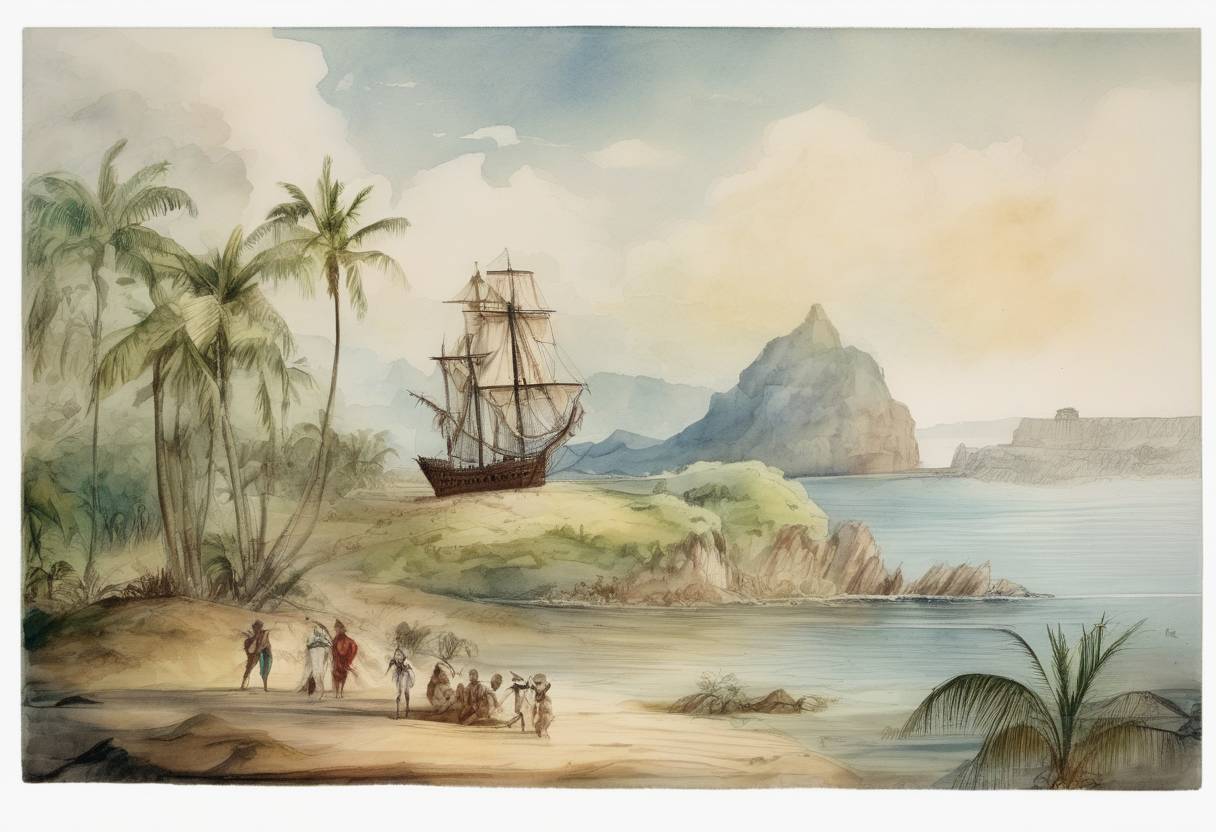
On August 1, 1498, during his third voyage, Christopher Columbus made a significant landfall on the mainland of South America, near what is today known as Venezuela. This event marked the first time Columbus set foot on the South American continent, expanding European awareness of the New World beyond the islands of the Caribbean.
Previous Voyages: Columbus’s first voyage in 1492 led to the discovery of the Caribbean islands, including Hispaniola and Cuba. His second voyage in 1493 further explored these areas, but the mainland of the Americas remained undiscovered by Europeans.
Third Voyage Objectives: The primary goal of Columbus’s third voyage was to find a passage to Asia by sailing further south than his previous expeditions. The Spanish Crown, eager to capitalize on the riches of the East, supported this mission.
Departure: Columbus departed from Spain on May 30, 1498, with a fleet of six ships. The expedition was divided, with three ships heading directly to Hispaniola and the remaining three, led by Columbus, exploring further south.
Discovery of Trinidad: Before reaching the mainland, Columbus and his crew sighted the island of Trinidad on July 31, 1498. They named it after the Holy Trinity.
Landfall on the Mainland: On August 1, Columbus reached the Paria Peninsula in present-day Venezuela. He explored the Gulf of Paria, noting the lush landscape and the abundance of fresh water, which led him to believe he had found another large island.
Recognition of a New Continent: Although Columbus initially thought he had discovered another island, his landing on the South American mainland was a pivotal moment in the Age of Exploration. It contributed to the eventual recognition of the Americas as a separate continent.
Impact on Indigenous Populations: The arrival of Europeans marked the beginning of significant changes for the indigenous peoples of South America, leading to cultural exchanges, as well as eventual colonization and its associated challenges.
Further Exploration: Columbus’s discovery paved the way for future explorers, such as Amerigo Vespucci, who would later confirm that the lands discovered were part of a new continent, not Asia.
Columbus’s Later Years: Despite his discoveries, Columbus faced challenges upon returning to Spain. His governance of Hispaniola was criticized, and he was eventually arrested and stripped of his titles. He made a fourth and final voyage in 1502 but never regained his former status.
Legacy: Columbus’s voyages opened the Americas to European exploration and colonization, profoundly impacting world history. His landing on the South American mainland was a crucial step in this process, despite the controversies surrounding his treatment of indigenous peoples and his governance.
In summary, Columbus’s landing on the mainland of South America on August 1, 1498, was a landmark event in the history of exploration, marking the expansion of European knowledge and influence in the New World.
Source: en.wikipedia.org