The End of World War II: Japan's Surrender on September 2, 1945
1945 · Tokyo, Japan
World War II officially ended when Japan signed the Instrument of Surrender aboard the USS Missouri in Tokyo Bay.
August 15, 1945
Japan announced its surrender to the Allies, effectively ending World War II. This day is known as V-J Day (Victory over Japan Day).
Tokyo, Japan | Allied Powers
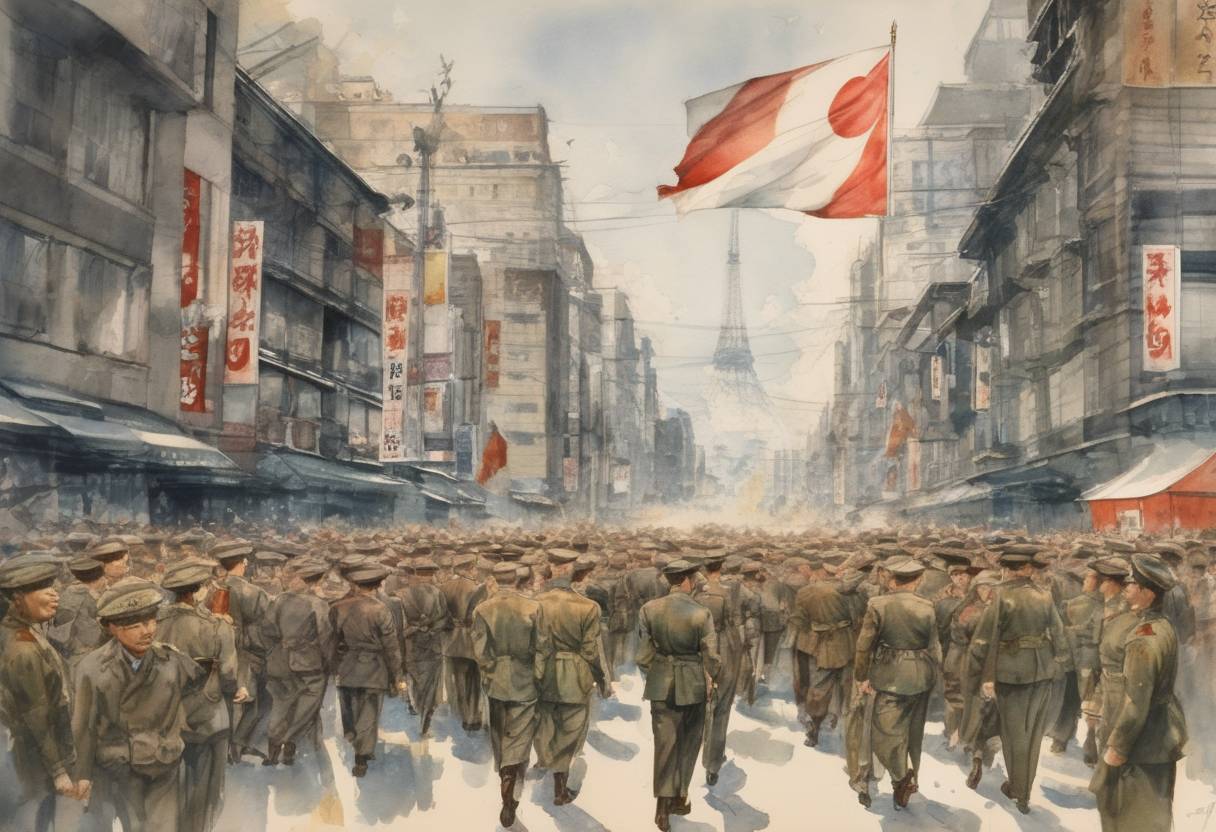
On August 15, 1945, Japan announced its unconditional surrender to the Allied Forces, effectively bringing an end to World War II. This day is commemorated as V-J Day, or Victory over Japan Day, marking a pivotal moment in 20th-century history.
The surrender of Japan was the culmination of a series of events that had significantly weakened the Japanese war effort:
Allied Advances: By mid-1945, the Allies had made significant advances in the Pacific, capturing key territories and crippling Japan’s ability to sustain its military operations.
Atomic Bombings: On August 6 and August 9, 1945, the United States dropped atomic bombs on the Japanese cities of Hiroshima and Nagasaki, respectively. These bombings resulted in unprecedented destruction and loss of life, demonstrating the overwhelming military power of the Allies and the futility of continued resistance.
Soviet Declaration of War: On August 8, 1945, the Soviet Union declared war on Japan and launched a massive invasion of Japanese-held territories in Manchuria, further pressuring Japan to surrender.
On August 15, 1945, Emperor Hirohito made a historic radio broadcast to the Japanese people, announcing the decision to surrender. This was the first time many Japanese citizens had heard the Emperor’s voice. In his speech, Hirohito cited the devastating power of “a new and most cruel bomb” as a key factor in the decision to surrender, emphasizing the need to save lives and restore peace.
Formal Surrender: The formal signing of the surrender documents took place on September 2, 1945, aboard the USS Missouri in Tokyo Bay. Representatives from Japan and the Allied nations, including General Douglas MacArthur and Admiral Chester Nimitz, were present.
End of World War II: V-J Day marked the official end of World War II, a conflict that had lasted six years and resulted in immense global devastation and loss of life.
Post-War Reconstruction: Following the surrender, Japan underwent significant political, economic, and social changes. The Allied occupation, led by the United States, initiated widespread reforms, including the drafting of a new constitution and the establishment of a democratic government.
Legacy: V-J Day is remembered as a day of relief and celebration, but also as a moment of reflection on the horrors of war and the dawn of the nuclear age. It serves as a reminder of the importance of peace and international cooperation.
V-J Day remains a significant historical milestone, symbolizing the end of one of the most destructive wars in human history and the beginning of a new era in international relations.
Source: en.wikipedia.org