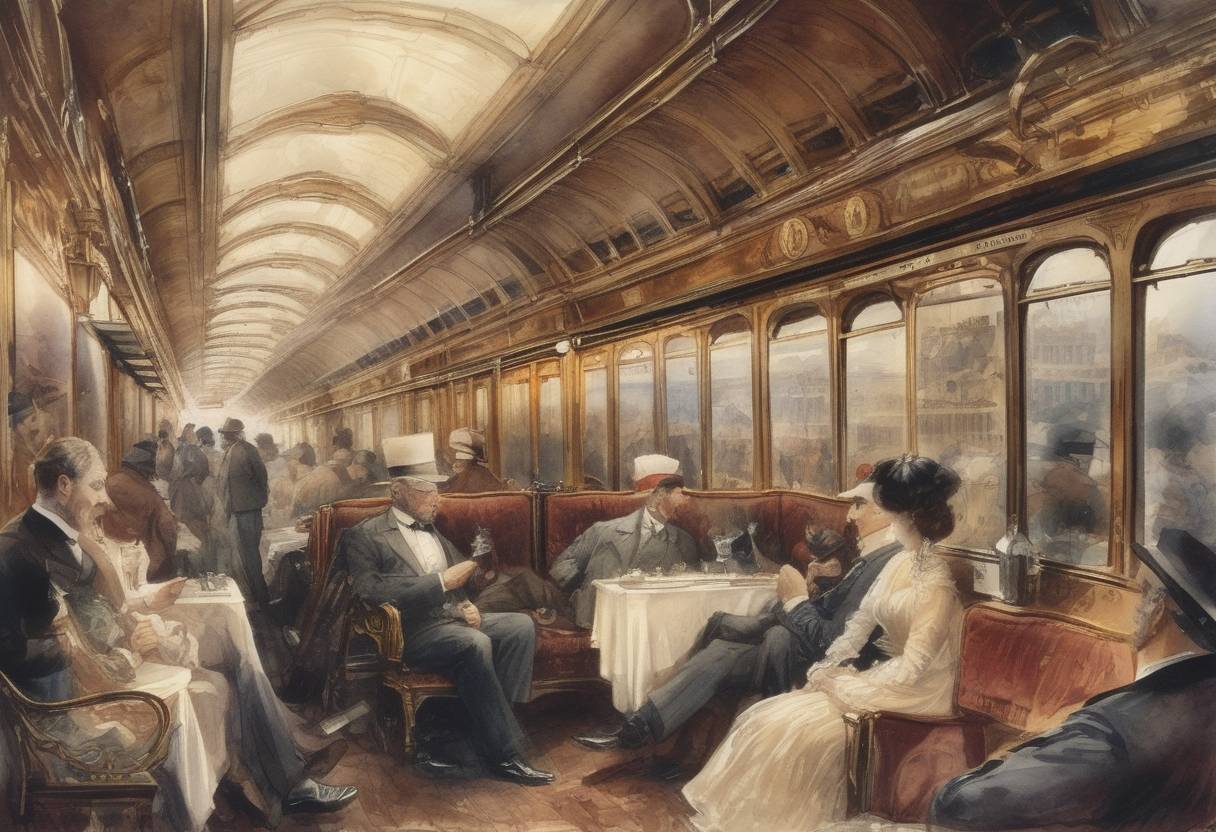
The Inauguration of the Orient Express: June 5, 1883
On June 5, 1883, the first regularly scheduled Orient Express train service commenced, marking a significant milestone in the history of rail travel. This luxurious train service linked Paris, France, to Istanbul, Turkey (then Constantinople), and became synonymous with opulence and adventure.
Background and Context
The concept of the Orient Express was the brainchild of Belgian engineer Georges Nagelmackers, who founded the Compagnie Internationale des Wagons-Lits (CIWL) in 1872. Inspired by the luxury and comfort of American Pullman cars, Nagelmackers envisioned a transcontinental railway service that would connect the major cities of Europe with the exotic East.
The Inaugural Journey
The inaugural journey of the Orient Express began at the Gare de l’Est in Paris. The route initially covered a distance of approximately 1,980 miles (3,186 kilometers), passing through several key European cities, including Strasbourg, Munich, Vienna, Budapest, and Bucharest, before reaching its final destination in Istanbul.
The train was renowned for its luxurious accommodations, which included plush sleeping cars, elegant dining services, and exquisite decor. This level of comfort and sophistication was unprecedented in European rail travel at the time.
Significance and Impact
The Orient Express quickly became a symbol of the golden age of rail travel, attracting wealthy and influential passengers from across the globe. It played a crucial role in connecting Western and Eastern Europe, facilitating cultural exchange and economic ties between the regions.
The train’s allure was further immortalized in popular culture, most notably in Agatha Christie’s 1934 novel “Murder on the Orient Express,” which cemented its place in literary and cinematic history.
Evolution and Legacy
Over the years, the route and service of the Orient Express underwent several changes due to geopolitical shifts, including the two World Wars and the Cold War. Despite these challenges, the train continued to operate in various forms until the original service was discontinued in 2009.
Today, the legacy of the Orient Express endures, with luxury train services and cultural references continuing to evoke the romance and intrigue of its storied past.
In summary, the commencement of the Orient Express on June 5, 1883, marked a transformative moment in the history of travel, symbolizing the height of luxury and the spirit of adventure that defined an era.