July 17, 2000

A Concorde jet crashes shortly after takeoff from Charles de Gaulle Airport in Paris, killing all 109 people on board and four people on the ground.


Paris, France | Air France
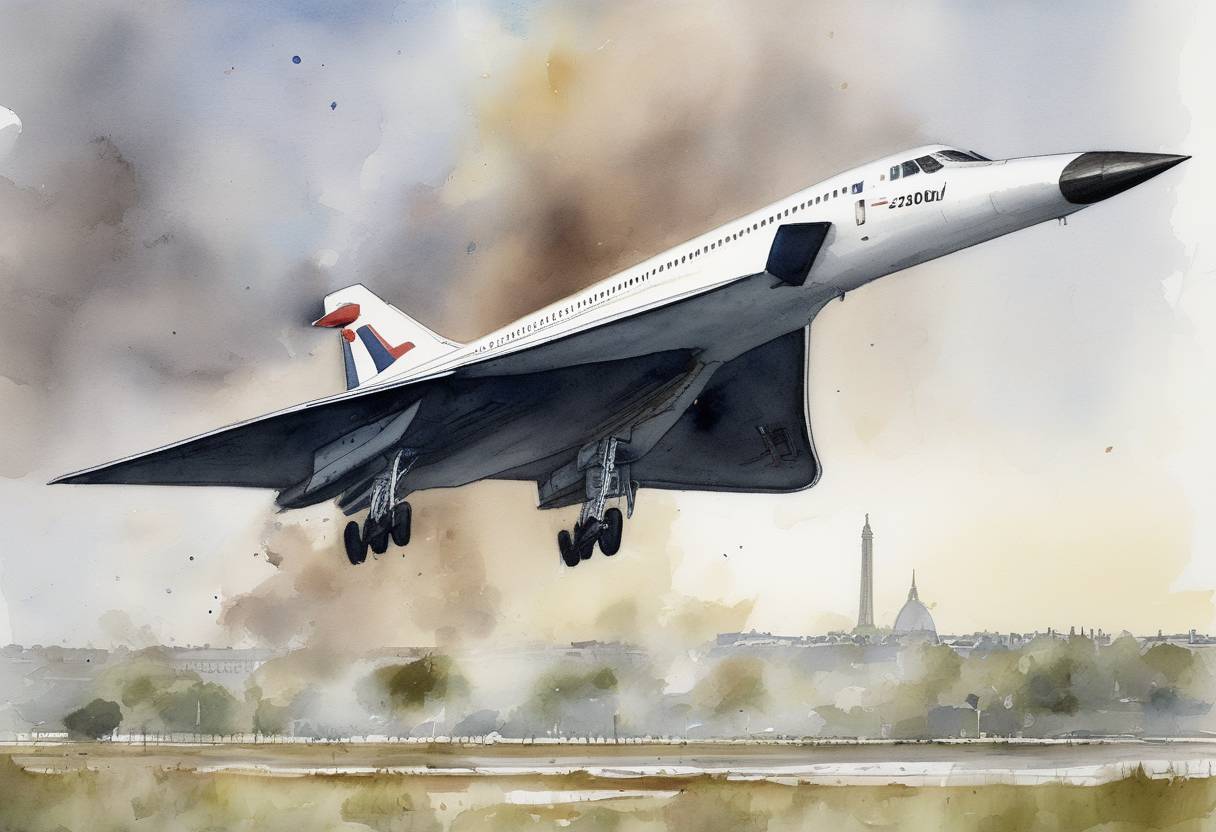
Watercolor painting based depiction of A Concorde jet crashes shortly after takeoff from Charles de Gaulle Airport in Paris, killing all 109 people on board and four people on the ground. (2000)

Concorde Crash at Charles de Gaulle Airport - July 25, 2000

On July 25, 2000, a tragic accident involving an Air France Concorde jet occurred shortly after takeoff from Charles de Gaulle Airport in Paris. This catastrophic event resulted in the deaths of all 109 people on board and four individuals on the ground.

Background

The Concorde was a turbojet-powered supersonic passenger airliner, renowned for its speed and luxury. It was a product of a joint venture between British and French aerospace companies and had been in commercial service since 1976. The aircraft was celebrated for its ability to fly at speeds over twice the speed of sound, significantly reducing transatlantic flight times.

The Accident

  • Date and Time: The crash occurred on July 25, 2000, shortly after 4:40 PM local time.
  • Flight Details: The aircraft involved was Air France Flight 4590, a charter flight destined for New York City.
  • Aircraft: The Concorde was registered as F-BTSC and had been in service since 1980.

Sequence of Events

  1. Takeoff: As the Concorde began its takeoff roll on runway 26R, a metal strip that had fallen from a preceding Continental Airlines DC-10 was lying on the runway.
  2. Tire Burst: The Concorde’s left main landing gear ran over the metal strip, causing a tire to burst.
  3. Fuel Tank Rupture: Debris from the tire punctured a fuel tank, leading to a significant fuel leak.
  4. Fire: The leaking fuel ignited, causing a fire on the left wing.
  5. Loss of Control: Despite the crew’s efforts to control the aircraft, the fire and subsequent engine failures led to a loss of control.
  6. Crash: The aircraft crashed into a hotel in Gonesse, a suburb of Paris, approximately two minutes after takeoff.

Casualties

  • Onboard: All 109 individuals on the aircraft perished, including 100 passengers and 9 crew members.
  • On the Ground: Four people in the hotel were killed, and several others were injured.

Investigation and Aftermath

  • Investigation: The French Bureau of Enquiry and Analysis for Civil Aviation Safety (BEA) conducted an investigation, concluding that the metal strip on the runway was the primary cause of the accident.
  • Safety Measures: The accident led to a temporary grounding of the Concorde fleet and significant safety modifications, including reinforced fuel tanks.
  • End of Service: Although the Concorde returned to service in 2001, the crash, combined with economic factors and the downturn in air travel post-911, led to the eventual retirement of the Concorde in 2003.

Historical Significance

The crash marked a turning point in the history of supersonic passenger travel. It highlighted the vulnerabilities of high-speed aviation and underscored the importance of rigorous maintenance and safety protocols. The Concorde, once a symbol of technological prowess and luxury, became a poignant reminder of the inherent risks in aviation.

This tragic event remains a significant chapter in aviation history, influencing safety standards and the future of supersonic travel.