The Taliban Capture Kabul: Establishment of the Islamic Emirate of Afghanistan
1996 · Kabul, Afghanistan
The Taliban capture the Afghan capital, Kabul, establishing the Islamic Emirate of Afghanistan.
February 26, 2001
The Taliban destroyed two giant Buddha statues in Bamiyan, Afghanistan, which were carved into the side of a cliff in the Bamiyan Valley and dated back to the 6th century.
Bamiyan, Afghanistan | Taliban
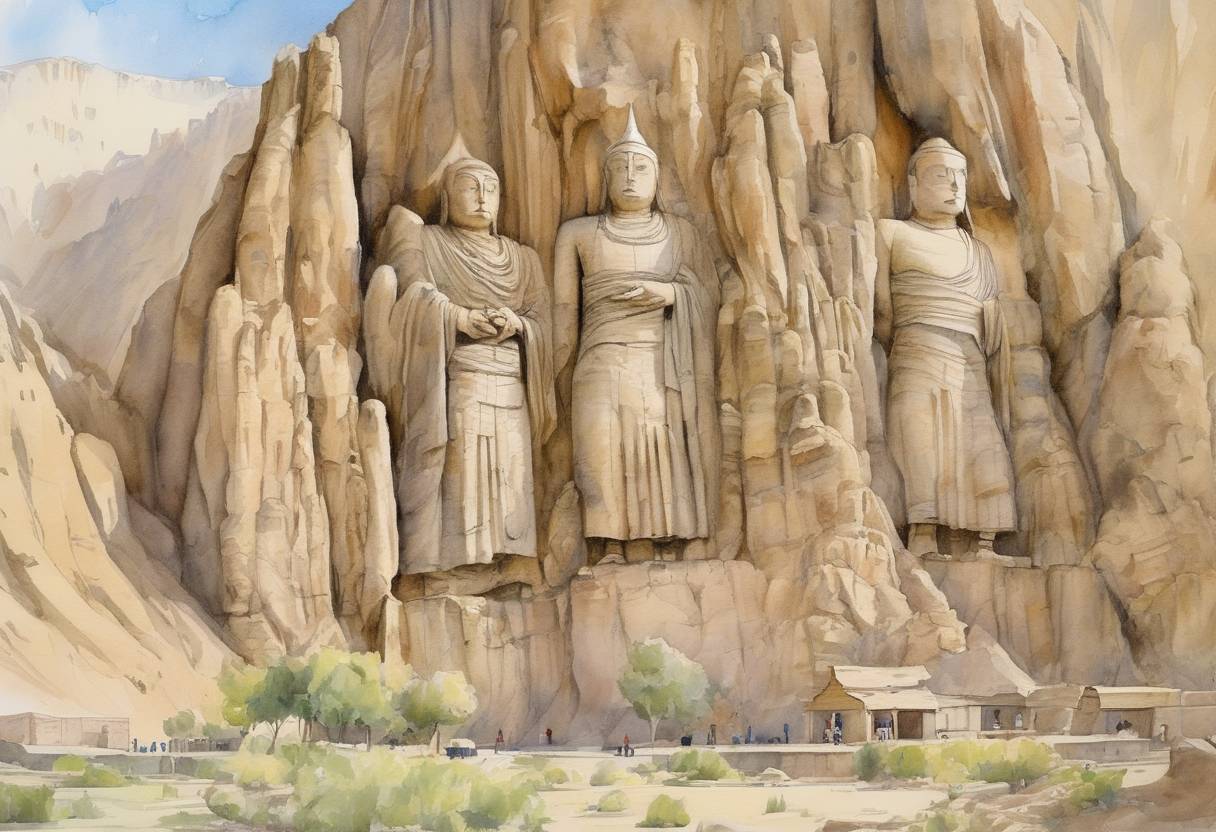
On February 26, 2001, the Taliban regime in Afghanistan announced its decision to destroy two monumental Buddha statues carved into the cliffs of the Bamiyan Valley. These statues, dating back to the 6th century, were among the most significant examples of ancient Buddhist art in the region.
Bamiyan Valley: Located in central Afghanistan, the Bamiyan Valley was a thriving center of Buddhist culture and religion from the 2nd century until the Islamic conquest in the 9th century. The valley was part of the Silk Road, facilitating cultural exchanges between the East and the West.
The Statues: The two statues, known as the Great Buddhas of Bamiyan, stood at approximately 55 meters (180 feet) and 38 meters (125 feet) tall. They were carved directly into the sandstone cliffs and were adorned with elaborate frescoes and intricate details, reflecting the artistic and religious significance of the period.
Taliban Regime: The Taliban, an Islamist militant group, took control of Afghanistan in the mid-1990s. Their strict interpretation of Islamic law led to the suppression of cultural and religious artifacts deemed un-Islamic.
Announcement and Destruction: On February 26, 2001, the Taliban’s leader, Mullah Mohammed Omar, issued an edict declaring that all non-Islamic statues in Afghanistan should be destroyed. Despite international protests and offers to preserve the statues, the Taliban proceeded with their demolition in March 2001, using dynamite and artillery.
Global Reaction: The destruction of the Bamiyan Buddhas was met with widespread condemnation from governments, cultural organizations, and religious leaders worldwide. It was seen as a tragic loss to global cultural heritage and an act of cultural vandalism.
Cultural Impact: The loss of the statues highlighted the vulnerability of cultural heritage sites in conflict zones. It spurred international efforts to protect and preserve endangered cultural artifacts and sites.
Reconstruction Efforts: Since the fall of the Taliban in 2001, there have been discussions and efforts to reconstruct the statues. However, debates continue over the feasibility and appropriateness of such reconstruction, given the original context and significance of the statues.
The destruction of the Bamiyan Buddhas remains a poignant reminder of the cultural and historical losses that can occur during times of conflict and ideological extremism.
Source: en.wikipedia.org