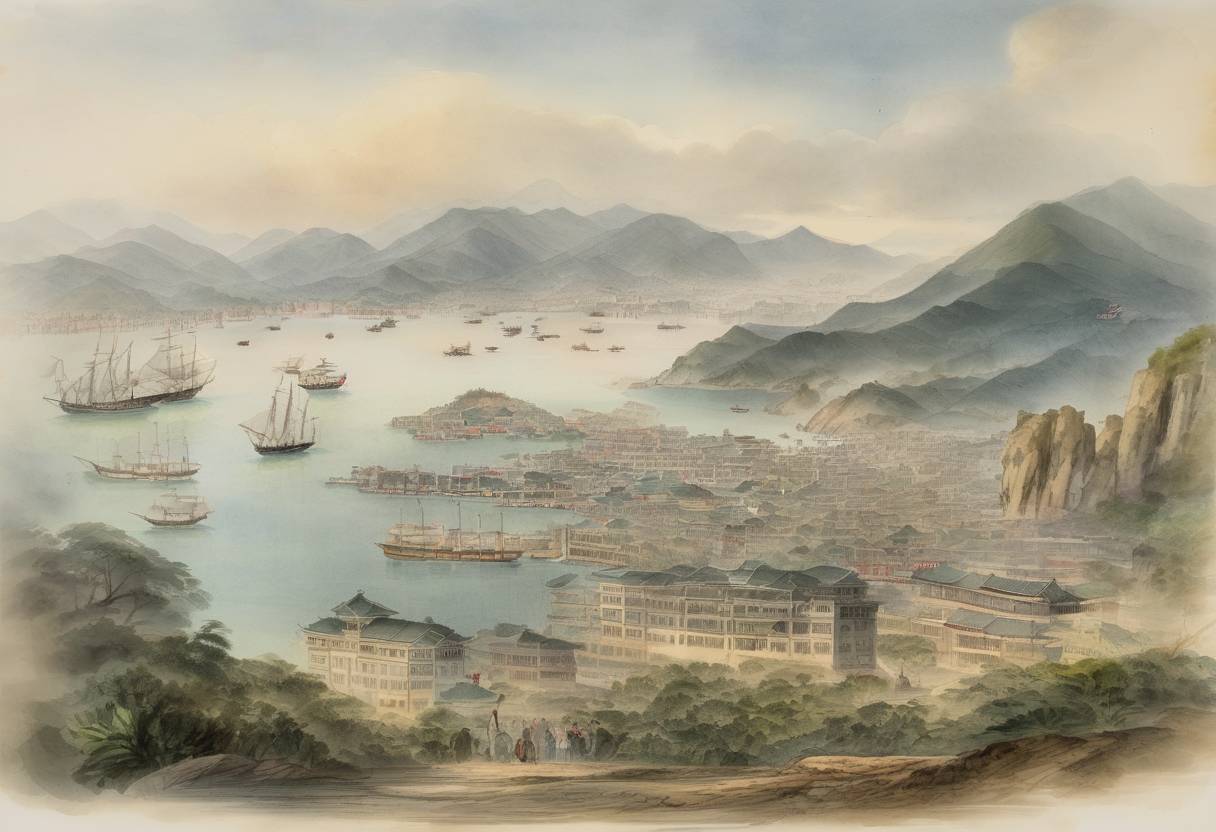
The British Occupation of Hong Kong Island: January 20, 1841
On January 20, 1841, a pivotal moment in the history of Hong Kong occurred when British forces occupied Hong Kong Island during the First Opium War. This event marked the beginning of Hong Kong’s transformation into a significant colonial outpost under British rule.
Context and Background
The First Opium War (1839-1842) was primarily a conflict between the Qing Dynasty of China and the British Empire, driven by disputes over trade, sovereignty, and the illegal opium trade. British merchants had been illegally exporting opium from India to China, leading to widespread addiction and social issues within China. The Qing government’s efforts to suppress the opium trade, including the confiscation and destruction of opium stocks in Canton (Guangzhou), escalated tensions with Britain.
Key Events Leading to the Occupation
1839: The Chinese government’s crackdown on opium trade, led by Commissioner Lin Zexu, resulted in the destruction of over 20,000 chests of opium. This act was perceived as a direct challenge to British commercial interests.
1840: In response, Britain deployed a naval expedition to China, initiating the First Opium War. The British sought to secure favorable trading conditions and compensation for the destroyed opium.
1841: As part of their military strategy, British forces, under the command of Captain Charles Elliot and Admiral George Elliot, targeted strategic locations along the Chinese coast. Hong Kong Island, with its deep-water harbor, was identified as a valuable asset for trade and military operations.
The Occupation of Hong Kong Island
On January 20, 1841, British forces landed on the largely uninhabited Hong Kong Island. The occupation was relatively unopposed, as the island was sparsely populated and not heavily defended by the Qing forces. The British quickly established a foothold, recognizing the island’s strategic importance as a naval base and trading port.
Consequences and Aftermath
Treaty of Nanking (1842): The occupation of Hong Kong Island was formalized in the Treaty of Nanking, signed on August 29, 1842, which ended the First Opium War. Under the treaty, China ceded Hong Kong Island to Britain “in perpetuity,” marking the beginning of British colonial rule.
Development as a Colonial Outpost: Hong Kong rapidly developed into a major trading hub and gateway to China. Its strategic location and deep-water harbor facilitated international trade, contributing to its growth as a global financial center.
Legacy: The British occupation and subsequent development of Hong Kong had lasting impacts on the region’s cultural, economic, and political landscape. The cession of Hong Kong Island set the stage for further territorial expansions and laid the groundwork for Hong Kong’s unique identity as a blend of Eastern and Western influences.
The occupation of Hong Kong Island on January 20, 1841, was a significant event that reshaped the region’s history and had enduring implications for Sino-British relations and global trade dynamics.