Decree by Roman Emperor Valentinian II on August 22, 392
392 · Rome, Roman Empire
The Roman Emperor Valentinian II issued a decree prohibiting pagan worship in the Roman Empire, marking a significant step in the Christianization of the empire.
February 10, 0356
The Roman Emperor Constantius II issues a decree closing all pagan temples in the Roman Empire, marking a significant step in the Christianization of the empire.
Rome, Roman Empire | Roman Empire
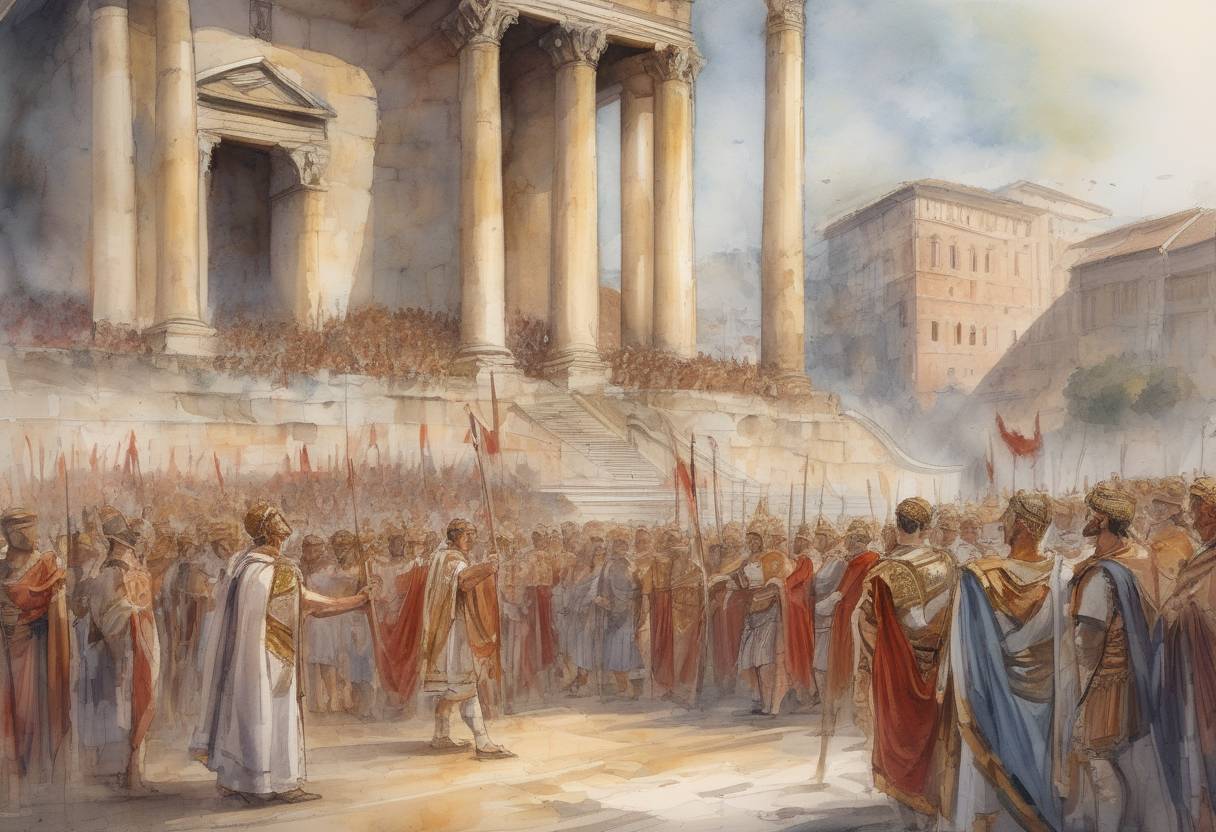
On February 10, 356, Roman Emperor Constantius II issued a significant decree that ordered the closure of all pagan temples within the Roman Empire. This action marked a pivotal moment in the Christianization of the empire, reflecting the shifting religious landscape of the time.
Rise of Christianity: By the mid-4th century, Christianity had gained substantial influence within the Roman Empire. The conversion of Emperor Constantine the Great, Constantius II’s father, and the subsequent Edict of Milan in 313 had already legalized Christianity and set the stage for its expansion.
Constantius II’s Reign: Constantius II, who reigned from 337 to 361, was a staunch supporter of Christianity. His policies often favored the Christian faith, and he actively worked to suppress pagan practices.
Content and Intent: The decree issued by Constantius II mandated the closure of all pagan temples, effectively outlawing the public practice of pagan rituals. This was part of a broader effort to promote Christianity as the dominant religion of the empire.
Enforcement: The decree was enforced with varying degrees of rigor across the empire. In some regions, local authorities were zealous in implementing the closure of temples, while in others, enforcement was more lenient.
Impact on Paganism: The closure of pagan temples was a severe blow to traditional Roman religious practices. It marked a significant step in the decline of paganism and the dismantling of its institutional structures.
Christianization of the Empire: This decree was one of several measures that accelerated the Christianization of the Roman Empire. It underscored the transition from a polytheistic society to one increasingly dominated by Christian ideology.
Cultural and Social Changes: The suppression of pagan practices contributed to broader cultural and social transformations within the empire. It facilitated the integration of Christian values into Roman law and governance.
The decree by Constantius II is a critical event in the history of the Roman Empire and the Christian Church. It highlights the complex interplay between religion and politics during this period and illustrates the profound changes that reshaped Roman society in the 4th century. This event is a testament to the enduring impact of imperial policies on religious and cultural landscapes.
Source: en.wikipedia.org