Pope Marcellinus Begins His Papacy
296 · Rome, Roman Empire
Pope Marcellinus begins his papacy.
August 6, 0258
Pope Sixtus II was martyred during the persecution of Christians under the Roman Emperor Valerian.
Rome, Roman Empire | Roman Catholic Church
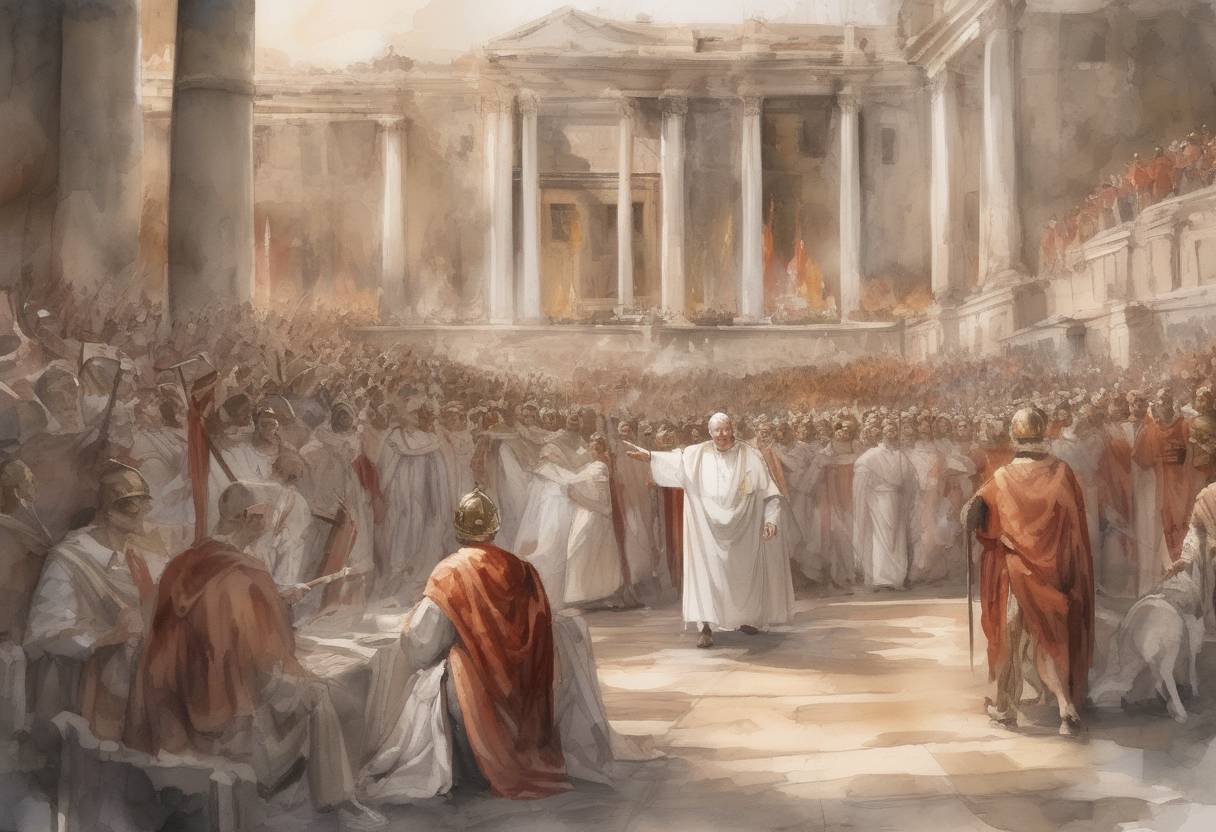
On August 6, 258, Pope Sixtus II was martyred during the persecution of Christians under the Roman Emperor Valerian. This event is a significant moment in early Christian history, reflecting the severe challenges faced by the Christian community in the Roman Empire during the 3rd century.
The Roman Empire, during the mid-3rd century, was a period of instability and crisis, marked by political turmoil, economic difficulties, and external threats. In this environment, Christianity, which was rapidly spreading, was often viewed with suspicion and hostility by Roman authorities. Christians’ refusal to worship Roman gods and the emperor was seen as a threat to the traditional Roman religious and social order.
Emperor Valerian, who ruled from 253 to 260, initiated one of the more severe persecutions of Christians. In 257, he issued an edict that targeted Christian clergy, demanding that they perform sacrifices to the Roman gods and forbidding Christian assemblies. The following year, in 258, Valerian intensified the persecution with a second edict that ordered the execution of Christian leaders and the confiscation of their properties.
Pope Sixtus II became the Bishop of Rome in 257, succeeding Pope Stephen I. His papacy was short-lived due to the intensified persecution under Valerian. On August 6, 258, while conducting a service in the Catacombs of San Callisto, Sixtus II was apprehended by Roman authorities. He was executed by beheading, along with several of his deacons, including Saint Lawrence, who would also become a celebrated martyr.
The martyrdom of Pope Sixtus II is emblematic of the trials faced by early Christians and their leaders. It underscores the resilience and steadfastness of the Christian community in the face of persecution. Sixtus II’s death, along with those of his companions, became a source of inspiration for Christians, strengthening their resolve and commitment to their faith.
The persecution under Valerian was short-lived, as he was captured by the Persian Empire in 260, leading to a period of relative peace for Christians under his successor, Gallienus. The martyrdom of Sixtus II and his deacons was commemorated by the Christian community, and they were venerated as saints. Their legacy is remembered in the liturgical calendar, with August 6 marked as the feast day of Saint Sixtus II and his companions.
In summary, the martyrdom of Pope Sixtus II on August 6, 258, is a poignant reminder of the early Christian church’s struggles and the enduring impact of its leaders’ sacrifices in the face of persecution.
Source: en.wikipedia.org