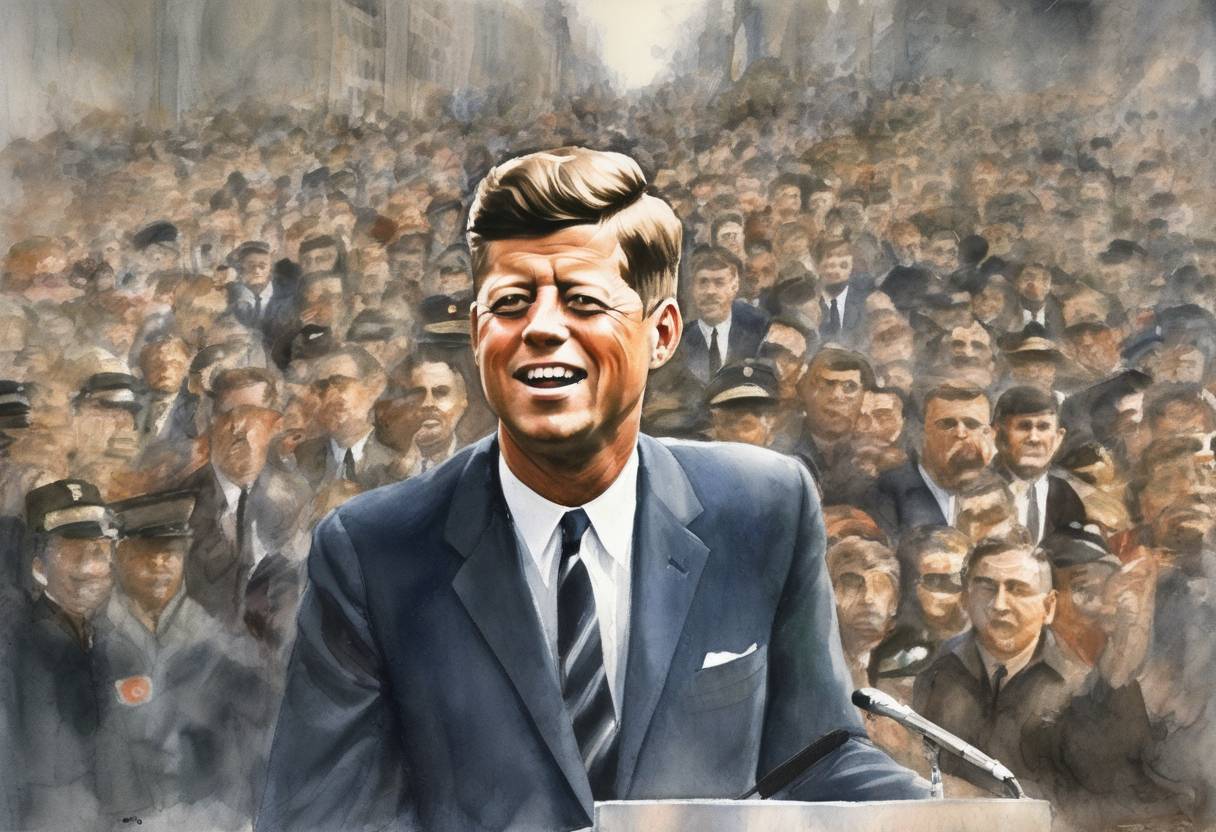
John F. Kennedy’s “Ich bin ein Berliner” Speech
On June 26, 1963, U.S. President John F. Kennedy delivered one of his most famous speeches in West Berlin, Germany. This speech, known for the iconic phrase “Ich bin ein Berliner,” was a pivotal moment during the Cold War, symbolizing the United States’ support for West Germany and its commitment to defending freedom in the face of communist expansion.
Context Leading Up to the Speech
Cold War Tensions: The early 1960s were marked by heightened tensions between the United States and the Soviet Union. The division of Germany into East and West, and particularly the construction of the Berlin Wall in 1961, had become potent symbols of the ideological divide between communism and democracy.
Berlin Wall: Erected by the East German government, the Berlin Wall physically and ideologically separated East and West Berlin. It was intended to stop the mass emigration from East to West, which was seen as a significant embarrassment for the communist regime.
Kennedy’s European Tour: President Kennedy’s visit to West Berlin was part of a broader European tour aimed at strengthening alliances and demonstrating U.S. resolve against Soviet influence.
Key Elements of the Speech
Expression of Solidarity: Kennedy’s speech was delivered in front of a large crowd at the Rathaus Schöneberg, the city hall of West Berlin. By declaring “Ich bin ein Berliner” (“I am a Berliner”), Kennedy expressed solidarity with the citizens of West Berlin, emphasizing that the struggle for freedom in Berlin was a struggle for freedom everywhere.
Symbolic Language: The phrase “Ich bin ein Berliner” was intended to convey that all free people, wherever they may live, are citizens of Berlin. This was a powerful message of unity and support against the oppressive communist regime in East Germany.
Defiance Against Communism: Kennedy’s speech underscored the ideological battle between democracy and communism, highlighting the stark contrast between the prosperity and freedom of West Berlin and the repression of East Berlin.
Aftermath and Historical Significance
Boost to West Berlin Morale: The speech significantly boosted the morale of West Berliners, who were living under the constant threat of Soviet aggression and isolation.
Cold War Symbolism: “Ich bin ein Berliner” became a defining moment of the Cold War, symbolizing the United States’ unwavering commitment to defending democracy and opposing communism.
Legacy: The speech is remembered as one of Kennedy’s most eloquent and impactful addresses, reinforcing his reputation as a charismatic leader and a staunch defender of freedom.
In summary, President Kennedy’s “Ich bin ein Berliner” speech was not only a declaration of solidarity with the people of Berlin but also a powerful statement of democratic values during a critical period in Cold War history.