The FCC Grants CBS the First License to Broadcast Television in Color
1950 · Washington, D.C., United States
The Federal Communications Commission (FCC) issued the first license to broadcast television in color to CBS.
December 29, 1949
KC2XAK of Bridgeport, Connecticut becomes the first ultra high frequency (UHF) television station to begin regular transmission, marking a significant advancement in television technology and broadcasting.
Bridgeport, United States | KC2XAK
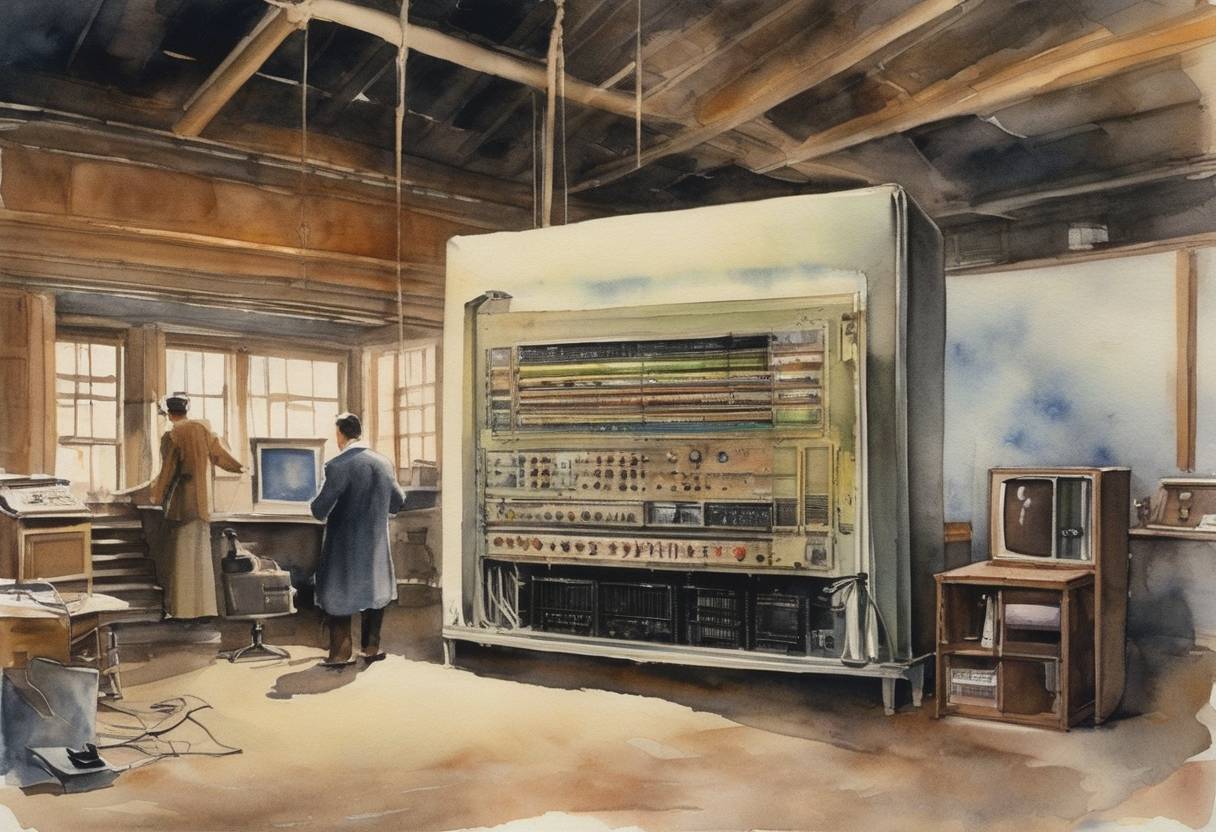
On December 29, 1949, KC2XAK in Bridgeport, Connecticut, became the first ultra high frequency (UHF) television station to begin regular transmission. This marked a significant technological advancement in the field of television broadcasting.
Pre-UHF Era: Before the advent of UHF, television broadcasting was confined to the very high frequency (VHF) bands. This restricted the number of channels available, limiting the growth of the television industry.
Development of UHF: During the late 1940s, the Federal Communications Commission (FCC) recognized the need to expand the channel spectrum. The introduction of UHF frequencies offered a wider band, which allowed for more channels and better service in areas with challenging topographies.
First of Its Kind: KC2XAK’s successful regular transmission marked the inception of UHF broadcasting. It was an experimental station used to test the feasibility of UHF technology for regular broadcasting purposes.
Technical Features: Broadcasting on Channel 24, KC2XAK operated at a much higher frequency range compared to VHF stations, paving the way for future developments in television technology.
Expansion of Television Access: The initialization of UHF stations enabled broadcasters to offer a greater variety of programming, which eventually contributed to the rapid expansion of television viewership across the United States.
Technology Advancement: The success of UHF stations like KC2XAK spurred further technological innovations and improvements in television sets, which needed to be capable of receiving both VHF and UHF signals.
FCC Policies: The operation of UHF stations like KC2XAK influenced FCC policies and allocations, which continued to evolve throughout the following decades, including the transition to digital broadcasting in the late 20th century.
KC2XAK’s launch was a pivotal moment in the history of television technology, illustrating the potential for broadcast expansion and setting the stage for the diverse media landscape we experience today.
Source: www.ctmuseumquest.com