Marriage of Mary, Queen of Scots, to the French Dauphin Francis
1558 · Paris, France
Mary, Queen of Scots, married the French Dauphin, Francis, who later became King Francis II of France.
September 8, 1380
Charles V of France, also known as Charles the Wise, dies. His reign was marked by the recovery of territories lost to England during the early stages of the Hundred Years' War and significant administrative reforms.
Paris, France | French Monarchy
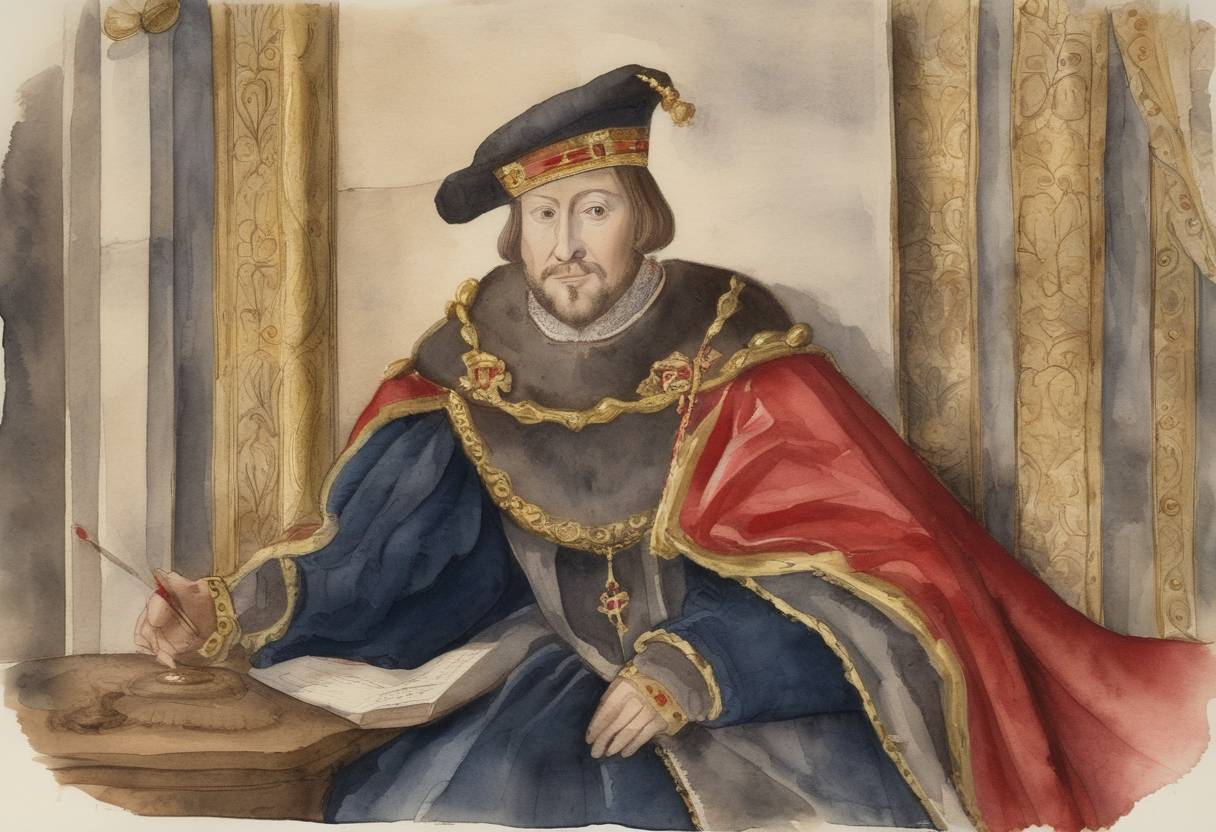
Charles V of France, known as Charles the Wise, passed away on September 8, 1380, at the age of 42 in Beauté-sur-Marne, France. As a pivotal figure in the recovery of France during the Hundred Years’ War, Charles’s reign was marked by strategic and administrative brilliance, leading to substantial territorial and economic accomplishments for the kingdom.
Recovery from the Hundred Years’ War: When Charles V ascended to the throne in 1364, France was in the midst of the destructive Hundred Years’ War with England. His reign saw the restoration of many territories lost to the English, reversing the adverse effects of earlier defeats, including the catastrophic Battle of Poitiers in 1356. Charles’s success in recapturing these territories was largely due to the efforts of his skilled military commander, Bertrand du Guesclin. Under Charles’s leadership, the French forces regained lands in Aquitaine, Normandy, and Brittany.
Diplomatic Maneuvers: Aside from military strategies, Charles was adept in diplomacy. He capitalized on alliances and leveraged political marriages to strengthen France’s position against England and other European powers.
Administrative Reforms: Known for his ability to stabilize and enhance the French monarchy’s power, Charles implemented significant bureaucratic reforms. He restructured the tax system, which enabled better resource allocation for the war effort. Charles also expanded the role of the Estates-General, an early form of representative assembly, thereby giving a semblance of inclusion to various estates in the governance process.
Cultural Patronage and Legacy: The reign of Charles V is also distinguished by his patronage of arts and learning. He established a royal library at the Louvre and was an avid supporter of Gothic architecture, as seen in the completion of several cathedrals during his time. His legacy, therefore, extends beyond political and military accomplishments, fostering a cultural renaissance that would define France for generations.
Charles V’s death marked a transition period in French history. His son, Charles VI, succeeded him at just 11 years of age, and his early reign was dominated by regents. The stability and gains achieved under Charles V would face challenges in subsequent years, as internal factional strife and renewed English aggression loomed. Nevertheless, the foundation laid by Charles V ensured that France would eventually emerge as a leading European power.
The passing of Charles the Wise left an indelible mark on the French monarchy, illustrating his role as a ruler who adeptly combined military strategy, diplomatic skill, and administrative efficiency to revitalize a battered France during a turbulent epoch.