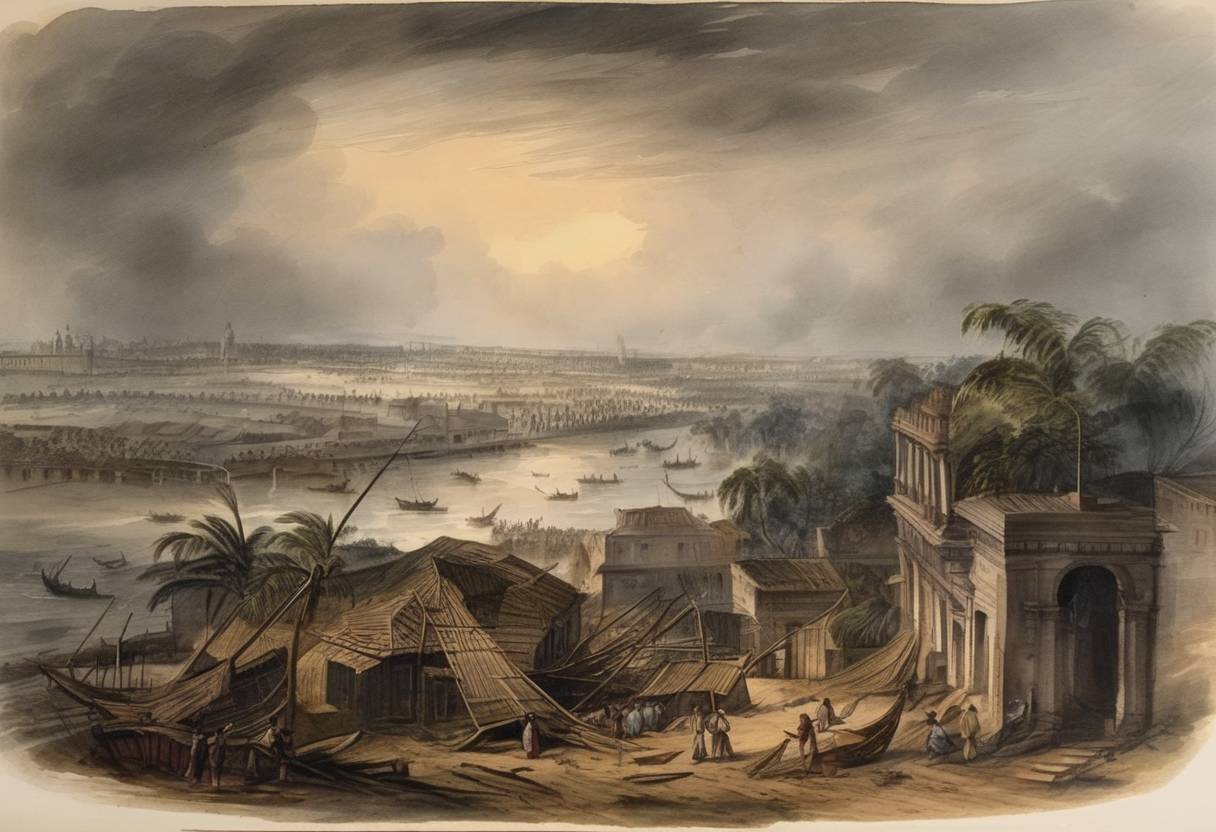
The Calcutta Cyclone of October 7, 1737
On October 7, 1737, a catastrophic cyclone struck the city of Calcutta, present-day Kolkata, India, causing severe devastation. This disaster is one of the earliest documented instances of a tropical cyclone wreaking havoc in the Indian region.
Impact and Damage
The cyclone, which made landfall with formidable intensity, led to a massive storm surge that inundated the low-lying areas of the city. Contemporary accounts suggest that the damage was extensive, with reports indicating that thousands of residential structures and other buildings were destroyed. The cyclone exacerbated the vulnerability of colonial infrastructure, which was ill-prepared for such a natural disaster.
Loss of Life
Estimates of the death toll vary significantly due to the limited documentation and varying contemporary reports. However, it is believed that the cyclone caused the deaths of over 3,000 to potentially 300,000 people in the surrounding region, including Calcutta. The variability in the reported numbers underscores the challenges in accounting and record-keeping of the time.
Broader Impact and Historical Context
The cyclone of 1737 serves as a crucial historical reference point for understanding the challenges faced in colonial Calcutta. It emphasized the environmental vulnerabilities faced by urban settlements, especially in a coastal region prone to intense weather phenomena. The catastrophic event likely spurred efforts to improve disaster management, though significant advancements in meteorological science and infrastructure were still several decades away.
This event is etched into the collective memory as one of the most severe natural disasters in the region’s history, its impact resonating through time as a reminder of nature’s formidable power and the importance of preparedness in mitigating future catastrophes.