Mary, Queen of Scots, Abdication - July 24, 1567
1567 · Edinburgh, Scotland
Mary, Queen of Scots, is forced to abdicate in favor of her one-year-old son, James VI.
December 8, 1560
The Treaty of Edinburgh was ratified by Mary, Queen of Scots, officially ending French and English hostilities in Scotland.
Edinburgh, Scotland
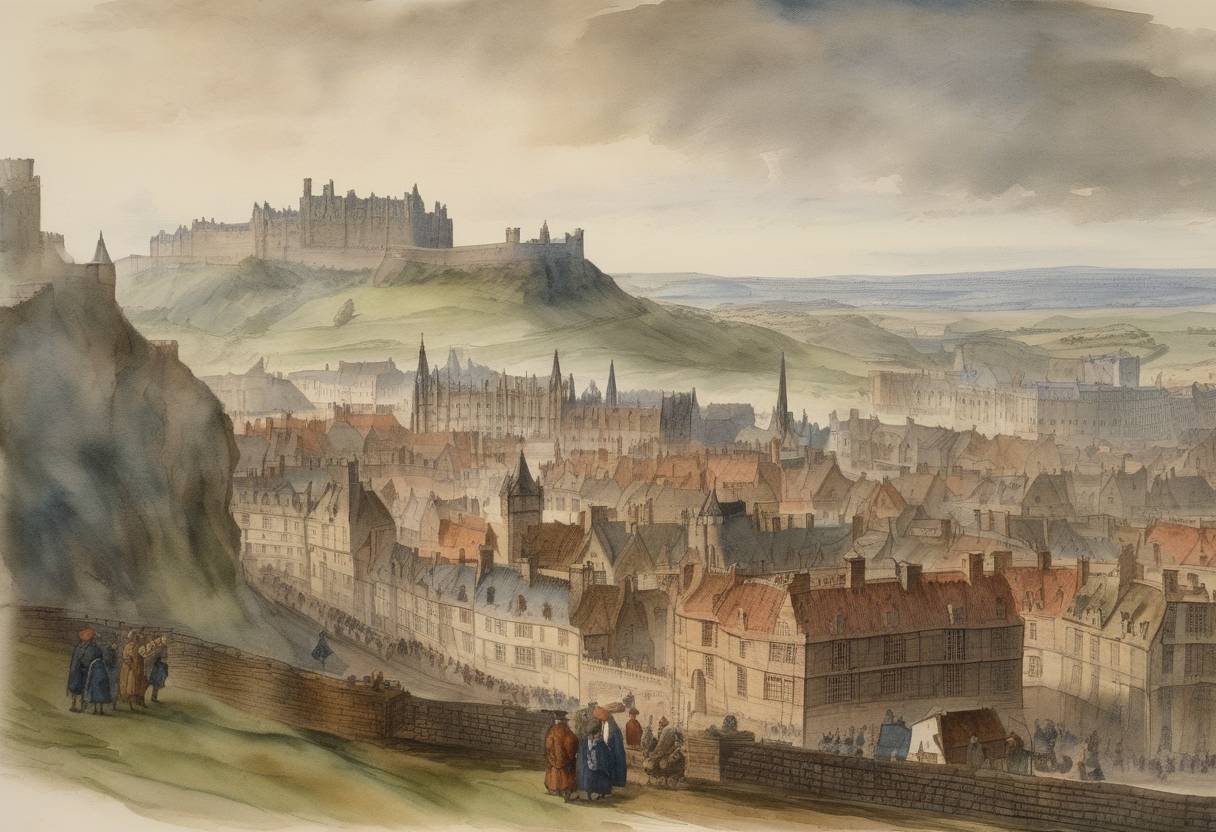
In the mid-16th century, Scotland found itself at the center of a power struggle between England and France. This was largely due to the political and religious turmoil in the region, with Scotland’s ruling class divided between pro-French Catholics and Protestant reformers aligned with England. The ascension of Mary, Queen of Scots, who was married to the French Dauphin (later King Francis II of France), heightened tensions in this Franco-English rivalry over influence in Scotland.
Tensions escalated when Scottish Protestant lords, known as the Lords of the Congregation, rebelled against the French-supported regency of Mary of Guise, mother to Mary, Queen of Scots. These lords sought assistance from England to overthrow French influence. Queen Elizabeth I of England saw an opportunity to curb French power and deployed forces to support the Protestant lords. This intervention led to a military confrontation, culminating in the siege of Leith, a major French stronghold in Scotland.
On July 6, 1560, the Treaty of Edinburgh was initially drafted. It was an agreement between representatives of England, Scotland, and France, aiming to end the hostilities in Scotland and restore peace. Although the English and Scottish commissioners signed the treaty in July, one critical condition was its ratification by Mary, Queen of Scots, which was not forthcoming from her side.
While the Treaty of Edinburgh was drafted and ostensibly came into effect in July, it marked the end of the protracted historical period of Franco-English hostilities in Scotland with its final acceptance on August 12, 1560. Though Mary, Queen of Scots, never formally ratified the treaty, in practice, hostilities ceased and French troops withdrew from Scotland. The formalization on this date signaled the end of direct French intervention in Scottish affairs and allowed Protestant reformers greater freedom to consolidate power and eventually establish the Protestant Reformation in Scotland.
The Treaty of Edinburgh significantly shifted the balance of power in Scotland, laying the groundwork for the eventual union of the English and Scottish crowns. Although Mary, Queen of Scots, returned to Scotland in 1561 and never agreed to the treaty’s terms formally, her French ties were permanently weakened. The withdrawal of French forces allowed the Protestant Reformation to take firm root in Scotland, leading to lasting political and religious changes.
This event underscores the complex intersection of political, religious, and dynastic rivalries that shaped the British Isles at the time, marking a significant pivot towards Protestantism in Scotland and altering the country’s trajectory within the wider European context.
Source: www.britannica.com