Marie Antoinette Marries Louis-Auguste
1770 · Versailles, France
Marie Antoinette marries Louis-Auguste, who later becomes King Louis XVI of France.
January 8, 1499
Louis XII of France marries Anne of Brittany in a ceremony held at the Château de Nantes, thereby strengthening personal ties and political alliances between the French crown and the Duchy of Brittany.
Nantes, France | French Crown
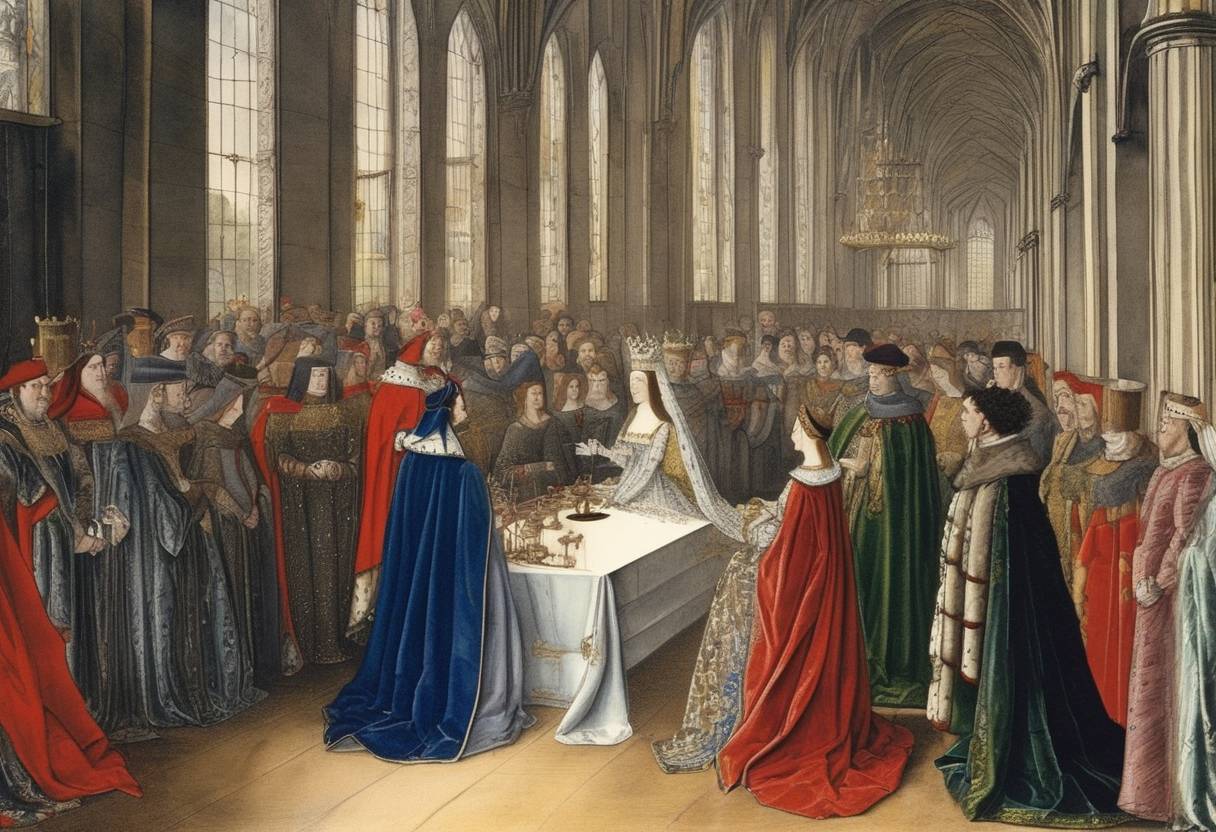
On January 8, 1499, a significant royal marriage took place at the Château de Nantes, marking a pivotal moment in the political landscape of France. King Louis XII of France married Anne of Brittany, strengthening the union between the French crown and the Duchy of Brittany. This matrimonial alliance had far-reaching implications for both entities involved.
The marriage was orchestrated shortly after Louis XII’s ascension to the French throne in April 1498. Anne of Brittany, the Duchess of Brittany, was previously married to Charles VIII of France, Louis XII’s predecessor. Upon Charles VIII’s death and Louis XII’s subsequent rise to power, the new king sought to maintain and solidify France’s grip over Brittany. This union was an extension of political maneuvering that aimed to prevent Brittany’s independence from the French crown, given its strategic importance.
The wedding ceremony took place in the Château de Nantes, a significant stronghold within Brittany, symbolizing the powerful bond between the duchy and the kingdom. This event was not purely ceremonial; it was the culmination of complex negotiations that took into account the political tension between regional autonomy in Brittany and the centralizing tendencies of the French monarchy.
Political Alliance: The marriage was pivotal in ensuring that Brittany would remain closely tied to France. This was crucial for French internal cohesion and significantly reduced the threat of European powers seeking Brittany as an ally against France.
Dynastic Impact: By marrying Anne, Louis XII ensured that the duchy would remain under the control of a joint lineage. This was stipulated in their marriage contract, as it required Brittany to remain within the sphere of French influence, should Anne outlive Louis.
Cultural Implications: The marriage also symbolized a blend of French and Breton cultures, impacting trade, language, and artistic exchanges over the ensuing years.
The union of Louis XII and Anne of Brittany set the stage for further French unification efforts, contributing to the consolidation of centralized power in France and affecting the future dynamics between the kingdom and its regions.
Source: en.wikipedia.org