The London & Greenwich Railway Opening: February 16, 1838
1838 · London, United Kingdom
The London & Greenwich Railway, the first railway in the world to be entirely elevated and fully lit, opens the first section between Spa Road and Deptford.
January 26, 1885
The first railway designs for the 3-foot gauge steam train known as the Salvation Army Railway are patented by General Booth.
London, United Kingdom | The Salvation Army
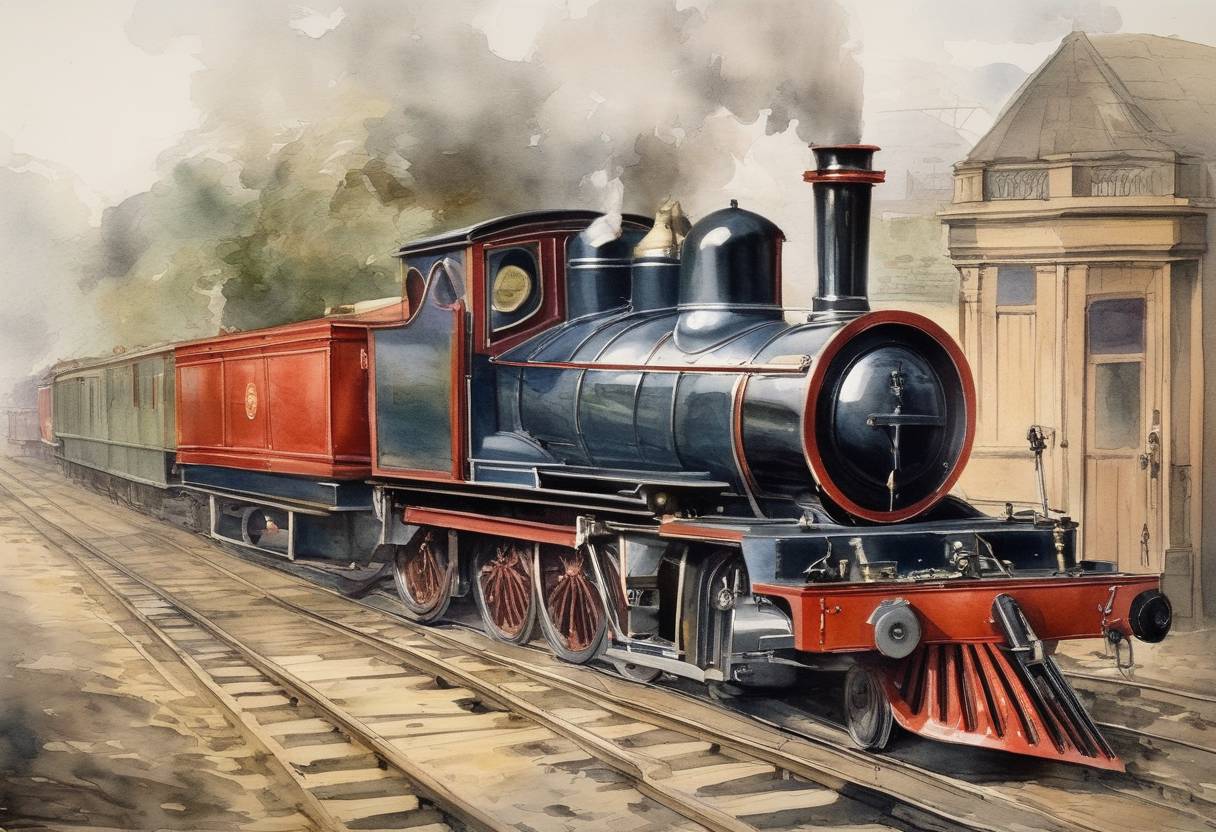
On January 26, 1885, General William Booth, the founder of The Salvation Army, patented the first railway designs for a unique 3-foot gauge steam train known as the Salvation Army Railway. This patent signified a significant development in the creative outreach methods of The Salvation Army, which was widely known for its innovative approaches to evangelism and social work during the late 19th century.
The Salvation Army, established in 1865 by William Booth in London, England, was an evangelical Christian movement dedicated to social reform and religious outreach, particularly to the impoverished and needy. By the 1880s, it had expanded significantly, necessitating new modes of transportation to access remote areas for missionary work, supply delivery, and aid distribution.
The designs patented by General Booth on this date outlined plans for a narrow-gauge steam train specifically designed to operate on a 3-foot gauge track. This track width was smaller than the standard gauge, making it more suitable for operation in constrained or difficult terrains where larger standard-gauge trains could not easily travel. The compact nature of this railway system reflected Booth’s practical approach to overcoming logistical challenges faced by The Salvation Army workers.
The patented railway designs underscored the innovative methods employed by The Salvation Army in its early years. It illustrated the organization’s commitment to integrating technology and practical solutions to further its mission of social and religious service. While there is limited detailed documentation on whether this specific design was widely deployed, the concept exemplified the broader historical backdrop of industrial innovation intersecting with social movements during the era.
This patent fits within the larger narrative of late 19th-century society, a time characterized by rapid industrialization and technological advancement. Social organizations like The Salvation Army played pivotal roles in addressing the repercussions of these changes, such as urbanization and increased poverty, by leveraging new technologies in their philanthropic and evangelical work.
General Booth’s patent for a railway design represents not only an initiative for practical problem-solving within The Salvation Army but also reflects the broader spirit of ingenuity and adaptability that has come to define the organization’s enduring legacy across decades and continents.
Source: www.gracesguide.co.uk