The Treaty of Den Haag - September 25, 1690
1690 · The Hague, Netherlands
The Treaty of Den Haag was signed, an agreement between England and the Netherlands against France, during the War of the Grand Alliance.
February 27, 1670
The Treaty of Dover, a secret treaty between England and France, is signed in Dover. It outlined plans for England's support of France's wars against the Dutch Republic and the conversion of England to Roman Catholicism. The treaty had significant political implications for England and its future relationship with France as well as religious consequences for the English populace.
Dover, England | English Government
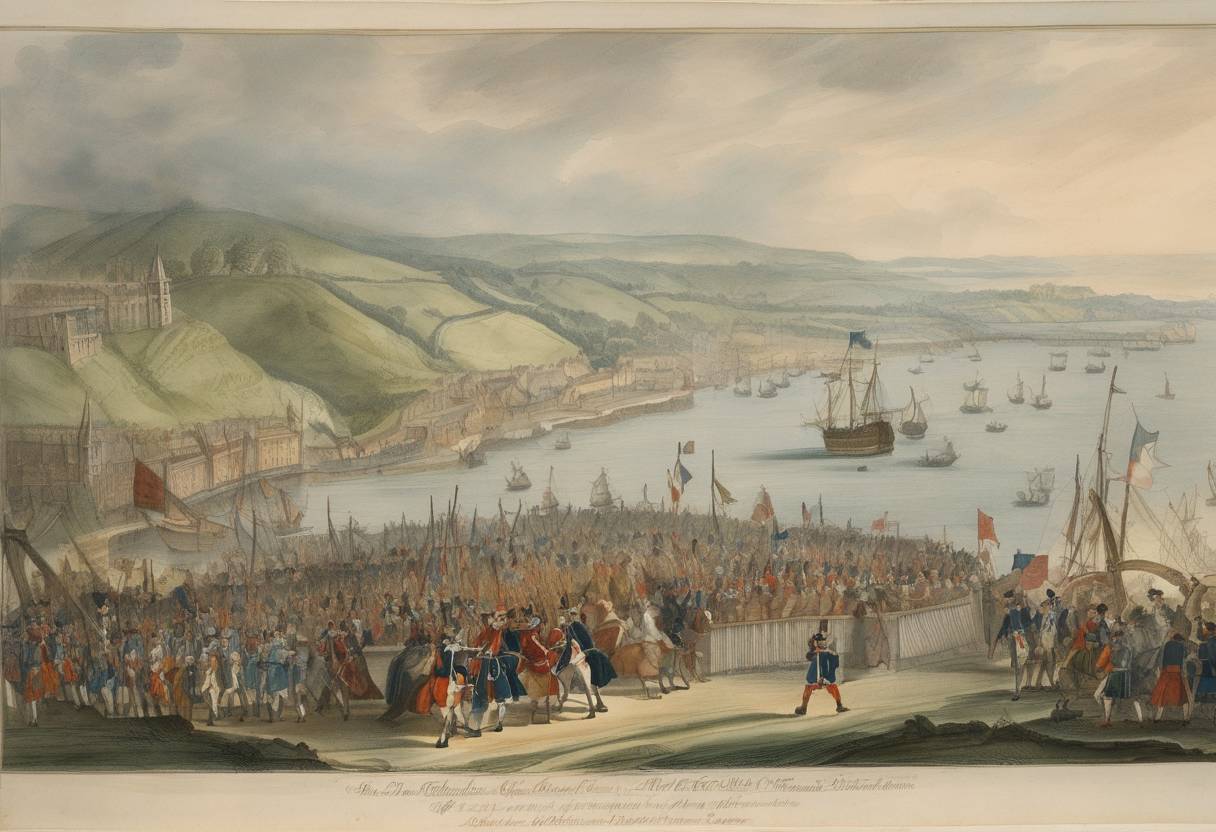
The Treaty of Dover, although officially dated to May 1670, is a critical episode in the history of Anglo-French relations as it secretly aligned England with France. By the mid-17th century, relations between France, under King Louis XIV, and the Dutch Republic had significantly deteriorated, primarily due to economic and military rivalry. Simultaneously, England under King Charles II faced internal religious tensions, particularly around Catholic and Protestant divisions.
The Treaty of Dover contained both public and secret clauses that greatly impacted England’s political landscape:
Military Alliance: The treaty committed England to support France in its military endeavors against the Dutch Republic. This Anglo-French alliance aimed to impose a stronger pressure on the Dutch, who were formidable rivals in trade and naval powers.
Religious Conversion: A highly confidential and contentious provision required King Charles II to announce his conversion to Roman Catholicism at his earliest opportunity. In return, Louis XIV promised substantial financial support to Charles II, effectively making England financially dependent on France, thus strengthening the bond.
Reduction of Dutch Power: The ultimate goal of the alliance was to weaken the Dutch, thereby enhancing French influence in Europe and allowing England to gain economically from a diminished Dutch presence in international trade.
Political Subterfuge: The secrecy of the treaty represented a significant foray into clandestine diplomacy. The revelation of such an alliance might have caused political turmoil in England, given the historical rivalry and the religious divide.
Religious Tensions: The prospect of England converting to Catholicism under a Catholic king risked igniting fierce Protestant opposition. In a country still grappling with the aftermath of the English Civil War and the Restoration, the treaty threatened to destabilize the fragile political balance.
Anglo-Dutch Conflict: As intended, the treaty further heightened tensions and set the stage for the Third Anglo-Dutch War (1672–1674), aligning with Louis XIV’s objectives to curb Dutch power.
Public Outrage and Distrust: Although the full contents were not widely known immediately, suspicions and partial revelations gradually leaked, leading to distrust among the English populace and Parliament towards the monarchy and its intentions.
Legacy: The secret treaty reflected broader European power dynamics and influenced subsequent diplomatic strategies. It highlighted the complexities of balancing personal loyalties with public commitments, a theme that re-emerged in various forms throughout English history.
The Treaty of Dover, as an emblem of secretive and ambitious statecraft, underscored the volatile nature of European politics in the 17th century, reflecting a period where shifting alliances regularly altered the continent’s political map.
Source: www.britannica.com