The Christianization of Iceland
On March 25, 1000, the process of Christianizing Iceland was significantly in motion, influenced by the decree of King Olaf Tryggvason of Norway. King Olaf I played a pivotal role in advancing Christianity throughout Scandinavia during his reign, leveraging both mission work and, at times, force to propagate the Christian faith among the Norse lands.
Context and Background
The conversion of Iceland was part of a broader wave of Christianization sweeping across Northern Europe during the late 10th and early 11th centuries. King Olaf I of Norway was a fervent Christian who sought to spread Christianity as a means to unify his realm under a single religious doctrine and to strengthen political alliances with other Christian kingdoms. His efforts were not only theological but also deeply political, aiming to consolidate his influence over territories such as Iceland.
Conversion of Iceland
By the year 1000, much of Norway was nominally Christian due to Olaf’s efforts, and he turned his attention to Iceland, which was still predominantly pagan. The conversion in Iceland chiefly occurred through diplomatic and sometimes coercive methods rather than outright military force. King Olaf used various means, including the threat of a trade blockade against the Icelanders, which helped persuade the Icelandic leaders to convert.
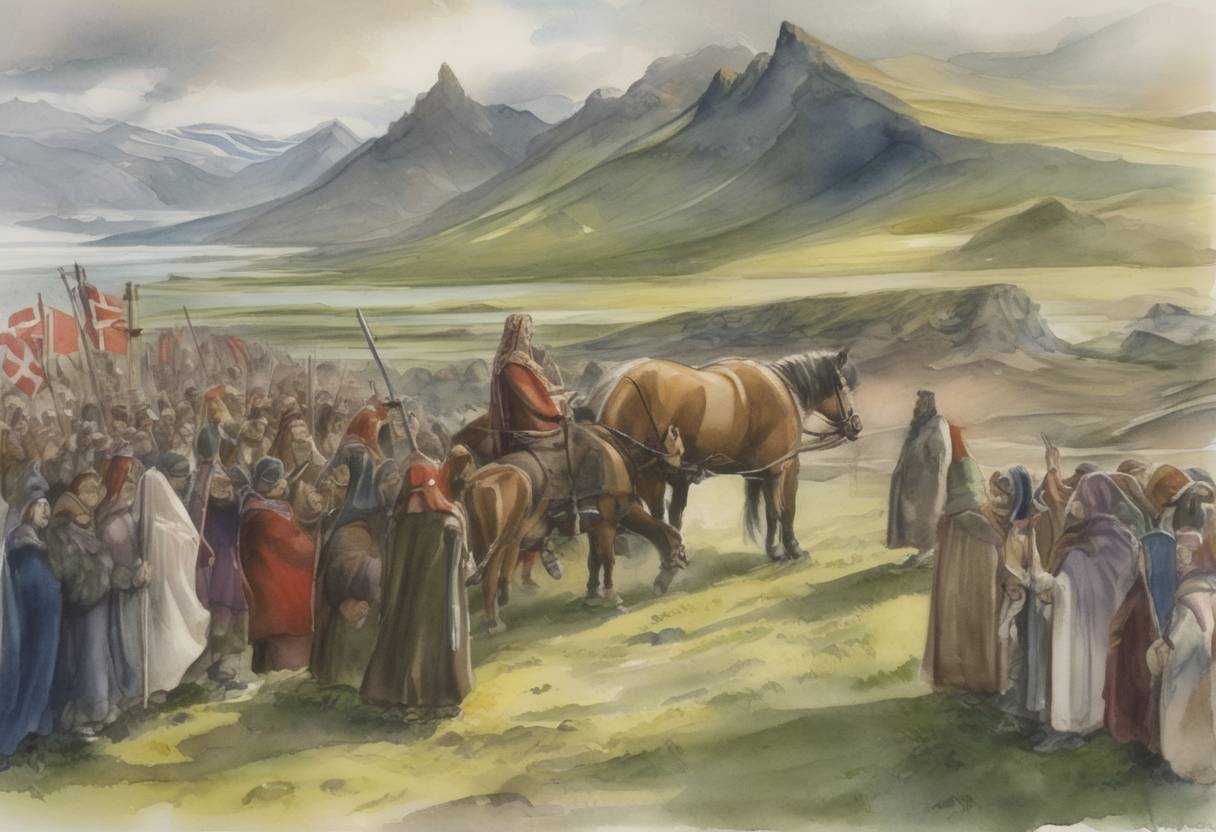
The key event in Iceland’s conversion was the Althing (the national parliament of Iceland), where, after much debate, Icelandic chieftains decided to adopt Christianity as the state religion. Thorgeir Thorkelsson, the lawspeaker of the Althing, reportedly spent a day and a night under a blanket pondering the nation’s decision. Ultimately, it was agreed that Iceland would become a Christian country, but with allowances for the private practice of pagan customs, thus maintaining some societal harmony during the transition.
Consequences and Significance
The formal acceptance of Christianity in Iceland marked a significant societal transformation. The integration of Christian customs, laws, and ecclesiastical structures began reshaping Icelandic culture, law, and art. The Christianization also paved the way for Iceland to develop closer links with other Christian nations of Europe.
The decision of the Althing has been viewed as a prudent compromise that allowed Iceland to join the Christian world without fracturing its society, setting a precedent for peaceful transitions amidst sweeping cultural changes. This conversion illustrates how diplomacy and internal deliberation played crucial roles in the spread of Christianity in the Norse regions, contrasting with more forceful methods used elsewhere.
In conclusion, the Christianization of Iceland, instigated in part by King Olaf I’s efforts and formalized at the Althing, marked a pivotal moment in the island’s history, aligning it more closely with the burgeoning cultural and religious landscape of medieval Europe.