The Signing of the Tripartite Pact: September 27, 1940
1940 · Berlin, Germany
The Tripartite Pact is signed in Berlin by Germany, Italy, and Japan, establishing the Axis Powers during World War II.
March 1, 1941
The Bulgaria officially joined the Axis Powers by signing the Tripartite Pact.
Sofia, Bulgaria | Axis Powers
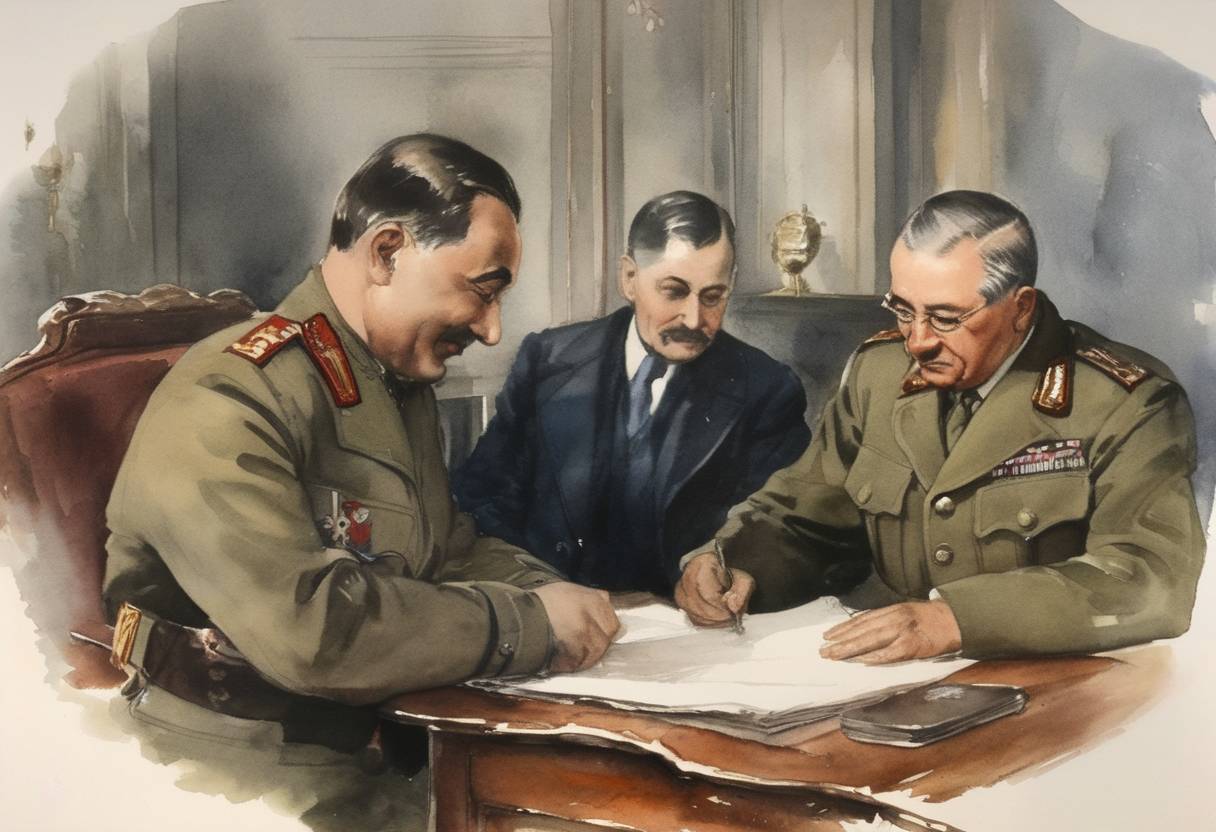
On March 1, 1941, the Kingdom of Bulgaria officially joined the Axis Powers by signing the Tripartite Pact in Vienna. This pivotal move aligned Bulgaria with Nazi Germany, Fascist Italy, and Imperial Japan during the escalating global conflict of World War II.
Leading up to this alignment, Bulgaria faced significant geopolitical pressures. The Balkans were a region of strategic importance, with neighboring countries already folding into Axis influence. Adolf Hitler’s Germany had exerted considerable diplomatic and military pressure on Bulgaria to encourage their cooperation. With the shifting power dynamics and facing potential territorial gains, Bulgaria saw strategic benefits in allying with the Axis Powers.
Furthermore, Bulgaria desired to revise its borders to recoup territories lost after the Treaty of Neuilly-sur-Seine in 1919 following World War I. The promise of regaining territories in Thrace and Macedonia—regions with strong Bulgarian ethnic ties—proved a compelling incentive for Bulgaria’s leaders.
The formal signing of the Tripartite Pact took place in Vienna, with Prime Minister Bogdan Filov representing Bulgaria. By signing, Bulgaria committed to the Axis cause, although it initially maintained military neutrality, not participating directly in military campaigns.
The pact effectively allowed Nazi Germany free passage through Bulgarian territory. This was a strategic advantage for Germany, facilitating its invasion of Greece and Yugoslavia in April 1941.
Bulgaria’s alliance with the Axis resulted in short-term territorial gains, receiving parts of Greece and Yugoslavia. However, this partnership also led to long-term repercussions. Despite their initial non-engagement stance, Bulgaria eventually became embroiled in the war efforts and faced internal dissent and later, occupation forces from the Soviet Union as the tides of war turned.
Bulgaria’s engagement with the Axis Powers continued until the advancing Red Army and the pressures of the Allied powers forced a political shift in 1944, leading Bulgaria to switch sides and join the Allies.
Bulgaria’s participation in the Tripartite Pact marked a significant realignment in the Balkans during World War II. It highlighted the intricate interplay of territorial ambitions, geopolitical pressures, and ideological influences that characterized the period leading to profound changes in the European political landscape.
Source: en.wikipedia.org