The 1900 Summer Olympics: Games of the II Olympiad
1900 · Paris, France
The first modern-era Summer Olympic Games, known as the Games of the II Olympiad, open in Paris, France.
July 11, 1924
Eric Liddell wins the gold medal in the 400 meters event at the Paris Olympics.
Paris, France | International Olympic Committee
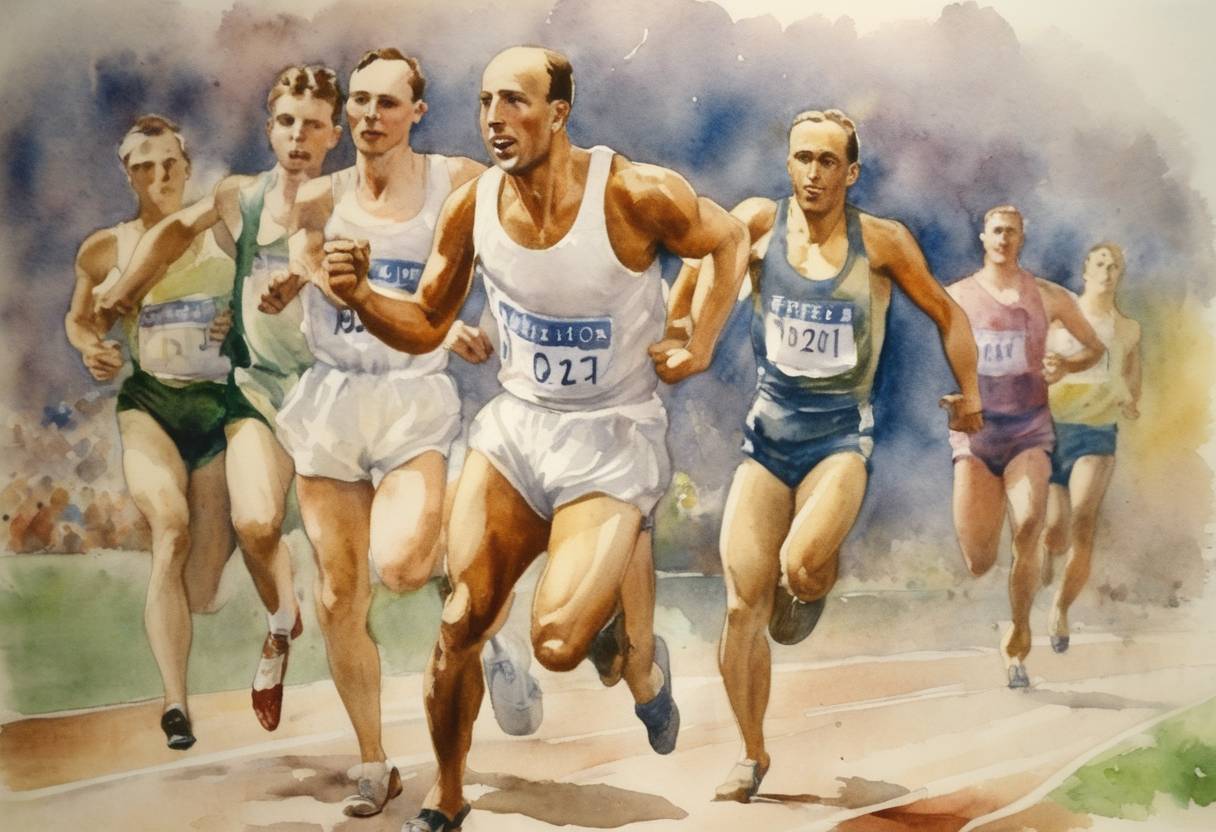
On July 11, 1924, at the VIII Olympiad hosted in Paris, Eric Liddell, a Scottish sprinter, claimed the gold medal in the 400 meters event. This victory stands out in Olympic history not only for Liddell’s athletic prowess but also for his steadfast adherence to personal principles, which led to significant alterations in his competition schedule.
Eric Liddell was originally the favorite in the 100 meters event. However, he withdrew from the race after discovering that the heats were scheduled on a Sunday, which conflicted with his Christian beliefs that forbade racing on the Sabbath. Despite the disappointment and potential loss of the prestigious 100 meters title, Liddell remained resolute and shifted his focus to the 400 meters and 200 meters events, the latter in which he later secured a bronze medal.
The 400 meters took place at the Stade Olympique Yves-du-Manoir, a primary venue for the 1924 Games. Liddell’s training had not been concentrated on this distance; however, he possessed remarkable speed and endurance, complemented by a distinctive running style distinguished by an upright posture and flailing arms.
Liddell ran with determination and held a fast pace from the beginning of the race, which was against common competitive strategy that favored conserving energy for the final stretch. His strategy paid off, as he finished the race in first place, clocking a time of 47.6 seconds, which was a new Olympic record and close to the world record at the time.
Eric Liddell’s triumph in the 400 meters was celebrated not only for its athletic excellence but also for the integrity and honor he demonstrated by prioritizing his principles over competitive success. His story became legendary, embodying the Olympic spirit of determination, sportsmanship, and respect for individual beliefs.
Beyond the track, Liddell continued to make significant contributions as a missionary in China, further enhancing his legacy as both an athlete and a humanitarian. His life and accomplishments were dramatized in the Academy Award-winning film “Chariots of Fire,” which brought renewed attention to his inspiring Olympic journey.
Liddell’s gold medal victory on July 11, 1924, remains a pivotal moment in Olympic history, illustrating the impact one individual’s convictions can have in the world of sports and beyond.
Source: en.wikipedia.org