Zhu Yuanzhang Ascends to the Throne: The Beginning of the Ming Dynasty
1368 · Nanjing, China
Zhu Yuanzhang ascends to the throne of China as the Hongwu Emperor, marking the beginning of the Ming Dynasty.
May 21, 1363
Battle of Lake Poyang: Decisive confrontation during the transitional period at the end of the Yuan Dynasty in China where the Ming forces under Zhu Yuanzhang defeated the Han forces.
Lake Poyang, China | Ming Dynasty
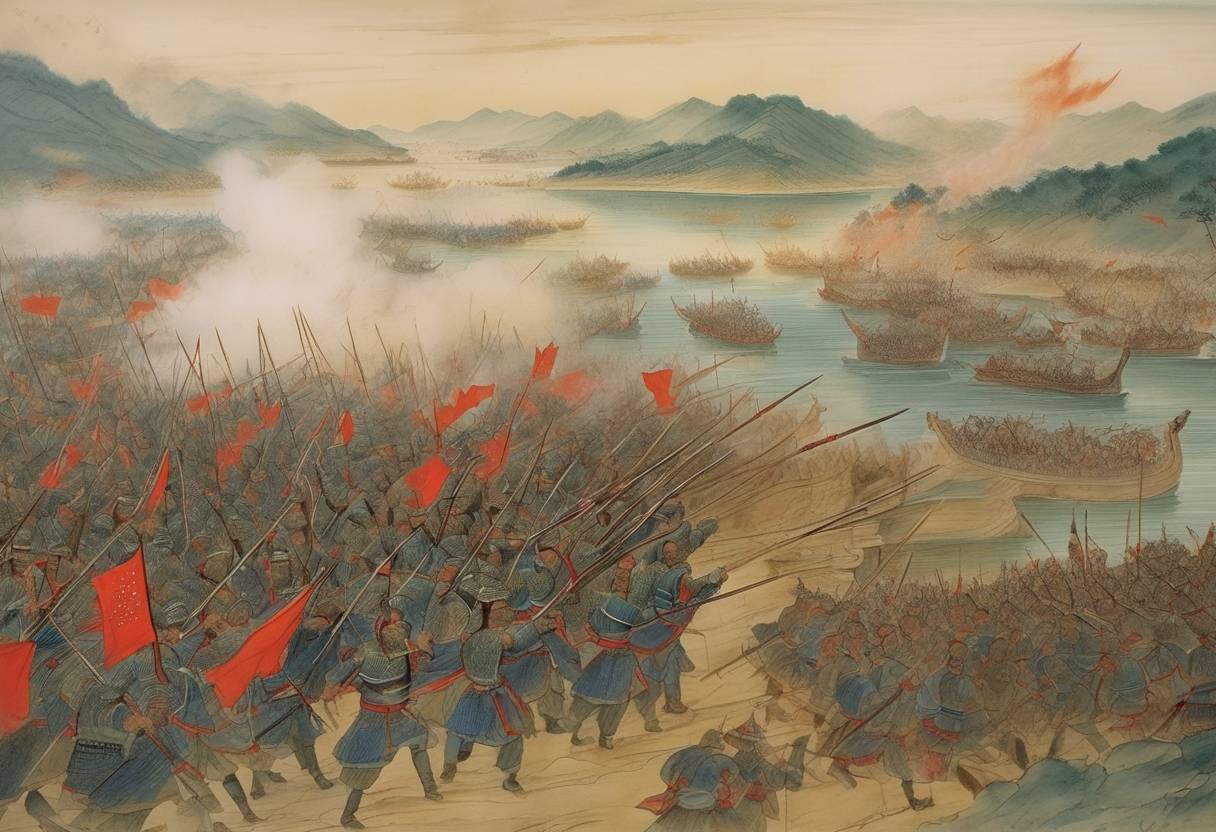
The Battle of Lake Poyang is a pivotal event during the transitional period bringing an end to the Yuan Dynasty and heralding the rise of the Ming Dynasty in China. The event took place on 5 January 1363, under the leadership of Zhu Yuanzhang, who would later establish the Ming Dynasty as its founding emperor.
By the mid-14th century, the Yuan Dynasty was experiencing internal strife and weakening due to widespread corruption and social unrest. This period saw the rise of several rebel factions eager to seize power and establish new rule. Among these factions, two prominent leaders emerged: Zhu Yuanzhang of the Ming forces and Chen Youliang leading the Han forces.
Zhu Yuanzhang, initially a monk with humble beginnings, became a charismatic leader commanding significant support in the rebellion against Yuan rule. His strategic and military prowess was vital in gradually consolidating control over important territories in Southern China.
The confrontation at Lake Poyang is renowned for being one of the largest naval battles in history. Lake Poyang, located in present-day Jiangxi Province, became the site of this defining clash during a hotly contested struggle for dominance.
On 5 January 1363, Zhu’s forces, despite having fewer and smaller ships, brought innovative naval tactics into play. Zhu employed the use of fire ships—vessels filled with combustibles set alight and aimed at enemy fleets—to break the formidable Han naval blockade. This strategic move caused significant damage and confusion within Chen Youliang’s vastly larger navy.
Zhu’s success in the Battle of Lake Poyang played a crucial role in diminishing the power of the Han faction. The victory allowed his forces to gain control of the Yangtze River, a vital economic and strategic asset, bolstering his resources and morale for subsequent campaigns.
The defeat weakened Chen Youliang’s position, both militarily and politically, leading to further losses in the subsequent months and years. Eventually, Zhu Yuanzhang emerged as the preeminent leader among the rebels against the Yuan, setting the stage for his proclamation as the first emperor of the Ming Dynasty in 1368.
The battle is not only significant for its immediate military outcome but also for its lasting impact on Chinese history. It marked a decisive turning point in the fall of the Yuan Dynasty, showcasing the blending of innovative tactics and determined leadership that defined Zhu Yuanzhang’s rise to power. The Ming Dynasty, established soon after, would go on to rule China for nearly three centuries, shaping the country’s cultural and political landscape profoundly.
Source: en.wikipedia.org