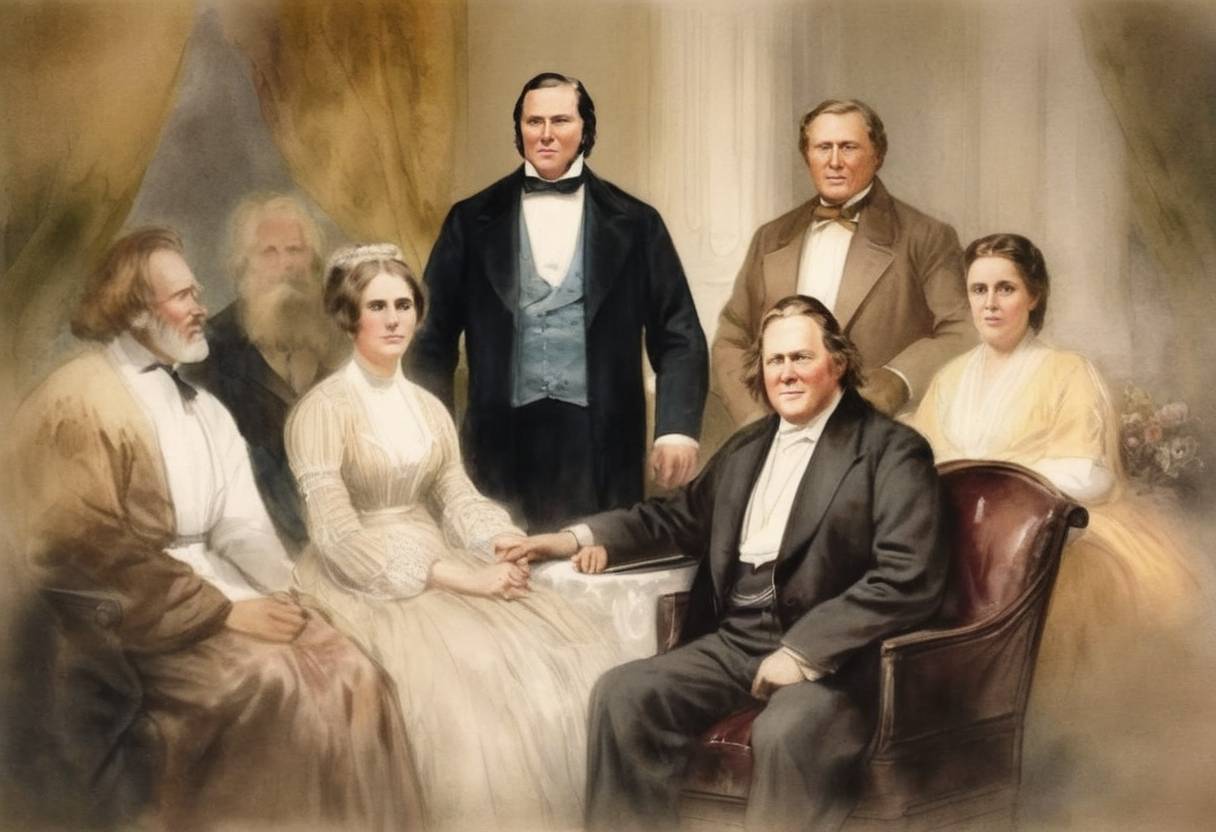
Brigham Young Assumes Leadership of The Church of Jesus Christ of Latter-day Saints
On August 24, 1847, Brigham Young formally became the leader of The Church of Jesus Christ of Latter-day Saints (LDS Church), succeeding Joseph Smith, who had been murdered three years earlier. This transition marked a significant moment in the history of the LDS Church and its consolidation as a religious community.
Background
Joseph Smith, the founder of the LDS Church, was killed in Carthage, Illinois, on June 27, 1844, leaving the church in a leadership crisis. Several claimants emerged, but Brigham Young, then the President of the Quorum of the Twelve Apostles, effectively took on the leadership role because of his position and influence.
Events Leading to Leadership
After Joseph Smith’s death, Brigham Young asserted that the governing structure of the Church should remain under the collective leadership of the Quorum of the Twelve Apostles. His position was solidified in a meeting of church leaders and members held in Nauvoo in August 1844, where Young’s vision and leadership capabilities were evident.
Journey to the West
In early 1846, Young led a significant portion of the church members in a migration westward to escape the hostile environment in Illinois. This trek culminated in the founding of Salt Lake City in the Salt Lake Valley on July 24, 1847, signifying a new beginning for the community in the remote territories of Utah.
Although Brigham Young had been functioning as the de facto leader since Smith’s death, it was on August 24, 1847, that his leadership was formally recognized at a meeting held in the Salt Lake Valley. This event marked the official transfer of leadership, establishing Young’s presidency and setting precedents for future leadership transfers.
Significance
Brigham Young’s formal assumption of leadership was instrumental in stabilizing the church during a critical period. Under his guidance, the LDS Church expanded its membership and established a substantial presence in the American West. His leadership and organizational skills helped shape the modern structure of the church and laid the groundwork for its future growth and development.
Young’s tenure as the leading figure of the LDS Church lasted until his death in 1877, during which he played a pivotal role in numerous aspects of the church’s evolution, from doctrinal developments to the establishment of settlements throughout the western United States.