Michelle Bachelet's Victory in the 2013 Chilean Presidential Election
2014 · Santiago, Chile
President Michelle Bachelet of Chile won the second round of the presidential election, returning to office for a non-consecutive term.
October 24, 1970
Salvador Allende of the Popular Unity party is elected the first Marxist President of Chile, marking a shift in Chilean politics.
Santiago, Chile | Popular Unity
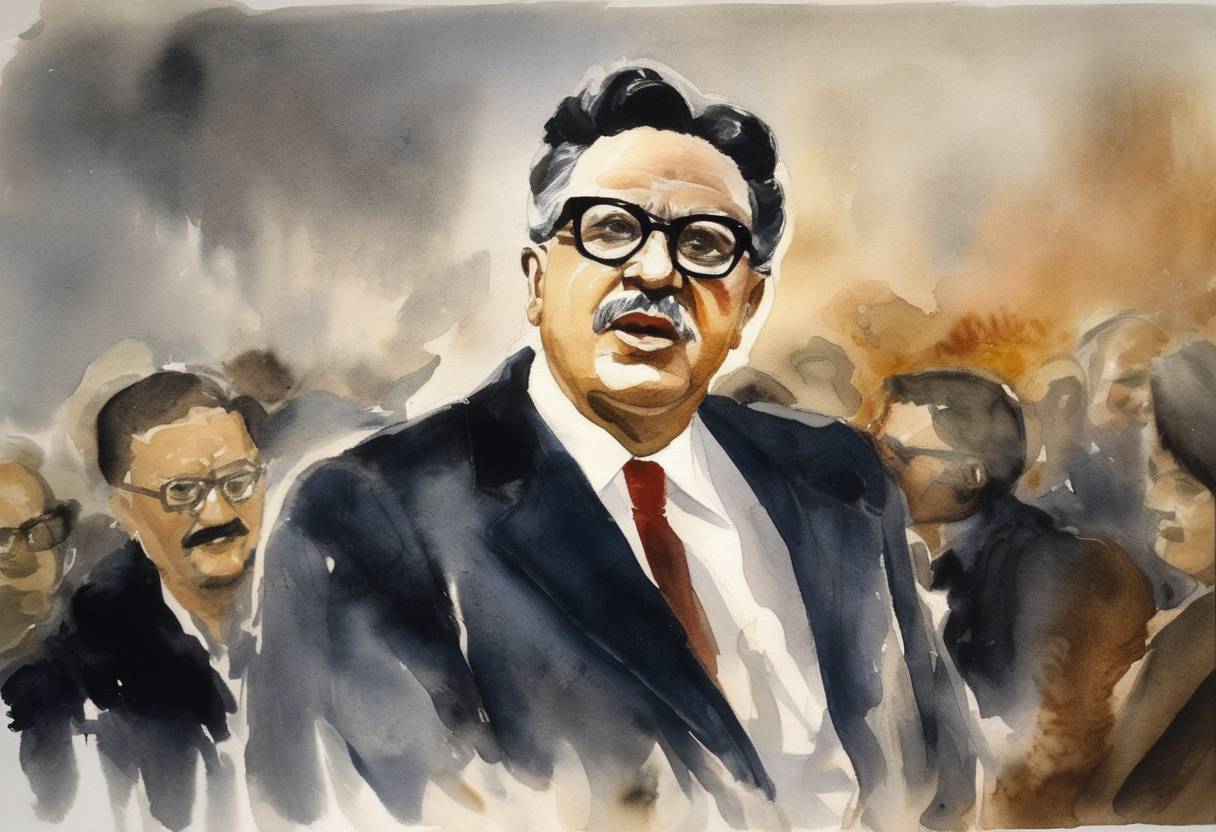
On October 24, 1970, Salvador Allende, a candidate from the Popular Unity coalition, was confirmed as the President-elect of Chile by the National Congress. This event marked a significant political shift in Chile as Allende became the first Marxist to be elected president in a Latin American democracy. His election stands as a landmark in both Chilean and global political history, embodying the complex interplay of Cold War geopolitics in Latin America.
The Popular Unity (Unidad Popular) was a political coalition in Chile, formed by left-leaning parties including the Chilean Socialist Party, Communist Party, Radical Party, and other smaller factions. The coalition aimed to bring about significant social and economic reforms through a democratic process.
Chile, at the time, was experiencing widespread inequality and socioeconomic challenges. There was a growing demand for land reform, relief for the working class, and nationalization of key industries. The electorate was increasingly receptive to progressive agendas that promised change through democratic means rather than armed struggle.
Salvador Allende secured approximately 36.6% of the vote in the September general election, receiving the highest percentage among all candidates but not the majority required to win outright. According to Chilean law, when no candidate achieved more than half the votes, the National Congress decided the winner between the top two candidates. On October 24, 1970, the Congress ratified Allende’s election, confirming him as president.
Allende’s victory was met with mixed reactions. Supporters lauded it as a triumph for democracy and socialism, while opponents, both domestic and foreign, particularly the United States, viewed it as a potential foothold for communism in the Western Hemisphere.
Allende’s presidency sought to implement radical economic and social policies, including the nationalization of the copper industry and agrarian reform. These initiatives aimed to redistribute wealth and resources more equitably.
His presidency intensified Cold War tensions in Latin America, drawing significant interest and interference from other nations, particularly the United States, which pursued policies to destabilize Allende’s government through economic blockade and covert operations.
Salvador Allende’s presidency, abruptly ended by a military coup on September 11, 1973, set a precedent in how a democratically elected Marxist leader navigated governance within the framework of global Cold War politics. His brief tenure remains a topic of extensive study and debate, highlighting issues of democracy, sovereignty, and foreign intervention.
Allende’s legacy is a poignant chapter in the history of Chile and offers rich insights into the dynamics of ideological conflicts during the 20th century.
Source: www.britannica.com