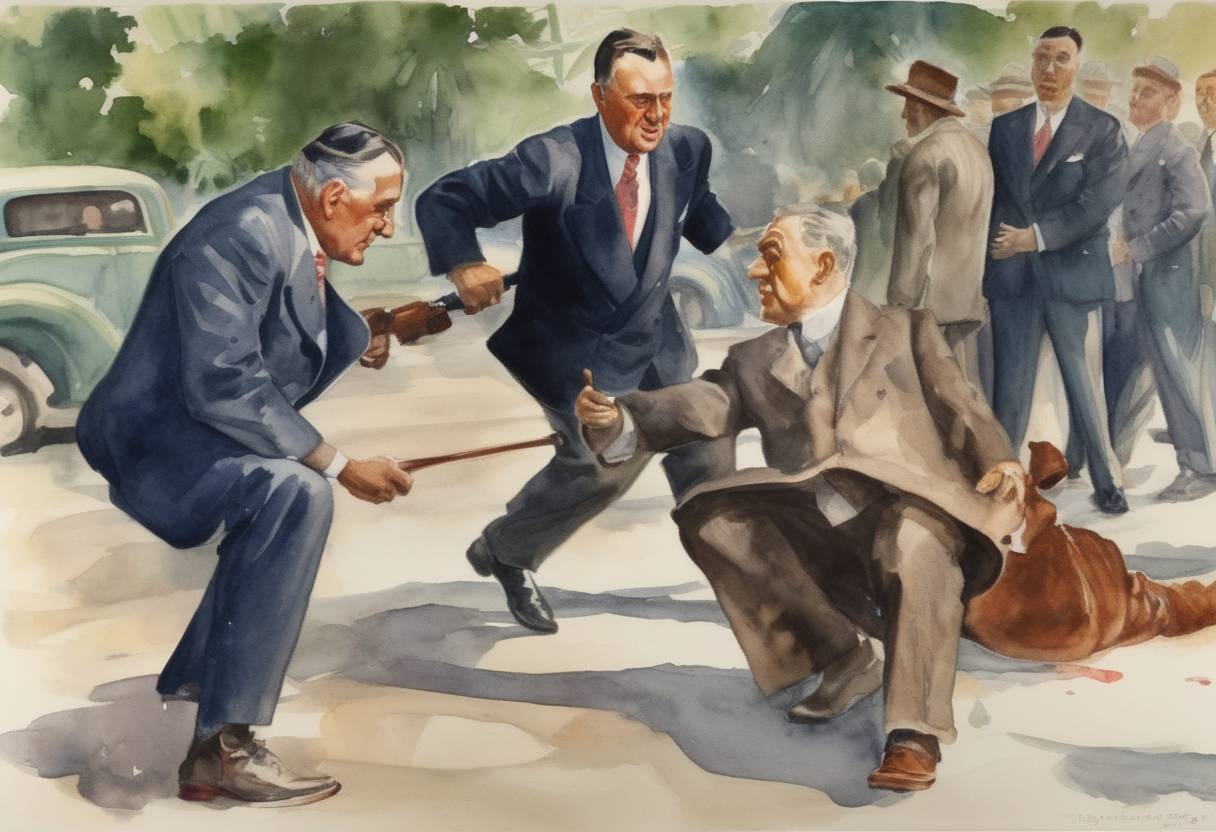
Attempted Assassination of Franklin D. Roosevelt
On February 15, 1933, an assassination attempt was made on U.S. President-elect Franklin D. Roosevelt by Giuseppe Zangara, an Italian immigrant. This event occurred at Bayfront Park in Miami, Florida, where Roosevelt was delivering a speech from the back of an open car.
Context
- The Great Depression: The United States was in the grip of the Great Depression, and Roosevelt’s election campaign had promised hope and change through his New Deal policies.
- Public Engagement: Roosevelt embarked on a speaking tour to garner public support and outline his plans before officially taking office on March 4, 1933.
The Attempt
- Giuseppe Zangara: Zangara was a 32-year-old bricklayer suffering from severe abdominal pain, likely due to a medical condition. His motives were rooted in a deep-seated resentment towards government leaders, whom he blamed for his problems.
- The Attack: During Roosevelt’s speech, Zangara, standing on a wobbly metal folding chair about 25 feet from Roosevelt, fired several shots with a .32 caliber revolver.
- Unintended Victim: In the chaos, Zangara’s shots missed Roosevelt but struck five other people. The most severely injured was Chicago Mayor Anton Cermak, who was struck in the abdomen.
- Cermak’s Condition: Despite being rushed to the hospital, Cermak succumbed to his injuries on March 6, 1933, nearly three weeks after the shooting.
- Public Reaction: The incident heightened concerns over presidential security and marked a significant moment in Roosevelt’s pre-presidency period.
Legal and Historical Impact
- Zangara’s Fate: Zangara was quickly apprehended and expressed no remorse for his actions during the trial. Initially sentenced to 80 years in prison for attempted murder, his charge was elevated to first-degree murder following Cermak’s death. He was executed in the electric chair on March 10, 1933.
- Legacy of the Event: The assassination attempt contributed to increased security measures for U.S. Presidents and highlighted the tense climate of the early 1930s. Although unintended, Cermak’s death added a tragic note to Roosevelt’s entry into the presidency during a time of national crisis.